A court in India-administered Kashmir has issued a landmark ruling officially declaring a man dead nearly three decades after he disappeared from military custody, AFP and Al Jazeera reported. The judicial order issued in Srinagar marks the first time that a local court has formally recognized the death of a missing person among thousands of unresolved petitions in the contested Himalayan territory. The judge ordered authorities to issue an official death certificate for Abdul Rashid Wani, a timber trader who vanished in July 1997. The ruling cited a thorough police investigation that identified a specific Indian army officer responsible for taking Wani into unlawful custody.
According to the judicial inquiry recorded in the ruling, the accused army major murdered Abdul Rashid Wani while in his custody and subsequently disposed of his corpse to conceal the crime. On the evening of his disappearance, Wani was stopped near his home in Srinagar while carrying a significant amount of cash intended for paying his business suppliers. His family recounted that his wife and two young children were dressed up and waiting for him to return to attend a wedding reception together. Wani never returned home, initiating a grueling twenty-nine-year legal battle by his relatives to uncover the truth behind his sudden arrest. His son, Junaid Rashid, who was only five years old when his father vanished, pursued the case into his adulthood.
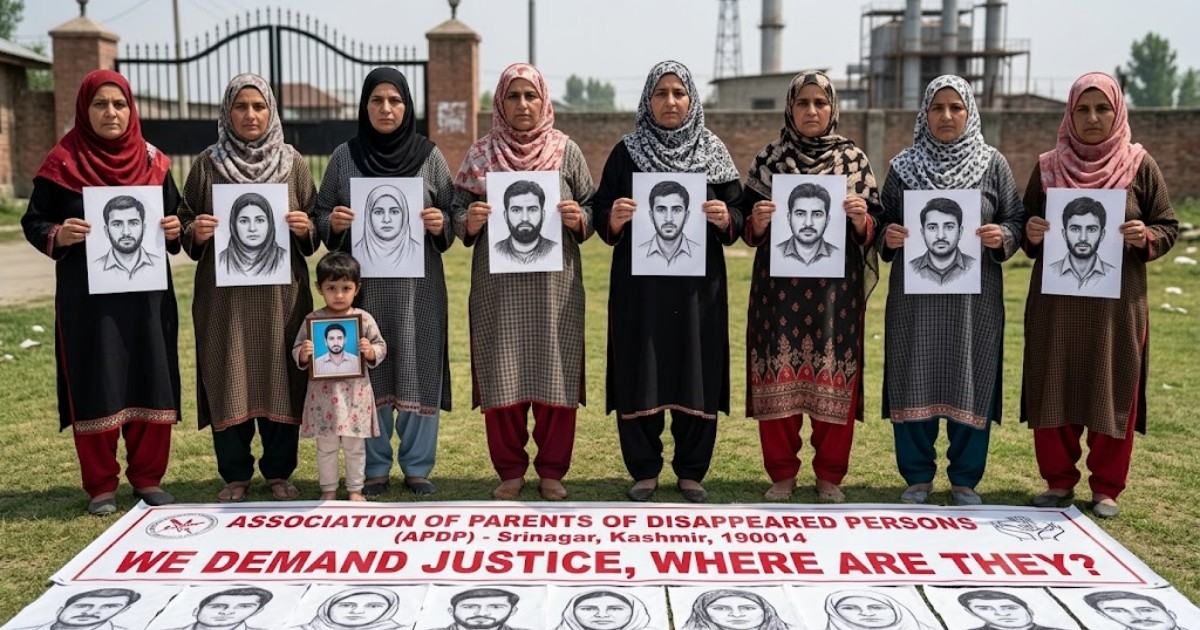
What remains unclear is how this unprecedented ruling will impact thousands of other pending cases involving enforced disappearances across the highly militarized region. Over the past few decades of armed conflict in Kashmir, thousands of men have vanished after being detained by security forces, leaving their families in a state of perpetual uncertainty. The wives of these missing individuals are widely referred to as half-widows within Kashmiri society, as they are legally and emotionally unable to mourn their husbands without definitive proof of death. Junaid Rashid noted that if the government had acknowledged this atrocity decades earlier, their family lives and his mother`s deteriorating health would have been significantly different.
Human rights organizations estimate that up to eight thousand people have undergone enforced disappearances in India-administered Kashmir since the outbreak of the insurgency. Indian authorities have consistently denied these widespread allegations, maintaining that most of the missing individuals crossed the border into Pakistan to join armed groups. However, the police investigation in Wani`s case directly contradicted the official narrative by establishing clear military culpability. The court officially recorded Wani`s date of death as the day of his initial abduction, though the ruling provides no further information regarding the current location of his remains.
The legal recognition of this custodial killing after nearly three decades represents a major victory for local human rights advocates seeking institutional accountability. Junaid Rashid stated to international journalists that the decades of denial by state institutions caused immense psychological trauma to his family. Thousands of relatives in the region continue to hold monthly protests, demanding information about their missing loved ones. Legal experts suggest that this specific judicial precedent could open the door for more families to seek formal death certificates and pursue criminal charges against security personnel.