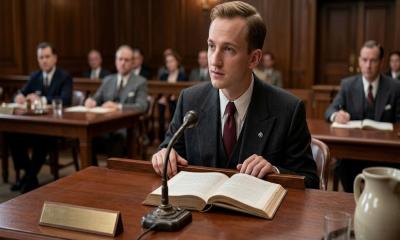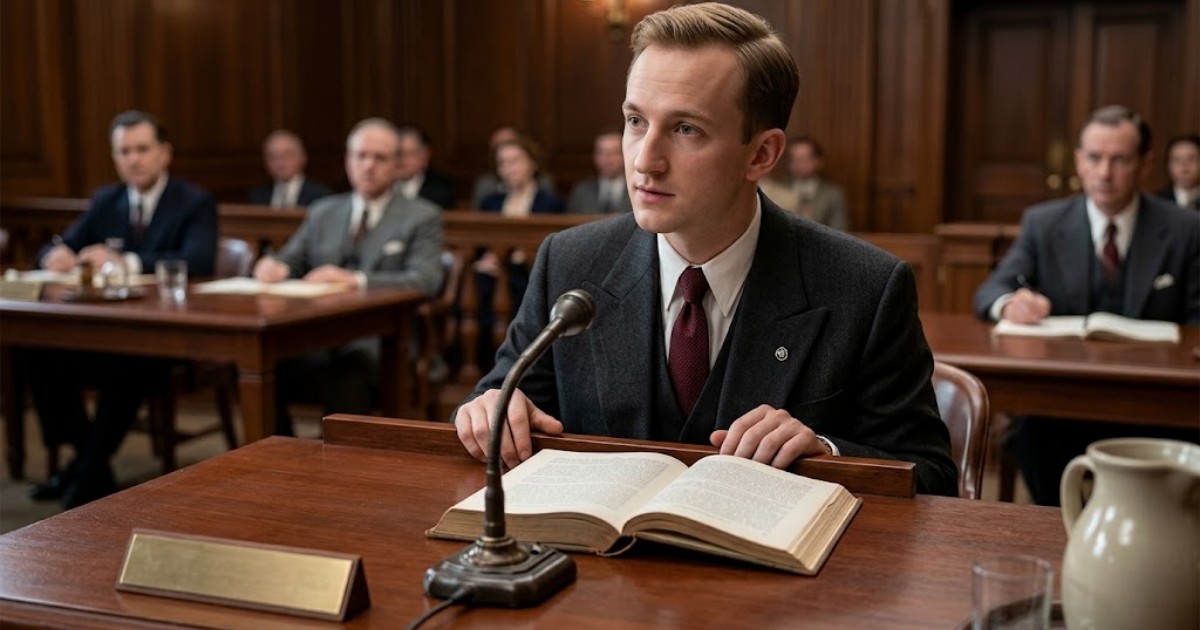
American prosecutor Ben Ferencz spearheaded the historic legal proceedings against Nazi mobile killing units following the conclusion of World War Two. On 29 September 1947, the United States military tribunal in Nuremberg, Germany, commenced what the Associated Press described as the largest murder trial in history. Ferencz, who was twenty-seven years old at the time, led the prosecution of twenty-two commanders responsible for the murder of over one million defenseless people across Eastern Europe. The trial established enduring international benchmarks for prosecuting crimes against humanity and systemic state atrocities.
The case rested almost entirely on captured military records.
A graduate of Harvard Law School who enlisted in the United States Army in 1943, Ferencz took part in the Normandy landings before becoming a specialized investigator of newly uncovered death camps. Entering sites such as Buchenwald, he gathered evidence of widespread atrocities that he later described as surpassing any conventional depiction of human cruelty. In 1945, the Pentagon requested his expertise to review Nazi state archives in Berlin, assessing institutional complicity among physicians, legal officials, and industrial leaders. During this investigation, a fifty-member research team uncovered top-secret daily operational bulletins filed by the Einsatzgruppen death squads.
These paramilitary units systematically carried out mass shootings behind German lines.
Ferencz personally traveled from Berlin to Nuremberg to urge General Telford Taylor, the chief American prosecutor, to bring these commanders to court despite heavy existing caseloads. Because physical capacity in the dock was restricted to twenty-two seats, Ferencz chose twenty-two high-ranking officers and university-educated professionals who were already in custody. He emphasized that holding every single perpetrator accountable was impossible, making it essential to convict the intellectual and military leadership. The defendants entered not-guilty pleas, arguing that they had merely adhered to superior operational directives.
None of the defendants displayed any remorse during the proceedings.
Ferencz dismantled their legal defense by introducing their own certified operational cables, which documented execution tallies submitted directly to command headquarters. The tribunal convicted twenty defendants of war crimes and crimes against humanity, while acquitting the remaining two of direct war crimes but convicting them of criminal organizational membership. In his courtroom addresses, Ferencz declared that the proceedings represented a plea for universal human dignity rather than an effort to exact summary vengeance.
Ferencz spent his subsequent career advancing global legal structures, playing a pivotal role in establishing the permanent International Criminal Court in 1998. He repeatedly cautioned that destructive state violence turns ordinary citizens into perpetrators, stressing that national identity offers no automatic immunity against fanaticism. Ferencz maintained throughout his life that international legal instruments remain the only viable mechanism to restrain state-sponsored brutality.