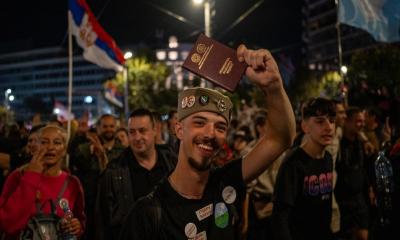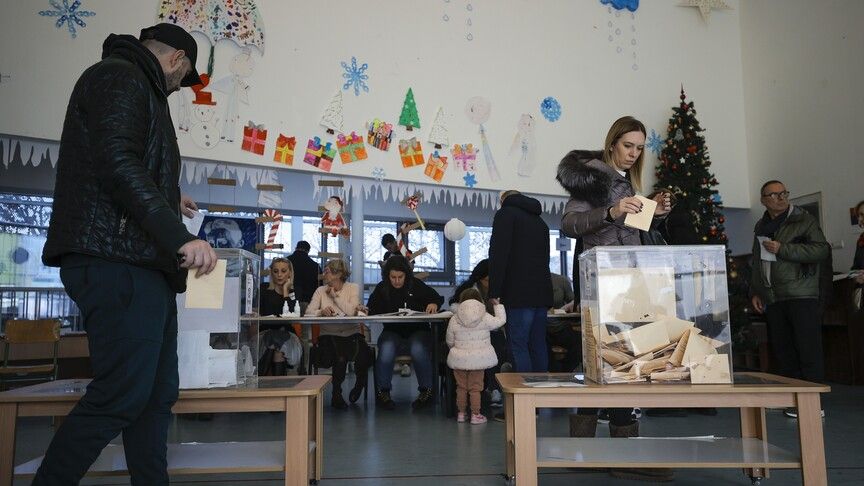
Voters in Serbia go to the polls to elect 250 members of the National Assembly in a snap parliamentary election. The Republic Electoral Commission reported 6,450,523 registered voters across 8,392 polling stations, which open at seven in the morning and close at eight in the evening local time.
The election comes after months of student-led protests and the resignation of President Aleksandar Vucic. Vucic stepped down in late September after serving two presidential terms, as he is constitutionally barred from a third. He is seeking to return to government as prime minister, representing the ruling Serbian Progressive Party through the electoral list Aleksandar Vucic United Serbia.
The SNS has been the dominant force in governing coalitions since 2012. Its campaign focuses on political stability, infrastructure development, economic growth, and continued investment.
The diplomatic climate surrounding the vote has also faced friction. Serbia sent a protest note to Croatia over alleged interference in its domestic political affairs and election campaign, local media reported.
Opposition groups and new movements are challenging the ruling camp. The Student List Students Win emerged from protests following the November 2024 collapse of a railway station canopy in Novi Sad, which killed 16 people. Its campaign centres on accountability, the rule of law, and reforms to strengthen public institutions, with protesters demanding investigations and accountability for the disaster.
The Socialist Party of Serbia, led by Ivica Dacic, participates in successive governments and presents itself as a force for stability. Dacic has opposed recognising Kosovo independence, imposing sanctions on Russia, and joining NATO.
The European Serbia coalition, associated with Marinika Tepic and Zdrovko Ponos, advocates European Union membership. The bloc prioritises the rule of law, independent courts, and anti-corruption measures, pledging not to support a government led by the SNS.
The Authentic Right bloc, led by Milos Jovanovic, represents a nationalist alternative. While supporting cooperation with the EU, the bloc opposes full membership and calls for a referendum on the issue, arguing that Serbia should retain its political sovereignty.
Serbia elects its parliament through proportional representation. Most lists must win at least 3 percent of valid votes to qualify for seats, while national minority lists are exempt. A party or coalition needs 126 seats for a majority in the National Assembly.
Foreign policy issues are central to the political debate. Serbia is an EU candidate country but has not joined Western sanctions against Moscow over the war in Ukraine, and Belgrade does not recognise the 2008 independence of Kosovo.