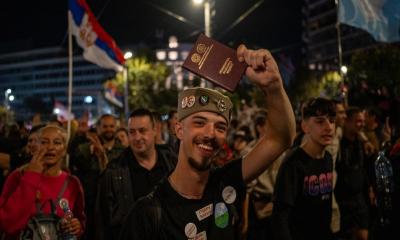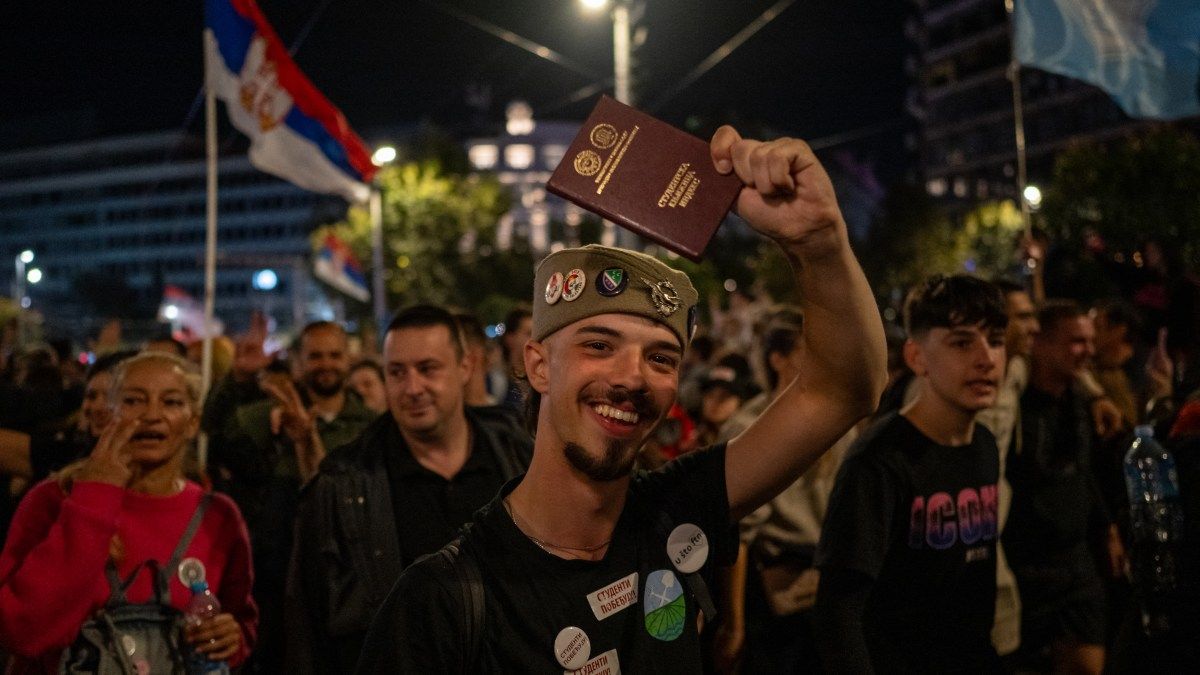
A student movement in Serbia has emerged as a serious challenger to the long rule of the Serbian Progressive Party and its leader, Aleksandar Vucic, ahead of snap elections on Sunday. Students marched into central Belgrade on October 21, 2026, after walking for several days to attend the final major rally of their campaign.
The political coalition calls itself Student List–Students Win. Teachers, professors, and experts have joined the protests over the past two years. The movement grew from public outrage over a fatal infrastructure disaster.
A concrete canopy collapsed at the renovated Novi Sad railway station on November 1, 2024. Sixteen people died in the tragedy. This triggered widespread anger over alleged corruption, construction safety, and government oversight.
Kosta Golubovic, a law student at the University of Novi Sad, said change is necessary. He stated that the state must belong to its people rather than criminals. He listed problems including treatment of the judiciary, local violence, dying villages, dubious privatisations, and a vanishing education system.
Demonstrations evolved into the largest protest movement in Serbia in years, drawing tens of thousands of participants. Vucic became prime minister in 2014 and was elected president in 2017. Opposition parties and rights watchdogs accuse Vucic and his party of voter bribery, stifling media freedom, violence against opponents, and ties with organised crime. Vucic and his allies deny these allegations, though Serbia’s rating on Transparency International’s global corruption index has worsened gradually.
Golubovic said Vucic is afraid and knows the governing party is no longer the most popular political option in the country. The student movement operates through daily assemblies known as plenums, replacing old student parliaments. Working groups handle strategy, donations, and security while universities in different cities coordinate demands.
The student movement maintains three rules: it is leaderless, demonstrations must be peaceful, and decisions are made democratically during hour-long plenary sessions. Natasa Kandic, founder of the Humanitarian Law Center in Belgrade, said that students managed to lead protests entirely without violence despite authorities mobilising criminal groups.
State-affiliated media criticised the students, and Vucic labelled the group as terrorists. However, the movement released a platform titled the Student Plan, which contains eleven points divided into three sections. Ilija Srdanovic, a cardiologist and the lead ballot holder for the Student List, explained that the platform avoids fixed deadlines because such timelines depend on knowing the full current state of affairs. Proposed measures include a special prosecutorial police unit, a law on the origin of assets, transitional justice, and the renovation of rural medical clinics.
Kandic expressed scepticism regarding the movement’s broader transformative potential, questioning its capacity to alter a political climate where convicted war criminals are celebrated.