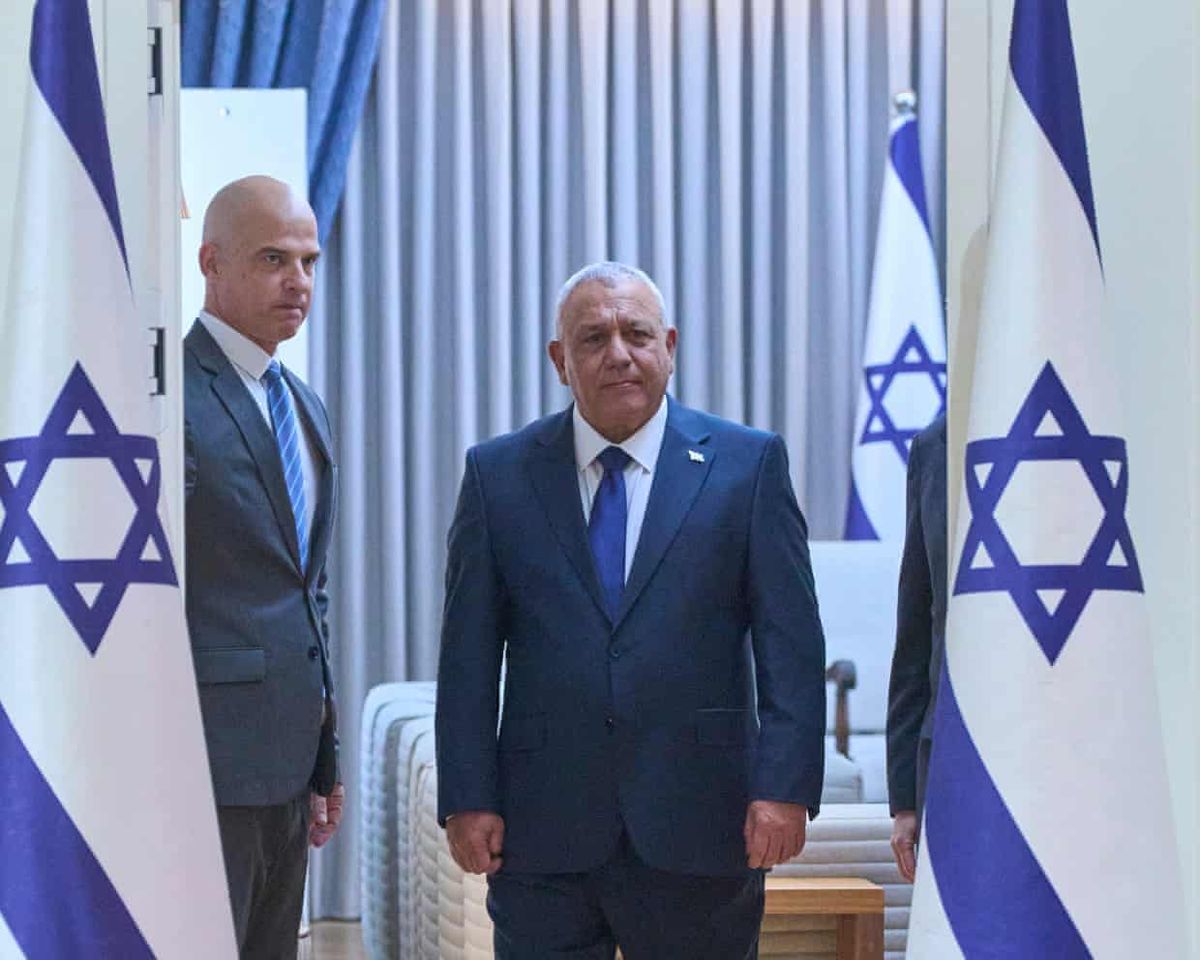
Israel’s new Knesset is sworn on Tuesday, giving opposition politicians their first chance to take control of some levers of power, even as they struggle to form a new government to unseat Benjamin Netanyahu. High on the agenda will be replacing the speaker, who wields immense influence by controlling the legislature’s agenda. The role is currently held by Amir Ohana, a close ally of Netanyahu.,Gadi Eisenkot, the former Israeli military chief who received the presidential mandate to try to form a coalition government at the weekend, may take the role himself, Israeli media reported on Monday. If Eisenkot does not take the speaker role, opposition parties have agreed that someone from his Yashar party will be the nominee.,The effort to wrest away control of the Knesset led more than 160 top former security officials to warn that rightwing activists were planning to disrupt the day with violent attacks. A forum of retired commanders, the Democracy’s Protective Wall, issued the warning in a letter to serving security chiefs.,"Actors who oppose replacing the Knesset speaker intend to go to the Knesset on the day of the swearing-in ceremony and to prevent the MKs and their family members from entering the building," the forum warned. Ma’ariv newspaper quoted the letter saying that these actors were encouraging tens of thousands of citizens to come and help them with their mission.,The opposition parties hold 67 seats in the 120-seat legislature, enough to install a consensus choice for speaker. All have described the current prime minister as a threat to the state and are keen to start moving against him, despite divides blocking the formation of a coalition. Several Jewish-Israeli opposition parties in the change bloc have sworn not to sit with Palestinian-led parties that hold over a quarter of the bloc’s seats, or even join a minority government that has their backing.,Eisenkot has vowed to broker a national emergency government, promising to achieve it with creative and unconventional political acts. He effectively warned that some election promises would have to be broken to unseat Netanyahu. "No one will be able to fulfil all the campaign promises they made, and all of us will need to compromise. That is also leadership, to know when to decide and set priorities," he said.,Palestinian citizens of Israel make up about 20% of the population and voted in unprecedented numbers this year, giving them 19 seats. Without them, the opposition bloc has fewer seats than Netanyahu’s diminished coalition. Rightwing opposition leader Avigdor Lieberman has been trying to seek an alternative path to government through an alliance with ultra-Orthodox parties, though he has campaigned hard for universal conscription.,"Has the End of Times arrived?" leading Haredi journalist Arye Erlich wrote in a column for Yedioth Ahronoth newspaper, questioning whether Lieberman could compromise on a military draft bill to sit in a coalition alongside ultra-Orthodox communities.,Even if Eisenkot does broker a coalition deal, he may delay announcing it until Netanyahu’s speaker has been replaced. Ohana could delay signing in a new government for up to a week, and some of the opposition do not want to give Netanyahu that much time to attack the pressure points of any fragile deal.,If Eisenkot cannot form a government, the mandate passes to other leaders, and if they too fail, Israel must hold elections again, leaving Netanyahu and his far-right allies in a caretaker role. Gideon Rahat, chair in political science at the Hebrew University of Jerusalem, said it would be harder for Netanyahu to destabilise an alternative government once established.