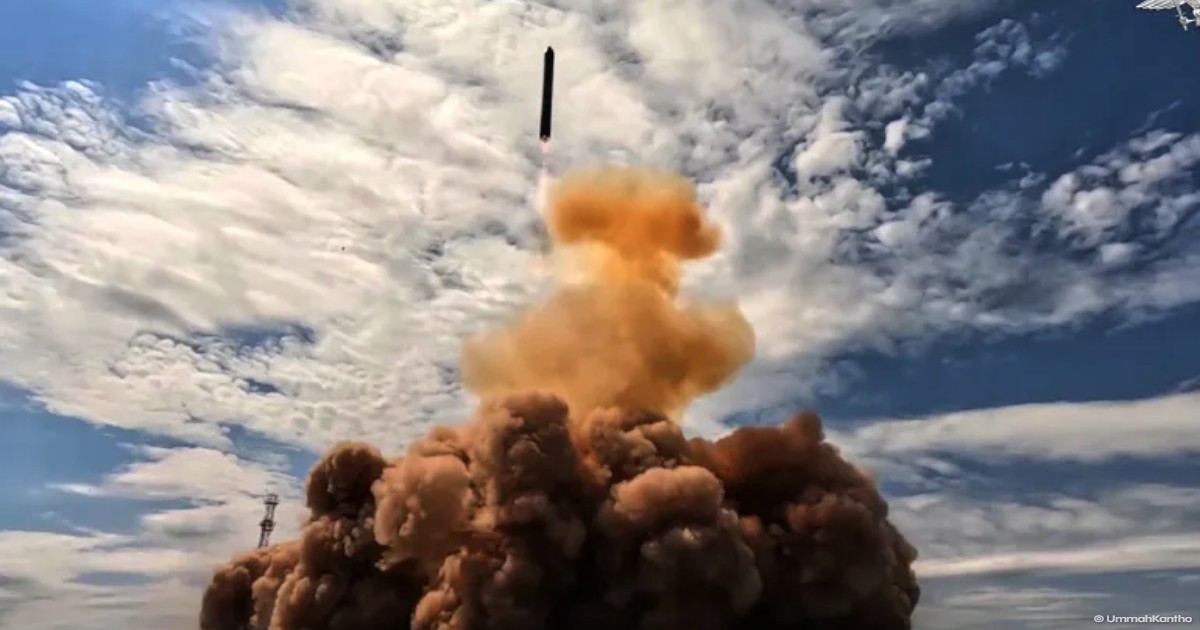
Russia has conducted a successful test launch of its next-generation intercontinental ballistic missile (ICBM), the RS-28 Sarmat, as part of a strategic push to modernize its nuclear triad. President Vladimir Putin personally observed the test on Tuesday, May 12, 2026, describing the weapon as the "most powerful in the world." The launch comes during a critical juncture in global geopolitics, following a fragile pause in the conflict between Iran and the U.S.-Israeli coalition, and amidst the ongoing stalemate in Ukraine.
Commonly referred to as "Satan II" by Western military analysts, the Sarmat is designed to replace the aging Soviet-era Voyevoda (SS-18 Satan). President Putin claimed that the missile`s operational capabilities far exceed initial Western intelligence estimates. Most notably, he asserted that the Sarmat possesses an unprecedented operational range of over 35,000 kilometers (21,750 miles), allowing it to strike targets via suborbital trajectories over both the North and South Poles. This capability would theoretically render existing and even future anti-missile defense systems obsolete, as it could bypass standard detection zones.
Technical specifications provided by Russian sources and the Center for Strategic and International Studies (CSIS) indicate that the Sarmat is a "super-heavy" missile. Standing at 35.3 meters in length and weighing 208 tons, it has a payload capacity of 10 tons. This allows the missile to carry up to 10 heavy or 16 lighter Multiple Independently Targetable Reentry Vehicles (MIRVs). Putin emphasized that the Sarmat reaches high speeds rapidly and shuts its engines earlier than traditional ICBMs, significantly reducing the window for interception during its boost phase.
Despite the recent success, the development of the Sarmat has been plagued by setbacks and technical failures. In late 2024, a failed test reportedly resulted in a catastrophic silo explosion at the Plesetsk Cosmodrome. However, Colonel General Sergei Karakayev, commander of Russia`s Strategic Missile Forces, reported that the May 2026 test achieved all mission objectives. Putin has subsequently confirmed that the first regiment armed with Sarmat missiles will enter combat service at the Uzhur unit in the Krasnoyarsk region by the end of this year.
Global reactions to the test remain cautious. While the Kremlin notified Washington and other international partners of the launch in accordance with existing protocols, the timing of the test is seen as a clear signal of nuclear posturing. Analysts suggest that by showcasing its "doomsday" arsenal, Moscow intends to deter Western nations from further escalating their military support for Kyiv. As Russia navigates a difficult fiscal path between war spending and domestic stability, the deployment of the Sarmat remains a central pillar of Putin’s strategy to project an image of an unassailable nuclear superpower.