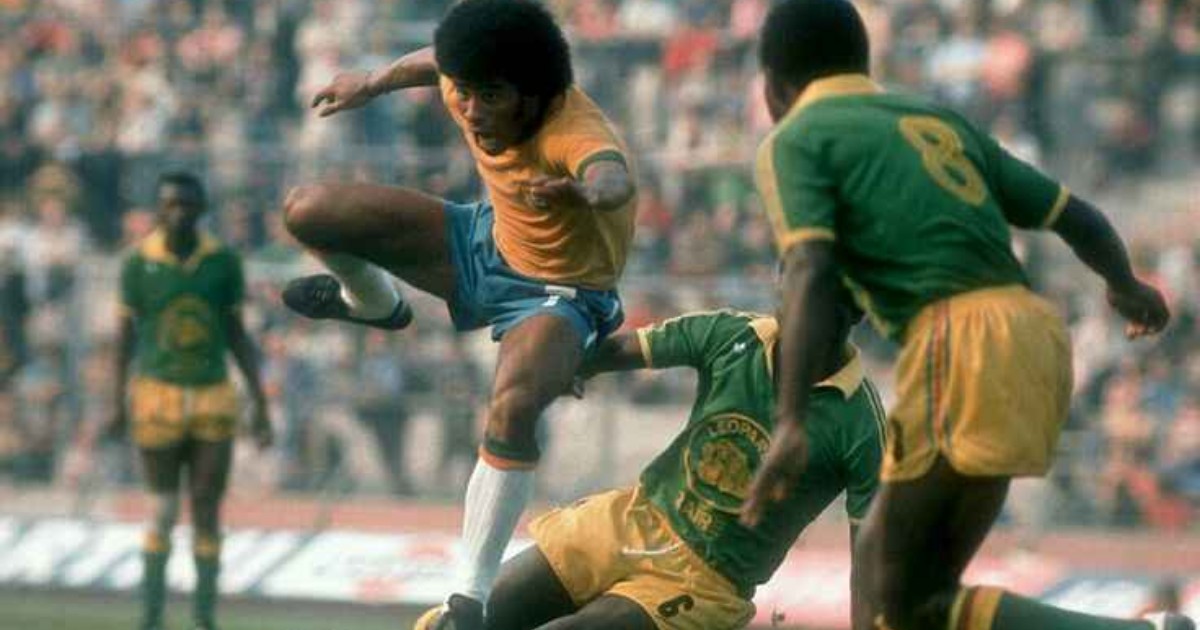
Football is often described as the beautiful game, a source of joy and unity for millions across the globe. However, history records moments when the sport has been overshadowed by the dark realities of brutal politics and authoritarian control. The participation of Zaire, now the Democratic Republic of Congo, in the 1974 World Cup in West Germany remains one of the most chilling narratives in sporting history. This was not merely a tournament for the African representatives; it was a desperate struggle for survival against the whims of a dictator.
The regime of Mobutu Sese Seko sought to use the national team as a propaganda tool to showcase the supposed glory of his leadership. The players were promised houses, cars, and significant financial rewards for their participation. These promises, however, were shattered early on. Following a 2-0 defeat to Scotland in their opening match, the players discovered that government officials had misappropriated their allocated funds. The betrayal caused immense frustration, leading the squad to initially refuse to play the subsequent match. While they were eventually forced onto the pitch under pressure from FIFA, the damage to their morale and safety was already done.
The subsequent match against Yugoslavia proved catastrophic as Zaire suffered a 9-0 defeat. The humiliation on the field, however, paled in comparison to the threats waiting in the shadows. Upon hearing of the poor performance, the regime of Mobutu Sese Seko sent government ministers and military officials to intimidate the squad. The players were issued a terrifying ultimatum: if the team lost by four or more goals against Brazil, they would face imprisonment, torture, or even death upon their return home. The safety of their families was also explicitly threatened, making the stakes of the match against the Brazilian giants far higher than points on a table.
The match against Brazil became a harrowing ordeal of nerves. By the second half, Brazil had established a 3-0 lead. Every additional goal conceded brought the Zairian players closer to a fatal reckoning. It was in this atmosphere of suffocating fear that defender Mwepu Ilunga committed one of the most iconic and misunderstood acts in football history. As Brazil’s Rivelino prepared to take a free-kick, Ilunga burst out of the defensive wall and kicked the ball away. The global audience, unaware of the internal terror the players faced, mocked the action as a sign of tactical ignorance or stupidity.
Years later, in a 2010 interview with the BBC, Ilunga finally revealed the truth behind his actions. It was not a lack of knowledge, but a deliberate act of survival. The players knew that another goal conceded could seal their doom. The dignitaries watching from the VIP boxes were indifferent to the mortal danger the players were navigating. Ilunga’s spontaneous disruption was a desperate measure to waste time, a final act of defiance by a man fighting to keep his teammates alive.
After enduring that dark chapter, the team, now competing as the Democratic Republic of Congo, has made a remarkable journey back to the global stage. Having navigated decades of political and social upheaval, they are set to compete in the 2026 World Cup hosted by the United States, Mexico, and Canada. Placed in Group K alongside Portugal, Colombia, and Uzbekistan, the team enters the tournament with a new identity. Having left the shadows of 1974 far behind, they now strive to write a legacy defined not by fear, but by the resilience of a nation finally finding its voice on the world’s biggest stage.