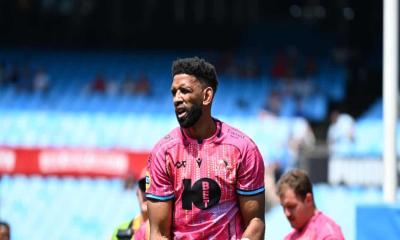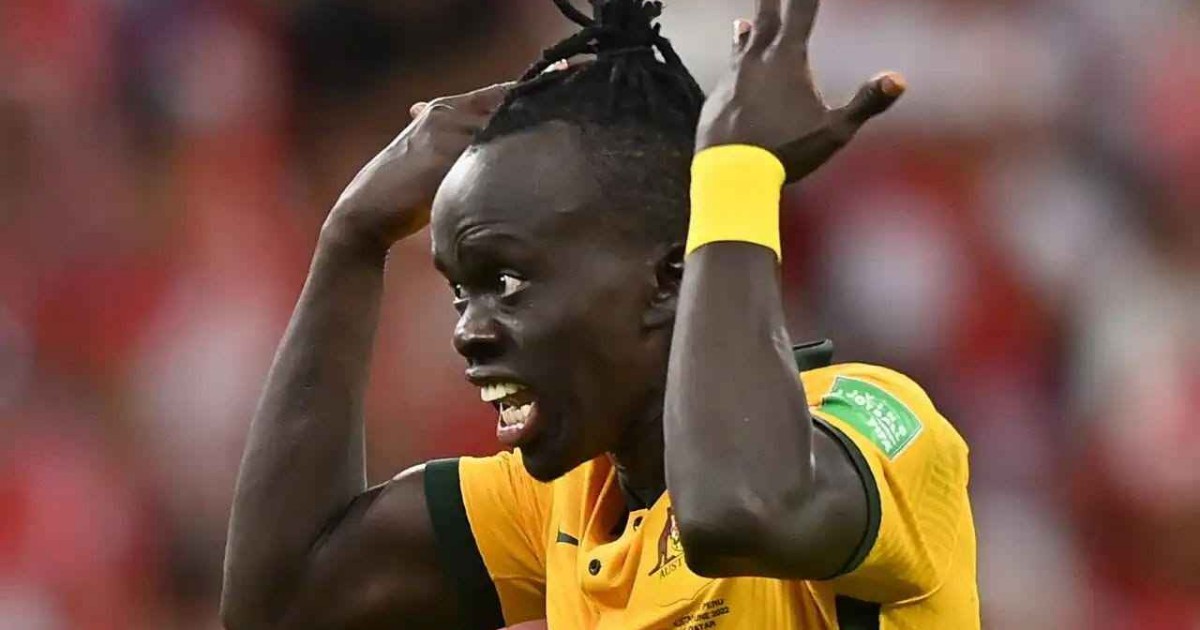
Australian national football team winger Awer Mabil, who survived the devastating South Sudanese civil war and spent his childhood in a Kenyan refugee camp, is currently delivering an inspiring performance at the 2026 FIFA World Cup, international news outlets Al Jazeera and Reuters reported on Sunday. His remarkable journey from a barbed-wire settlement to the grandest stage of global sports represents more than just a typical football success story, serving as a profound anthem of human resilience and determination. Born in the Kakuma refugee camp in Kenya, Mabil has evolved into a powerful symbol of hope for over 110 million displaced individuals worldwide who are currently facing the hardships of forced migration.
Mabil`s early years were characterized by extreme poverty, severe humanitarian deficits, and constant systemic instability. His family fled the brutal conflict in war-torn South Sudan, seeking a fragile safety in the remote and arid landscape of the Kakuma refugee camp managed by international relief agencies. In that harsh environment, his family encountered daily struggles for survival, navigating acute shortages of clean drinking water, adequate nutrition, and permanent shelter. Amid these immense challenges, football became Mabil`s ultimate escape, providing a temporary psychological relief from the surrounding traumas of displacement. Lacking access to standard sports equipment, he and his childhood friends constructed improvised footballs using old socks and plastic bags wrapped together, playing barefoot on the dusty earth.
A transformative turning point occurred when Mabil was 10 years old, as his family was granted resettlement in Australia under a specialized international humanitarian visa program. Upon arriving in the southern hemisphere nation, the family established their new home in the city of Adelaide, located in South Australia. Adjusting to a completely unfamiliar society, learning a new language, and integrating into a foreign culture presented immense challenges for a young boy who had only known life inside a refugee camp. During this difficult transition, football once again emerged as his primary tool for social integration and personal stability. His exceptional speed, technical agility, and precise dribbling skills quickly attracted the attention of professional youth coaches in the local leagues.
Following a successful professional debut with Adelaide United in the domestic A-League, Mabil secured opportunities to advance his career within competitive European club structures. He joined the prominent Danish club FC Midtjylland, where he won major domestic silverware and gained valuable experience competing in the prestigious UEFA Champions League. The dynamic winger subsequently played for various traditional clubs across Portugal, Spain, Turkey, and Switzerland, establishing himself as a highly adaptable and reliable professional on the international stage. This extensive European journey significantly enhanced his tactical maturity, allowing him to refine his skills against some of the world`s finest defensive units.
Mabil`s senior international career with the Socceroos commenced in 2018 when he earned his first official call-up to the Australian national team. He quickly established himself as an indispensable component of the team`s offensive line, contributing vital goals during major qualification campaigns. In 2022, he achieved legendary status by scoring the decisive sudden-death penalty against Peru during a high-stakes World Cup qualification playoff shootout, securing Australia`s place in the tournament finals. Reflecting on that highly emotional milestone, Mabil stated to reporters that executing that successful penalty was the most beautiful way his family could express their deepest gratitude to Australia for providing them with a safe haven.
What remains unclear is how the profound psychological trauma of childhood displacement and refugee camp memories shapes the long-term career longevity and mental well-being of professional athletes. Sports psychologists emphasize that while players like Mabil often possess extraordinary inner resilience forged in extreme adversity, navigating the intense public pressure of elite sports requires specialized support systems. This hidden internal struggle demands constant mental fortitude, as athletes frequently balance their high-profile professional obligations with the emotional weight of their past experiences.
Beyond his achievements on the football pitch, Mabil has remained deeply committed to supporting underprivileged communities and aiding vulnerable children worldwide. Together with his brother, he co-founded Barefoot to Boots, an international humanitarian foundation dedicated to improving the lives of refugees. The charitable organization actively operates across various African regions, distributing quality sports gear, essential medical supplies, and educational resources to children living in refugee settlements. Mabil personally returned to the Kakuma camp to launch this initiative, driven by a desire to ensure that the next generation of displaced youth receives the opportunities he once lacked.
As global conflicts continue to force millions of families out of their homelands, Mabil`s enduring narrative provides a timely reminder of the transformative power of sport and human perseverance. His presence on the pitch during the 2026 FIFA World Cup is not merely a display of athletic excellence, but a living testament to the fact that dreams can transcend the most imposing geopolitical borders. For football enthusiasts and human rights advocates alike, his performance stands as a powerful message that a difficult beginning does not dictate a person`s ultimate destination.