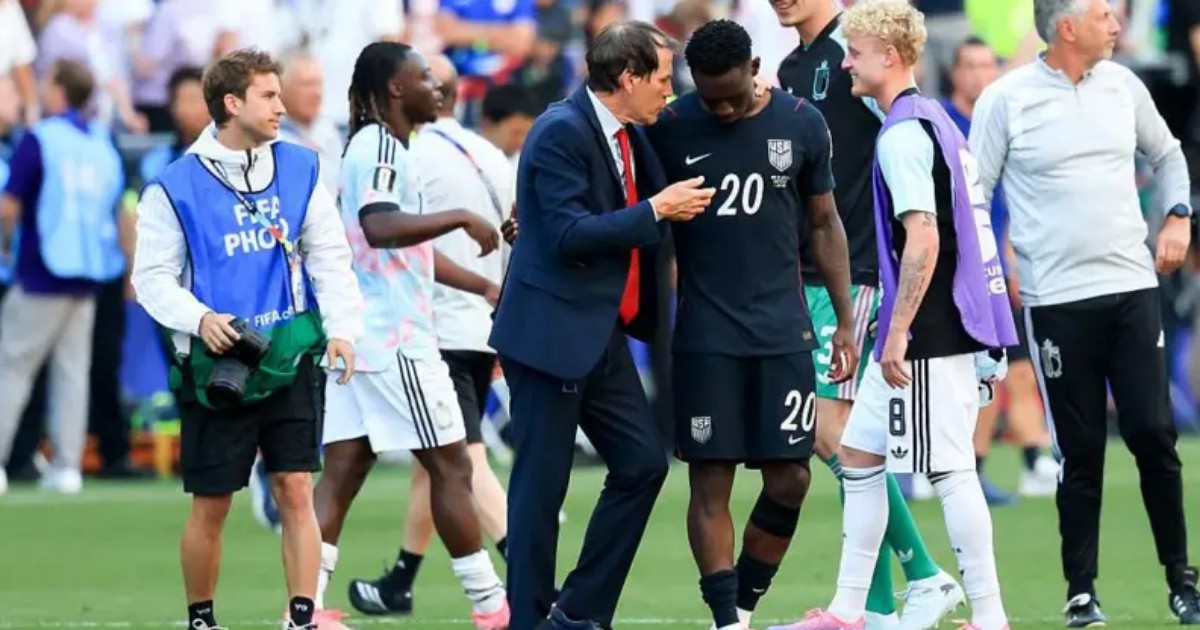
The United States were eliminated from the 2026 World Cup following a 4-1 defeat to Belgium in the round of 16 at Seattle Stadium. The co-hosts` dream of winning the tournament on home soil came to a crashing end in a match defined by defensive fragility and the culmination of a turbulent week of controversy. This exit marks the heaviest defeat for the United States since 1990.
The buildup to the encounter was dominated by FIFA’s contentious decision to suspend the automatic one-match ban for Folarin Balogun. The striker had received a straight red card in the previous round, but FIFA’s intervention allowed him to participate, drawing fierce criticism from UEFA and Belgian officials. US manager Mauricio Pochettino rejected the suggestion that the saga impacted the team’s performance, stating that his focus remained on training. He expressed disappointment regarding the political and ethical scrutiny directed toward his players.
On the pitch, the American side struggled to cope with Belgium`s clinical attacking maneuvers. Charles De Ketelaere exploited space in the box to open the scoring, and despite a brief equalizer, Belgium regained control quickly. A catastrophic error by US goalkeeper Matt Freese, who ventured well outside his area, allowed Hans Vanaken to extend the lead to 3-1, effectively extinguishing any hope of an American comeback. Romelu Lukaku added a fourth goal in stoppage time, prompting many fans to exit the stadium before the final whistle.
The defeat leaves the future of Mauricio Pochettino in doubt, as his contract is set to expire at the conclusion of the World Cup. The manager indicated that he would take time to rest and hold discussions with the federation before deciding on his next steps. There is currently no clarity on whether he will continue as the head coach for the national team.
Despite the abrupt exit, players like midfielder Tyler Adams have described the tournament as a valuable experience. While the loss was a significant setback for the squad, the increased public interest in soccer across the United States has been a notable takeaway. Fans and analysts suggest that while the team still has ground to cover to reach the level of global elite nations, the infrastructure built around the tournament may foster long-term growth for the sport in the country. The focus now shifts toward the federation`s upcoming strategic decisions and the development of the next generation of players.