Ukraine has shifted its tactical focus by launching long-range drone and missile strikes against Russia’s military space programme facilities, marking a significant escalation in the ongoing conflict, according to Al Jazeera and Reuters.
Recent operations have targeted critical space communication centers, satellite control bases, and rocket launch pads across several Russian regions, including Moscow and Plesetsk. Earlier in August, an explosion at a central Moscow restaurant killed the son-in-law of Russian Aerospace Forces chief Aleksandr Chayko, an incident that the Kremlin blamed on Ukrainian authorities, while Kyiv has chosen not to comment on the event.
The Russian Aerospace Forces utilize satellites and ground-based facilities for intelligence gathering, navigation, and the coordination of ground troops as well as missile strikes. Because these vital installations are concentrated in western Russia, they fall well within the operational range of newly developed Ukrainian long-range drones and missiles. Researchers note that key manufacturing plants and communication hubs are now vulnerable, potentially causing widespread operational disruptions across both military and civilian space programs.
In late June, Ukrainian drones struck a massive space communications center in the town of Dubna outside Moscow, damaging a large satellite antenna, hardware modular complexes, and central control consoles. Ukrainian President Volodymyr Zelenskyy referred to the operation as a long-range sanction against Russian military capabilities. Additional drone strikes have targeted smaller space communication facilities in western Russia and annexed Crimea.
Experts emphasize that these high-value communication centers are extraordinarily expensive and labor-intensive to construct, making infrastructure relocation extremely difficult because they are fixed to specific geostationary satellites. Although no satellites have drifted out of orbit, analysts indicate that these strikes have likely generated severe behind-the-scenes communication hurdles for Moscow.
In late August, a swarm of Ukrainian long-range drones traveled deep into Russia’s northwestern Arkhangelsk region to target the Plesetsk cosmodrome, Russia’s primary military spaceport and launchpad for intercontinental ballistic missiles and military satellites. Regional authorities claimed to have intercepted numerous drones, but at least two reached the vicinity of the launch pads. Reports suggest the timing was specifically calculated to strike booster rockets that had been fully fueled and prepared for takeoff.
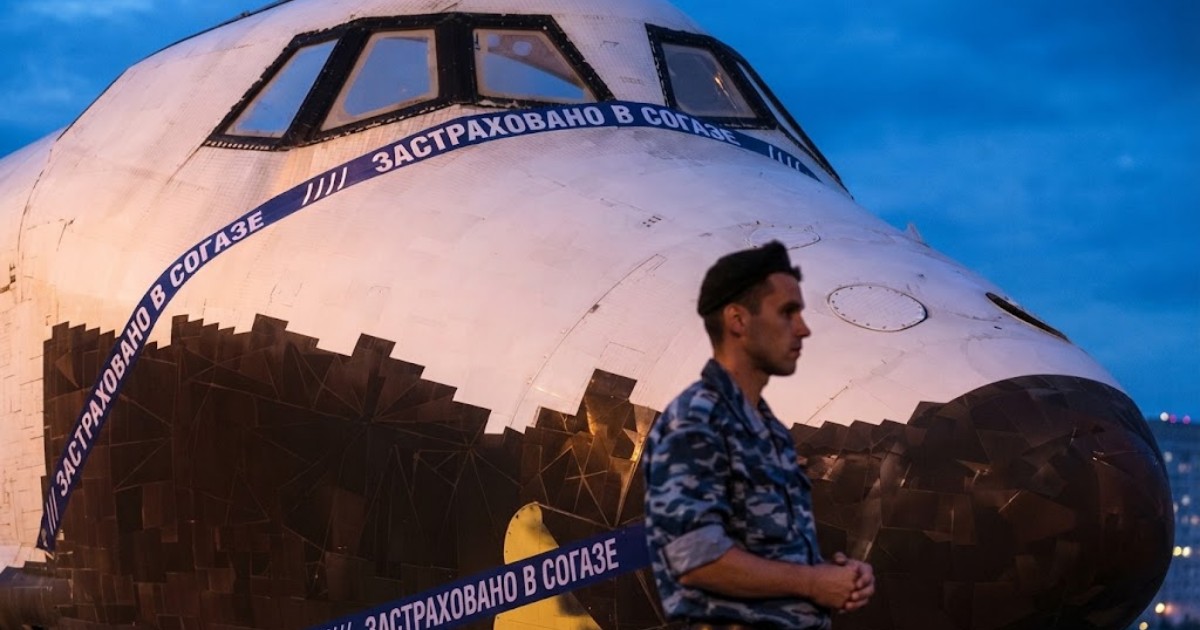
Plesetsk hosts the launch facilities for the Rassvet satellite fleet, which Moscow positions as a rival to Elon Musk’s Starlink network. Analysts estimate that damaging the launch tables or assembly complexes requires coordinated swarms of multiple drones. Furthermore, Ukrainian strikes have also reached the Progress Rocket and Space Centre in Samara on the Volga River, which serves as the sole manufacturing facility for the world-famous Soyuz booster rockets. While recent damage to the Samara facility was reportedly minor, any critical disruption to Soyuz production could severely constrain Russian launch capabilities within the year.
Historically, Soviet and Russian authorities emphasized the peaceful exploration of space while maintaining a robust underlying military infrastructure. By bringing the conflict directly to launchpads and space communications networks, Ukraine has disrupted the traditional separation between terrestrial warfare and orbital operations.