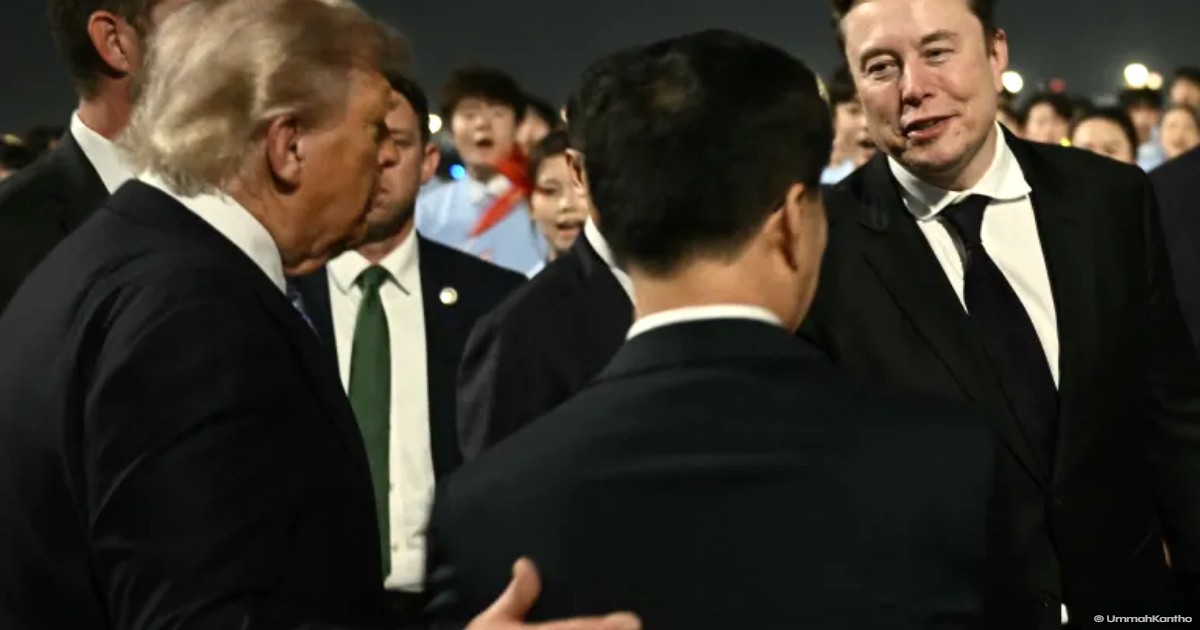
When President Donald Trump stepped onto the red carpet in Beijing on Wednesday, he wasn’t just representing the US government; he was leading a parade of America’s most powerful corporate titans. Introduced to President Xi Jinping as "distinguished representatives from the American business community," more than a dozen CEOs have joined this state visit to influence the future of global trade. From tech visionaries like Elon Musk to banking heavyweights like David Solomon, the delegation represents hundreds of billions of dollars in market value—and they all have a lot to gain, or lose, from this summit.
The Power Players in the Room
The delegation is a "who’s who" of the American tech and financial sectors. Here are the key figures currently in Beijing:
- Elon Musk (Tesla, SpaceX, X): Musk is arguably the most critical figure here. With Tesla’s heavy reliance on Chinese manufacturing and the massive growth of the local EV market, he is pushing for the approval of "Full Self-Driving" (FSD) technology and securing supply chains for battery components.
- Tim Cook (Apple): For Cook, the stakes are existential. With Trump’s previous tariffs exceeding 100%, Apple’s margins are under intense pressure. He is in Beijing to advocate for a "tariff truce" and to ensure that Apple’s manufacturing hub remains stable.
- Jensen Huang (Nvidia): As the AI boom accelerates, Huang is navigating a minefield of US export restrictions. He wants to maintain Nvidia’s dominance in the Chinese AI chip market while ensuring Beijing doesn’t retaliate with its own bans.
- David Solomon (Goldman Sachs): Representing the financial sector, Solomon is seeking broader access to China’s vast financial markets, which have seen increased regulation in recent years.
What is in it for them?
The primary motivator is market access. China remains the world’s most significant consumer market and manufacturing engine. With the Iran war disrupting global oil flows and causing supply chain shocks, US companies are desperate for a stable relationship with Beijing. Specifically, they are looking to resolve the export of rare earth metals, which are essential for everything from smartphones to electric missiles.
Furthermore, these CEOs are acting as a bridge for Trump’s political goals. With the US midterm elections looming, Trump needs a high-profile "economic win" to show voters he can tame inflation and secure jobs. By bringing these CEOs along, he is signaling that "America is back to doing business."
For the CEOs, a successful summit means lower tariffs, fewer regulatory hurdles, and a more predictable environment for their global empires. However, as the user mentioned regarding the Taiwan tensions, any business deals signed this week could be held hostage by the looming threat of geopolitical conflict. The message from the American business community is clear: they highly value the Chinese market and are willing to stand behind Trump to secure a slice of it, provided the political winds don`t blow the house down.
With the US midterms approaching and 100% tariffs on the line, do you think these CEOs are more interested in long-term trade stability or just a short-term stock market rally?