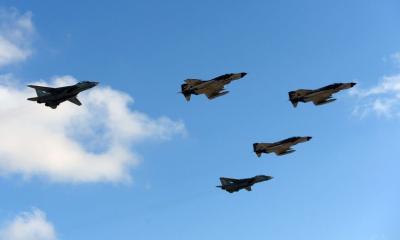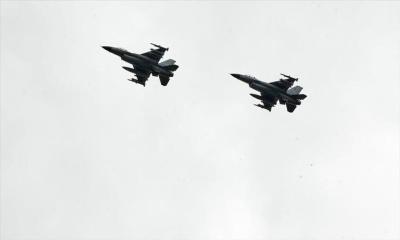
A clandestine Israeli military outpost operating deep within the Iraqi desert has been exposed, raising serious questions about regional security and national sovereignty during the 2026 war. Reports from U.S. media, specifically The Wall Street Journal, indicate that the facility was established shortly before the onset of the military conflict between Israel and Iran. The base reportedly served as a critical logistics hub and a staging ground for special forces, operating under the radar of Iraqi authorities but with the alleged knowledge of Washington.
The installation was strategically placed near the Saudi-Iraqi border to support Israel’s air campaign against Iranian targets. Analysts utilizing open-source intelligence identified the suspected location through satellite imagery. Beyond its logistics role, the base housed search-and-rescue teams intended to recover Israeli pilots in the event of aircraft being downed over hostile territory. The existence of such a base inside an Arab nation that officially maintains no ties with Israel underscores the complex and often hidden layers of Middle Eastern military cooperation during times of high-intensity conflict.
The discovery process was marked by violence. Lieutenant-General Qais al-Muhammadawi, Iraq’s deputy commander of joint operations, confirmed that reports of unusual movement in the Najaf desert led to the deployment of three Iraqi regiments in early March. As these forces approached to investigate, they came under heavy fire from the air. The resulting skirmish led to the death of one Iraqi fighter and injuries to several others. By the time reinforcements arrived, the site had been abandoned. Military observers suggest that the Israeli units utilized a highly mobile strategy, never remaining in one location for more than 48 hours to evade detection by local patrols or shepherds.
Baghdad`s response to these revelations has been characterized by deep internal friction. While some senior security officials have officially denied the presence of any foreign troops, others within the political sphere tell a different story. A lawmaker from the Badr Organization recently claimed that a joint U.S.-Israeli camp has been operational in western Iraq for some time. Furthermore, an official within the outgoing Prime Minister Mohammed Shia al-Sudani’s office characterized the incident as an "American deception," suggesting that the U.S. provided cover for Israeli operations under the guise of standard coalition activities. This has placed the Iraqi government in an incredibly precarious position as it tries to navigate its relationships with both Washington and Tehran.
Tehran has reacted with expected alarm and skepticism toward Baghdad’s denials. Iran’s Ministry of Foreign Affairs spokesperson, Esmaeil Baghaei, stated that the possibility of an Israeli presence in Iraq would be raised formally with the Iraqi government. Iran views such outposts as a direct violation of regional security agreements and a calculated move to breach its "red lines." Meanwhile, Israel remains silent, following its long-standing policy of ambiguity regarding clandestine overseas operations. However, the exposure of this base suggests that Iraqi territory has become a silent battlefield, further complicating the fragile stability of a region already reeling from the broader 2026 conflict. The incident serves as a stark reminder of the erosion of sovereignty in nations caught between competing global and regional powers.