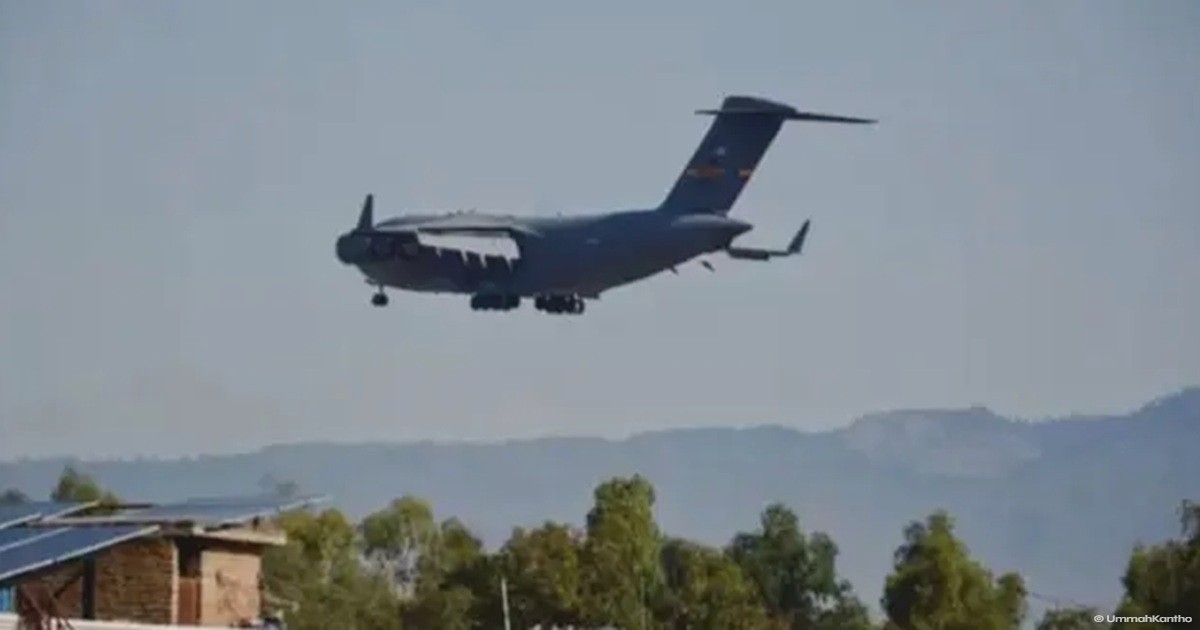
A controversial report published by CBS News has sparked a fresh diplomatic row, alleging that Pakistan allowed Iranian military aircraft to seek refuge at its airbases to avoid potential American strikes. The report claims that during the height of recent tensions between Washington and Tehran, Pakistan provided a safe haven for Iran`s strategic aviation assets. However, the Pakistani government has swiftly and categorically rejected these allegations, labeling the report as misleading and designed to create unnecessary sensation in an already volatile region.
According to CBS News, which cited several US officials familiar with national security matters, Iran moved multiple aircraft to Pakistan`s Nur Khan Airbase shortly after a brief ceasefire was established. Nur Khan, located near Rawalpindi, is one of Pakistan`s most strategically significant military installations. The officials claimed that among the relocated assets was an Iranian Air Force RC-130, a specialized aircraft utilized for signals intelligence and high-level surveillance. The US intelligence community reportedly viewed this move as an attempt by Tehran to preserve its remaining military capabilities from a direct confrontation with American forces.
The Pakistani Ministry of Foreign Affairs issued a strong rebuttal on Tuesday, clarifying the nature of the flights mentioned in the report. While Islamabad admitted that Iranian aircraft had indeed landed in Pakistan, they insisted that these flights were part of the ongoing diplomatic mediation efforts. Pakistan has been positioning itself as a neutral facilitator between the US and Iran to de-escalate the conflict. The ministry stated that during the negotiation phase, aircraft from both the United States and Iran frequently visited Islamabad to transport diplomatic delegations, security details, and administrative staff.
A senior Pakistani official further argued that hidding military aircraft at Nur Khan Airbase is practically impossible due to its location near densely populated residential areas. The official maintained that such a large-scale military movement could not remain secret for long. From Islamabad’s perspective, the CBS report undermines Pakistan`s role as a responsible mediator. The country is currently engaged in a delicate balancing act, maintaining its long-standing military and economic ties with China while attempting to stabilize relations with both Washington and Tehran.
The report also extended its claims to Afghanistan, suggesting that Iran had dispatched some civilian aircraft to Kabul and Herat for similar protection. According to a civilian aviation official cited by CBS, a Mahan Air flight originally destined for Kabul was rerouted to Herat for security reasons. However, Zabihullah Mujahid, the chief spokesperson for the Taliban-led government, has denied the presence of any Iranian military assets on Afghan soil. This regional dimension adds a new layer of complexity to the narrative, suggesting a broader Iranian strategy to diversify the locations of its critical infrastructure.
Amidst these allegations, the future of the US-Iran ceasefire remains grim. Reports suggest that President Donald Trump has rejected a recent peace proposal from Tehran, which included demands for war reparations and the recognition of Iranian sovereignty over the Strait of Hormuz. The failure of these diplomatic talks has only intensified the scrutiny on regional players like Pakistan. While the Pentagon continues to monitor the movement of Iranian assets, Islamabad insists that its primary goal is to foster dialogue and prevent a full-scale regional war. The situation remains fluid, with all parties watching closely to see if diplomacy can survive the latest wave of mutual suspicion.