The mounting political uncertainty in London has begun to take a tangible toll on the nation`s financial health. On Tuesday morning, following the opening of the bond markets at 08:00 BST, the effective interest rate on 10-year government borrowing rose above the 5% threshold. This sharp increase reflects a growing lack of confidence among international investors as Sir Keir Starmer’s grip on the premiership appears increasingly fragile. In the world of high finance, certainty is a valuable commodity, and the current ambiguity surrounding the future of the British government is proving to be expensive.
While borrowing costs have been rising globally due to inflation concerns—largely driven by spiked oil prices resulting from the Iran conflict—the United Kingdom is emerging as an outlier among advanced economies. The UK’s borrowing costs are notably higher than its peers, a gap that market analysts directly attribute to the localized leadership crisis. Investors demand a premium for risk, and when the fate of a country`s economic policy is tied to a Prime Minister whose own future is in doubt, that premium inevitably rises. The 5% mark is a significant psychological and economic barrier that signals deep-seated market anxiety.
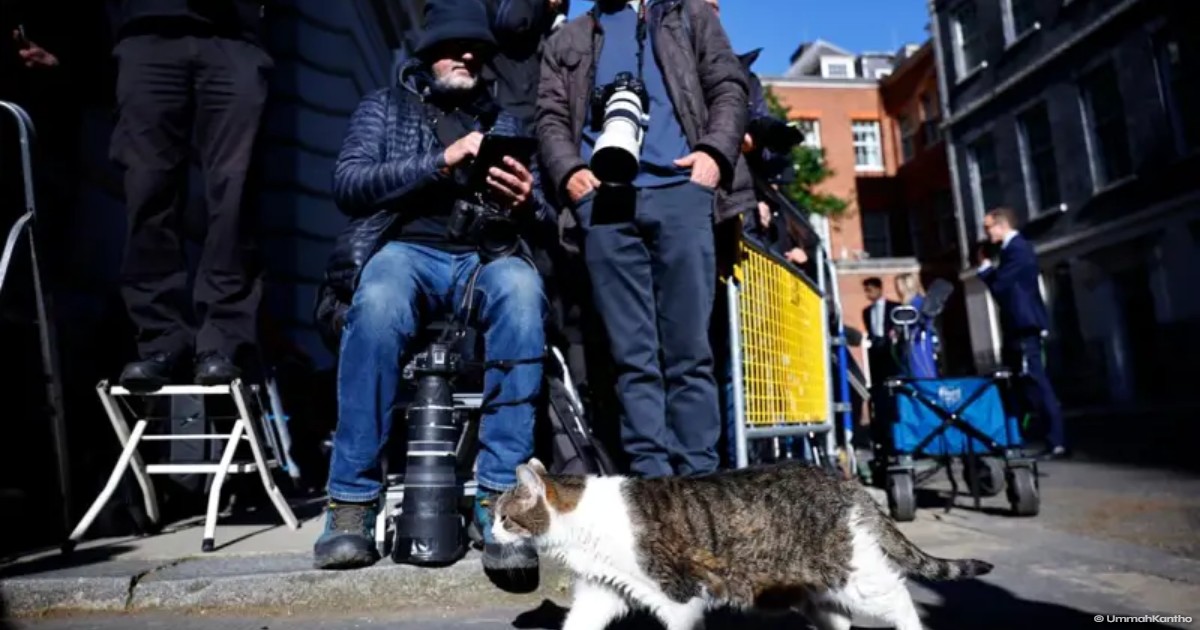
The political drama at Westminster reached a fever pitch this afternoon as the Cabinet gathered for a high-stakes meeting at No. 10 Downing Street. Deputy Prime Minister David Lammy was seen arriving, smiling and waving at the press, though he pointedly ignored questions regarding whether he would ask the Prime Minister to step down. Following him was Attorney General Lord Richard Hermer. This gathering of senior ministers comes at a time when the Cabinet is reportedly split on the most fundamental of political questions: whether they still believe in the man at the head of the table.
Adding a layer of historical irony to the situation is the impending State Opening of Parliament scheduled for Wednesday. The streets of Westminster are being swept and cordoned off as the capital prepares for King Charles III to deliver the government`s plans for the coming year. Traditionally, the monarch reads out a list of bills framed by "My government." However, as political editor Chris Mason noted, Starmer cannot be certain of his own political survival by lunchtime today, let alone the duration of the bills to be read by the King tomorrow. The absurdity of a Prime Minister potentially presiding over an opening for a government he might no longer lead is a stark reflection of the current instability.
For ordinary Britons, these market fluctuations are more than just numbers on a screen; they translate into higher mortgage rates and increased national debt servicing costs. What follows in the next few hours will be critical. If Starmer fails to demonstrate unity within his Cabinet, the bond markets may react with further volatility. The intersection of global inflationary pressures and domestic political turmoil has created a perfect storm for the UK economy. As the Cabinet meeting progresses behind closed doors, the financial world waits for a signal of stability that has yet to arrive from Downing Street.