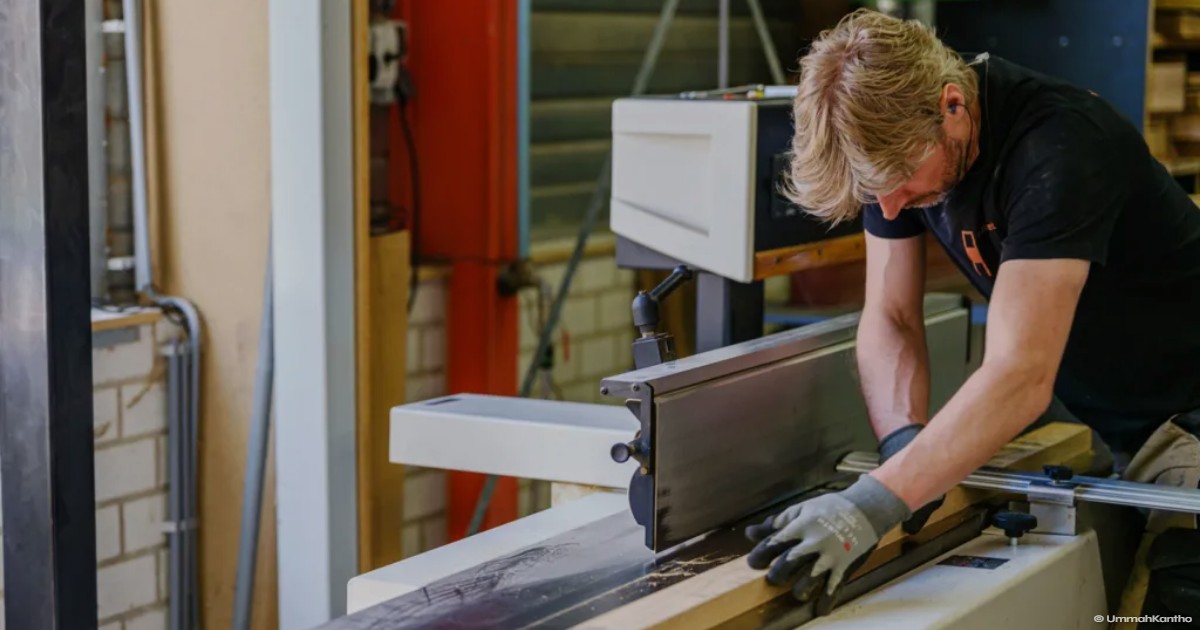
The traditional image of a woodworking shop—dimly lit, filled with deafening noise, and thick with sawdust—is rapidly fading into history. Thanks to significant technological advancements in recent decades, modern workshops are becoming cleaner, safer, and more efficient environments for artisans. Ryan Saunders, a seasoned furniture maker and instructor, notes that the industry has seen a paradigm shift as woodworkers have gained a deeper understanding of respiratory health. Today, high-pressure extractors and medical-grade filters are no longer luxuries but essential tools for protecting a craftsman`s lungs.
A major driver of this change is the focus on smart dust collection. Chris de Jongh, an engineer and woodworker, launched BlastGate.com in 2024 to address a common inefficiency in the industry. He observed that many shops left their dust extraction systems running continuously, wasting energy and wearing down equipment. His automated device ensures that extraction only occurs when a specific machine is in use. For small businesses, like a Dutch kitchen manufacturer mentioned by de Jongh, the energy savings alone allowed the system to pay for itself within just six months.
Safety has also seen a revolutionary leap through the implementation of sensory technology. The American company SawStop has gained international fame for its unique braking system. The saw blade carries a low-voltage electrical signal that can distinguish between the electrical conductivity of wood and human skin. If a finger comes into contact with the spinning blade, it triggers an aluminum brake that stops the blade in less than five milliseconds. This speed is critical, often turning a potentially life-altering amputation into nothing more than a minor nick that requires a simple bandage.
Meanwhile, German engineering is taking safety a step further by integrating artificial intelligence. The company Altendorf has introduced its Hand Guard technology, which utilizes high-speed cameras and AI to monitor the area around the blade. This system detects dangerous hand movements before contact even occurs, providing an additional layer of proactive protection. As the AI continues to collect data, these machines are becoming better at distinguishing between legitimate dangers and false alarms, ensuring that safety does not come at the cost of unnecessary downtime.
The digital transformation of woodworking extends beyond safety into the realm of precision manufacturing. Non-profit workshops like Pow in West London are seeing an influx of makers who utilize computer numerical control (CNC) routers, laser cutters, and 3D printers. While CNC technology has existed for decades, the software has recently become much more intuitive and user-friendly. Automatic tool changers and simplified digital interfaces have broadened the range of people who can access these high-precision tools, allowing hobbyists and professionals alike to create complex designs with ease.
If a woodworker from the 19th century were to step into a 21st-century shop, the core principles of the craft would remain recognizable, but the execution would seem like science fiction. While the cost of high-tech equipment remains a barrier for some, the increasing affordability and compact nature of these tools are democratizing the industry. From protecting health with AI-driven sensors to creating personalized tools with 3D printers, technology is ensuring that the ancient art of woodworking remains a viable and thriving profession in the digital age.