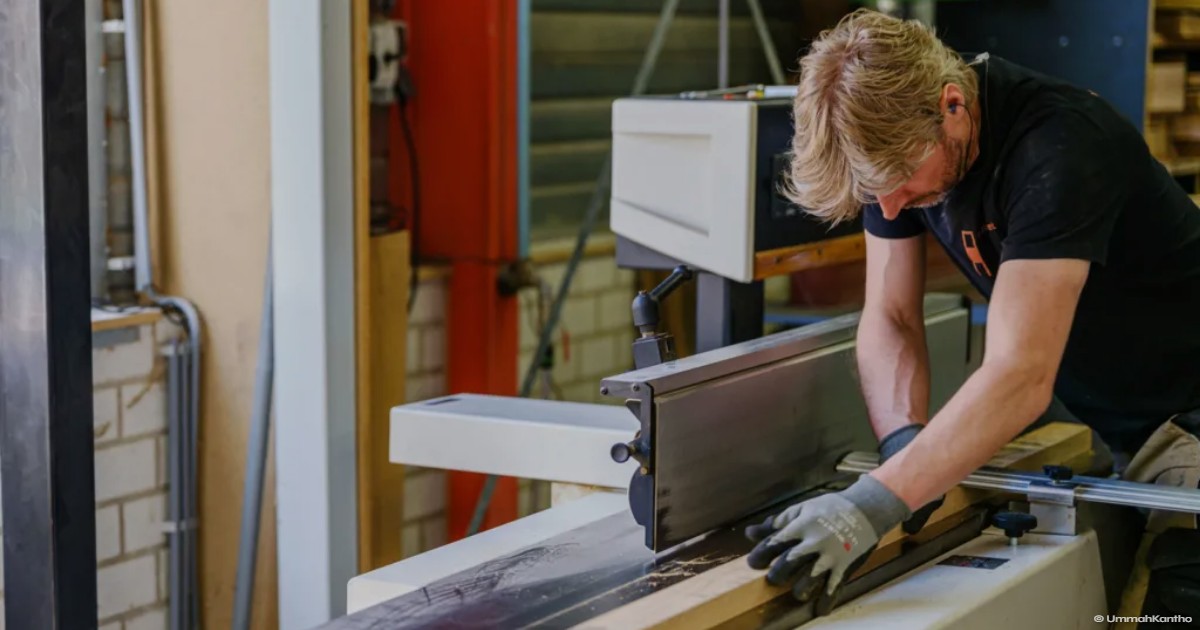
The traditional image of a woodworking shop—a space filled with thick clouds of sawdust and the deafening roar of manual saws—is rapidly fading into history. Today, technology is bringing a level of cleanliness and safety to the craft that was once unimaginable. Furniture maker and instructor Ryan Saunders notes that modern workshops are becoming nearly dust-free. This transformation is driven by a deeper understanding of respiratory health and the development of high-pressure extractors and high-quality filters. In 2024, engineer Chris de Jongh launched BlastGate.com, introducing a device that ensures dust extraction occurs only when a machine is active. For a Dutch kitchen manufacturer, this system paid for itself within just six months through energy savings and increased efficiency.
Safety has also seen a revolutionary upgrade through digital integration. Table saws, once the most dangerous tools in a shop, are now being equipped with life-saving technology. The U.S. company SawStop has developed a mechanism that uses an electrical signal to detect human skin contact with the blade. Upon contact, the blade stops and drops below the table in less than five milliseconds. As Saunders puts it, this technology represents the difference between needing a simple adhesive bandage and undergoing major plastic surgery. Similarly, the German firm Altendorf has introduced "Hand Guard" technology, which employs cameras and AI to monitor the proximity of a worker’s hand, stopping the blade before contact is even made.
If a 19th-century woodworker were to step into a 2026 workshop, they would find the core principles familiar but the execution alien. While hammers and chisels remain, digital tools like laser cutters and 3D printers have become staples. Many modern woodworkers use 3D printing to create customized jigs and tools that fit their specific ergonomic needs. Computer Numerical Control (CNC) routers have also become more accessible. Although the technology has existed for decades, the software has recently become significantly more user-friendly, featuring automatic tool changes that allow a broader range of people to operate these machines. Companies like Shaper are even producing handheld CNC routers that allow for digital precision without the need for a stationary industrial machine.
Artificial Intelligence is also making its mark on the industry, particularly in design and material management. Designers now use generative AI to explore countless iterations of a furniture piece before a single piece of wood is cut. Mark Vasilkov, a professional propmaker in London, utilizes AI image generators like Stable Diffusion to provide rapid design options for film departments. Meanwhile, the startup Automated Architecture (AUAR) has developed a "microfactory"—a robot housed within a shipping container that can be delivered directly to a building site. This robot is capable of building all the timber panels required for a standard home in just a single day, streamlining the construction process without replacing the essential oversight of skilled carpenters.
Despite the digital surge, a balanced approach remains vital. Experts like Saunders warn students about the risks of over-reliance on AI without verifying how specific materials behave in the real world. While AI can quickly pull up building regulations or generate design concepts, it cannot replace the tactile feedback of working with timber. Many professionals still find that too much digital integration can lead to a loss of "human interaction" with the material. Nevertheless, the integration of AI, robotics, and advanced safety features is ensuring that woodworking remains a viable, healthy, and highly sophisticated profession for the next generation of artisans. The blend of traditional craft and cutting-edge tech is building a future where creativity is limited only by the imagination, not the environment.