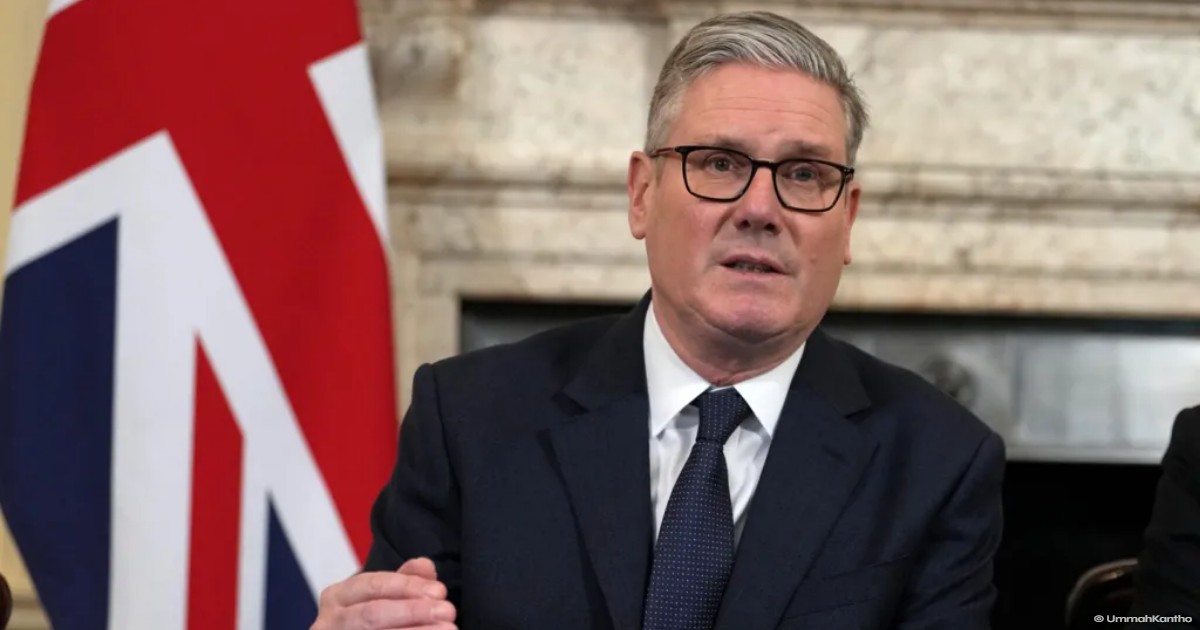
The corridors of 10 Downing Street are currently echoing with the whispers of a government in transition, or perhaps, in collapse. Prime Minister Sir Keir Starmer finds himself at the center of a political firestorm that threatens to extinguish his premiership. His cabinet is currently grappling with the most fundamental question any administration can face: whether the leader at the top still possesses the authority and mandate to govern. According to reports from the BBC and Reuters, the top tier of the British government is no longer a unified front but a house divided into factions with irreconcilable views on the Prime Minister`s future.
Tuesday morning`s cabinet meeting serves as a critical junction for Starmer. It follows a night of intense, private deliberations where ministers reportedly confronted the Prime Minister with a spectrum of advice. Some loyalists urged him to dig in and fight for his vision, while others, more pragmatic or perhaps more disillusioned, suggested it was time to establish a formal timetable for his departure. The split in the cabinet is a symptom of a much deeper malaise within the Labour Party, where backbench MPs are increasingly going public with their loss of confidence. The frequency of these public denouncements suggests that the internal discipline of the party has reached a breaking point.
The catalyst for this latest wave of discontent appears to be Starmer`s much-anticipated speech delivered on Monday. Intended to steady the ship and outline a path forward for a country struggling with economic and social pressures, the address seems to have had the opposite effect. One Labour MP described the performance in brutal terms, calling it fundamentally inadequate for the scale of the challenges Britain faces. There is a growing sense within the party that Starmer has become a political liability, particularly as they look over their shoulders at the rising popularity of Reform UK among traditional voters.
Despite the mounting pressure, Starmer`s inner circle remains adamant that he should stay the course. Their argument is built on the premise of stability. With an economy under strain due to international tensions involving Iran and subsequent market volatility in gilt movements, they argue that a protracted leadership contest would be a gift to political opponents and a disaster for national stability. They point out that any successor chosen now would lack a direct general election mandate, potentially leading to an even more fragile government. Starmer himself is reportedly resolute, fearing that a leadership vacuum would only deepen the party`s current woes.
However, the reality on the ground is increasingly grim for the Prime Minister. According to Reuters, even those considered close allies of Starmer acknowledge that the current arithmetic of support is bleak. The atmosphere within the Labour movement has turned toxic, with rival camps already briefing against one another in anticipation of a vacancy at the top. This blame game is a classic sign of a government in its twilight phase, where the focus shifts from policy and governance to survival and succession. The "bad blood" mentioned by observers suggests that the wounds being opened now will take a long time to heal, regardless of who leads the party next.
The economic context cannot be ignored in this analysis. Britain`s financial markets are sensitive to political instability, and the current uncertainty in Downing Street is not helping. Investors are watching closely as the Prime Minister attempts to navigate a path between his cabinet`s demands and the public`s expectations. The struggle is not just about Starmer`s personal style or leadership quality; it is about the direction of a country that feels increasingly adrift in a turbulent global economy. The pressure from the "gilt movements" mentioned by insiders indicates that the stakes are not just political but profoundly financial.
As Chris Mason of the BBC aptly noted, a cabinet split of this magnitude is historically unsustainable. In the British parliamentary system, the Prime Minister governs by the consent of their cabinet and their party. Once that consent is withdrawn or even publicly questioned, the authority to command the House of Commons evaporates. The coming days will determine whether Starmer can perform a political miracle and reunite his frontbench, or if he will become another entry in the list of Prime Ministers whose tenures were cut short by internal party revolts. The momentum, for now, seems to be moving away from the Prime Minister.
What follows will be a period of intense scrutiny for the Labour Party. If Starmer stays, he will likely be a diminished figure, forced to make concessions to various factions to remain in power. If he goes, the party faces a hurried search for a leader who can bridge the gap between its traditional base and the modern electorate. As the sun rises over Westminster this Tuesday, the stakes could not be higher. The cabinet meeting will not just be a discussion on policy; it will be a verdict on the future of Sir Keir Starmer and, by extension, the current trajectory of the British government.