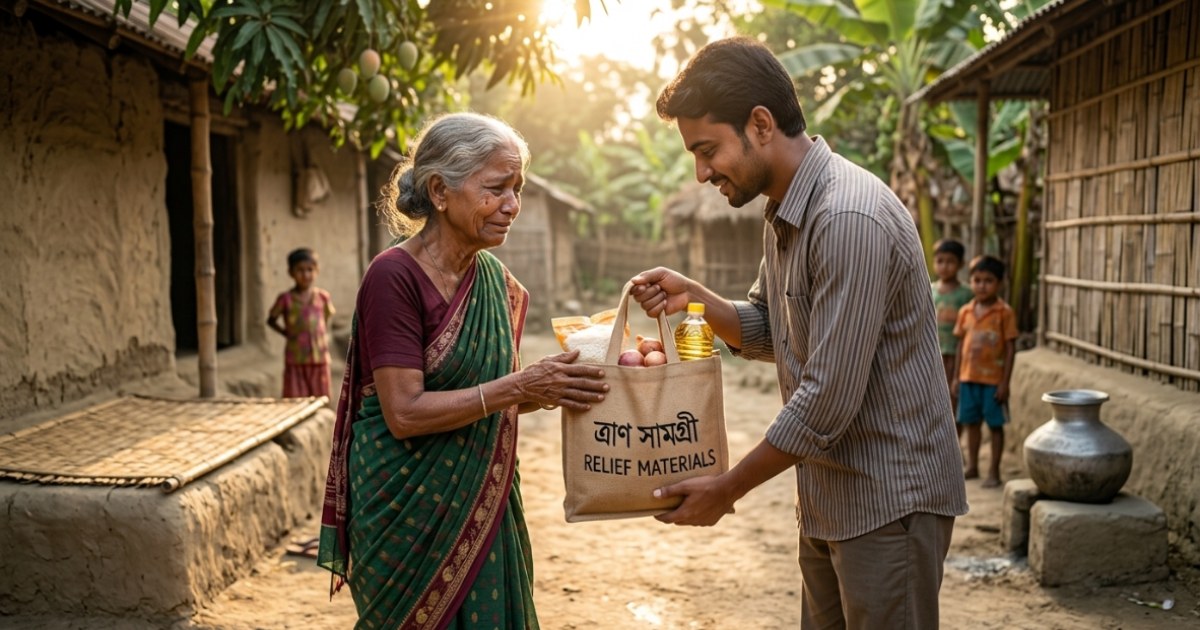
Islam is not merely a set of rituals but a comprehensive way of life that places profound emphasis on social justice, compassion, and humanitarian service. In the Islamic tradition, supporting the helpless and the needy is considered one of the highest forms of worship. For a believer, donating to the poor—commonly referred to as Sadaqah or Zakat—is not just a charitable act but a spiritual investment for the hereafter. The Holy Quran repeatedly commands believers to spend from their wealth for the sake of Allah, highlighting that true righteousness lies in helping those who are less fortunate.
According to the divine teachings of the Quran, the reward for those who give is multiplied many times over. Allah states that the example of those who spend their wealth in the way of Allah is like a seed of grain which grows seven ears; in each ear is a hundred grains (Surah Al-Baqarah, 2:261). This verse provides a clear understanding that charity does not deplete wealth but rather purifies it and brings divine blessings. Islamic scholars emphasize that by helping the helpless, a person shields themselves from various worldly calamities and attains a state of spiritual purity that removes arrogance and greed from the heart.
The Prophetic traditions further elevate the status of those who dedicate themselves to the service of the needy. The Prophet Muhammad (PBUH) stated that wealth does not decrease by giving in charity, and Allah increases the honor of a person who forgives and helps others (Sahih Muslim, 2588). Through these teachings, the Prophet (PBUH) encouraged the Muslim Ummah to be proactive in addressing social inequalities. Specifically, caring for widows, orphans, and the destitute is likened to the reward of striving in the cause of Allah. A generous person is described as being close to Allah, close to Paradise, and close to the people, while remaining far from the fire of Hell.
One of the most significant spiritual benefits of helping the helpless is the protection it offers on the Day of Judgment. It is mentioned in the Hadith that charity extinguishes sin as water extinguishes fire (Tirmidhi, 2616). On that difficult day, every person will be under the shade of their own charity. This concept provides immense psychological and spiritual relief to believers, knowing that their small acts of kindness in this world will serve as a shield in the next. Moreover, the internal peace and tranquility—often called `Sakina`—that comes from seeing the joy on a recipient`s face is a unique worldly reward for the donor.
The Islamic system of giving also plays a crucial role in maintaining social balance and harmony. When wealth circulates through Zakat and voluntary Sadaqah, it prevents the concentration of resources in the hands of a few and empowers the marginalized sections of society. Islam teaches that the upper hand is better than the lower hand, signifying that the giver holds a position of honor and responsibility (Sahih Al-Bukhari, 1429). In today`s world, where economic disparities are growing, following these Islamic principles is more important than ever. Ultimately, helping the helpless is a path to divine pleasure, ensuring success in both this life and the eternal life to come.