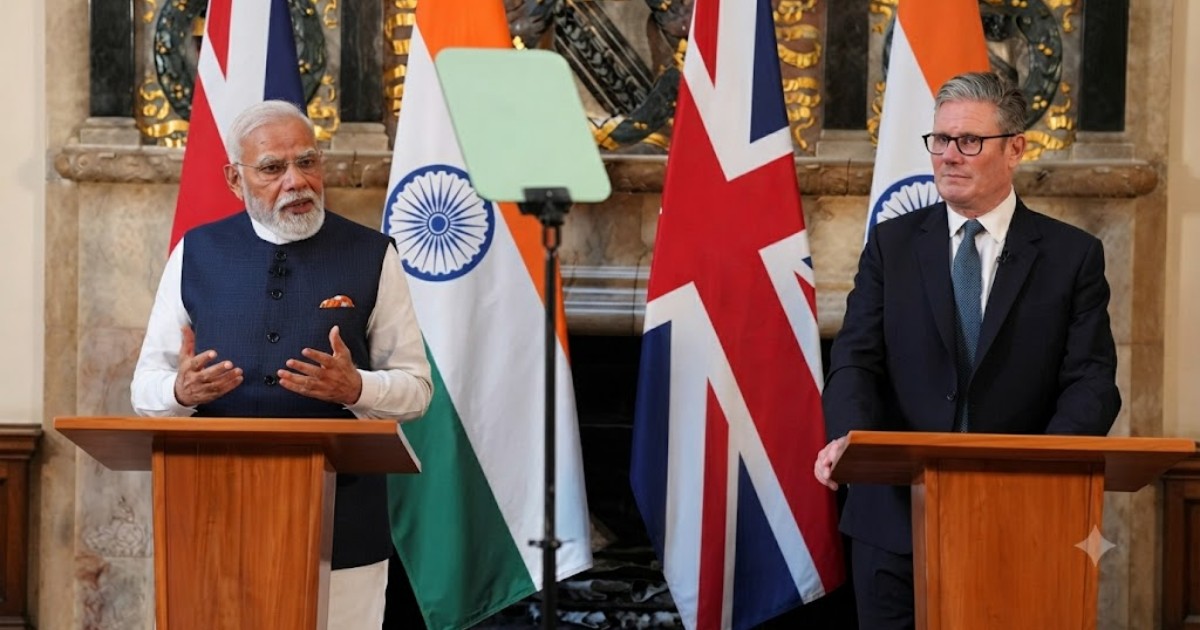
The Comprehensive Economic and Trade Agreement (CETA) between India and the United Kingdom officially came into effect on Wednesday, marking a significant milestone in bilateral economic relations. This deal significantly reduces tariffs on thousands of goods and facilitates expanded market access for service-oriented firms in both nations, according to Reuters and Al Jazeera. The agreement is widely expected to strengthen the economic linkages between the two democracies, fostering deeper cooperation in technology, innovation, and professional services.
Under the terms of the agreement, Indian exporters gain immediate duty-free access to the majority of British tariff lines, providing a boost to labour-intensive sectors such as textiles, leather, and gems and jewellery. Conversely, the United Kingdom will secure wider access to the Indian market through phased tariff cuts and quotas, particularly benefiting the British automotive and high-end manufacturing sectors. Indian Commerce and Industry Minister Piyush Goyal described the agreement as a defining milestone that creates unprecedented opportunities for small and medium enterprises, farmers, and manufacturers.
Financial data highlights the scope of this partnership. In the 2025-26 financial year, India exported $13.44bn worth of goods to the UK, while imports amounted to $11.68bn. The bilateral services trade was valued at $35.44bn in 2024, with India maintaining a services surplus of nearly $7.9bn. Prime Minister Narendra Modi noted that the deal reflects the trust shared between the two nations, emphasizing that it will deepen cooperation in professional services and support greater mobility for skilled Indian talent.
For Indian consumers, British imports such as cosmetics, whiskies, chocolates, soft drinks, and lamb are expected to become more affordable as tariffs are eliminated. The manufacturing sector will also see benefits, with reduced costs for British-made medical devices, electrical circuits, and optical products. Meanwhile, Indian suppliers of spices, processed foods, and fresh produce are set to compete more effectively in the British market.
The agreement also addresses labour mobility. Indian workers moving temporarily to the UK for professional assignments will be exempt from contributing to National Insurance for a five-year period. However, the deal does include exclusions for sensitive items. Products including poultry, eggs, sugar, and dairy are not covered by the agreement. Furthermore, India has excluded specific categories of gold bars, apples, walnuts, and smartphones from the tariff cuts.
Industry projections suggest that over 75,000 professionals and 900 companies stand to benefit as the agreement takes hold. Sectors including IT, telecommunications, healthcare, and engineering are positioned for growth as regulatory barriers are lowered. Officials from both New Delhi and London have expressed commitment to this forward-looking partnership, viewing it as a catalyst for shared prosperity and long-term investment in technology and innovation.