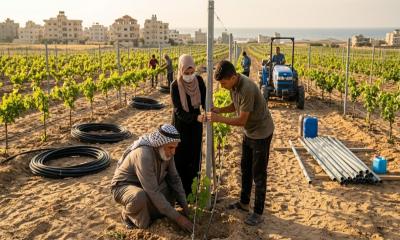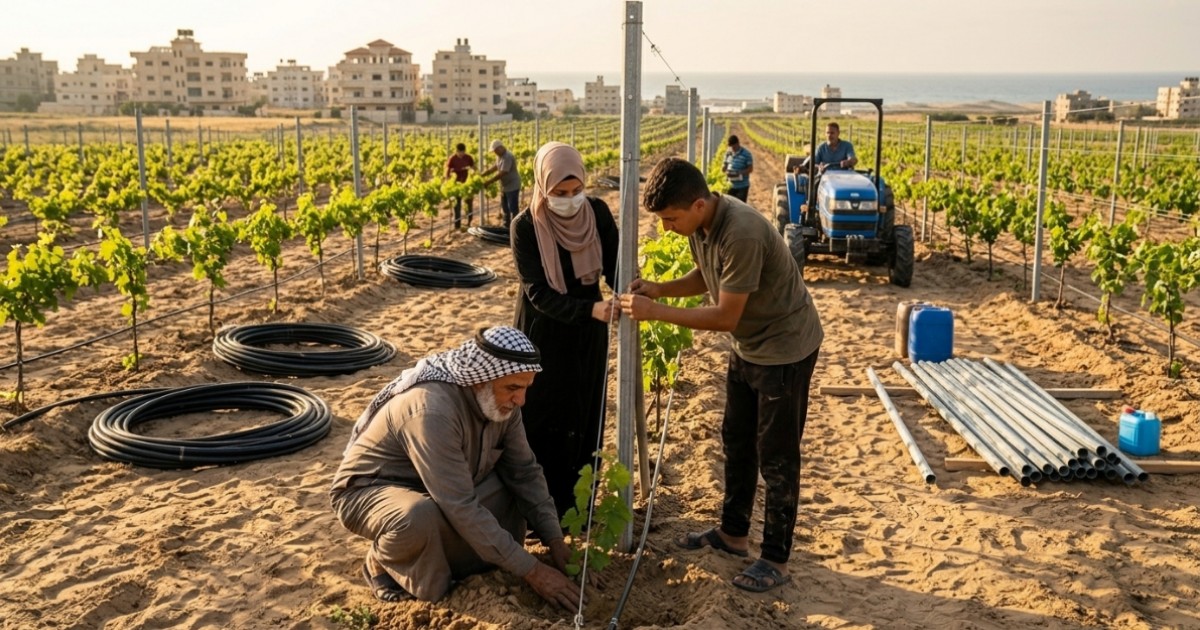
Fifty-year-old Palestinian farmer Khaled Abu Madeen has returned to his family vineyard in the Sheikh Ijlin area of southwestern Gaza City to harvest grapes after nearly three years of war, according to Al Jazeera. Walking through the rows of green vines during the cool early morning hours, Abu Madeen gathers fruit from plants that survived the extensive destruction, marking the emotional recovery of a life he feared was lost forever. His family has cultivated grapes and figs in Sheikh Ijlin for generations, inheriting the fertile land from his father and grandfather. Abu Madeen previously worked in project management before dedicating himself fully to agriculture to preserve his family heritage.
When the conflict began in October 2023, Abu Madeen refused initial opportunities to leave Gaza permanently, choosing to stay close to his land and elderly mother even after his wife and children were evacuated abroad. As military operations intensified and direct evacuation orders were issued under threat of bombardment, he was eventually forced to flee south to Deir el-Balah in central Gaza. Despite displacement and severe security risks, his thoughts remained fixed on his property. During one perilous clandestine attempt to check the fields with workers, Israeli forces opened fire, severely injuring one worker who lost substantial amounts of blood before they could escape and rescue him.
Upon finally returning to the north after long periods of restricted access, Abu Madeen confronted widespread devastation across his property. Approximately 60 percent of his vines, including decades-old trees, had been uprooted and destroyed by military operations. Rather than abandoning the ruined land, he and his workers began clearing debris and searching for surviving root systems beneath the soil. As spring arrived, new shoots emerged from old roots, signaling a miraculous agricultural revival despite severe shortages of fertilizers, pesticides, and farming equipment in the besieged enclave.
This season, Abu Madeen estimates that his harvest yields about 40 percent of pre-war production levels, a modest figure that translates into higher market prices due to extreme scarcity. However, the psychological significance far outweighs commercial metrics, restoring a profound sense of identity and connection to the soil for local farmers. Sheikh Ijlin has historically been renowned for producing some of the finest grapes and figs in the region, and the gradual return of greenery represents a powerful symbol of resilience against overwhelming adversity. Abu Madeen describes his bond with the land as unbreakable, asserting that just as fish cannot survive outside the sea, his existence remains permanently tied to his ancestral earth.
Local farmers across the enclave are undertaking similar grassroots efforts to rehabilitate damaged soil and restore traditional crops. Humanrights reports indicate that ordinary civilians continue striving to sustain their livelihoods through agriculture despite ongoing blockades and severe resource constraints. These restored green patches in Sheikh Ijlin stand as enduring testaments to survival, offering a glimpse of renewal amid widespread physical destruction. Future recovery depends heavily on