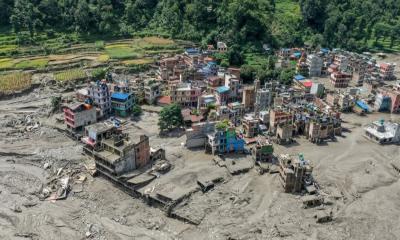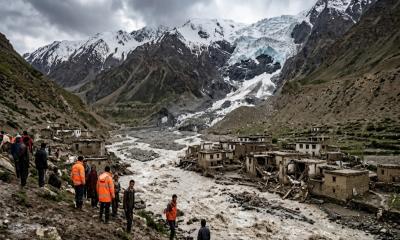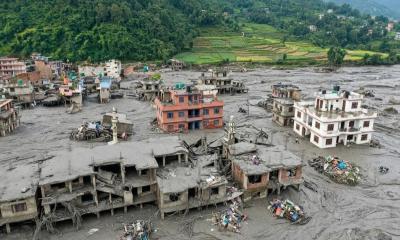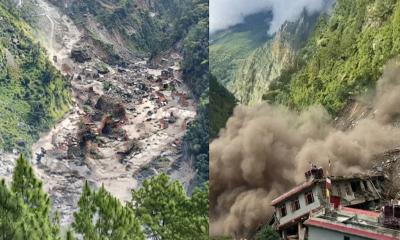
According to BBC News and international agencies, at least 547 people have died and nearly a thousand remain missing in Nepal following a massive glacier collapse that triggered catastrophic flash floods along the Nepal-Tibet border on Wednesday. Nepal’s National Disaster Risk Reduction and Management Authority reported that over 14,000 security personnel have been deployed to the devastated mountainous regions. The sudden surge of water obliterated dozens of villages, prompting an urgent multinational rescue effort. Authorities are currently navigating severe weather conditions as they search through miles of mud and debris.
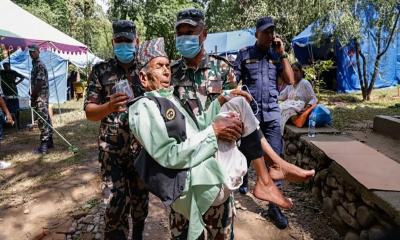
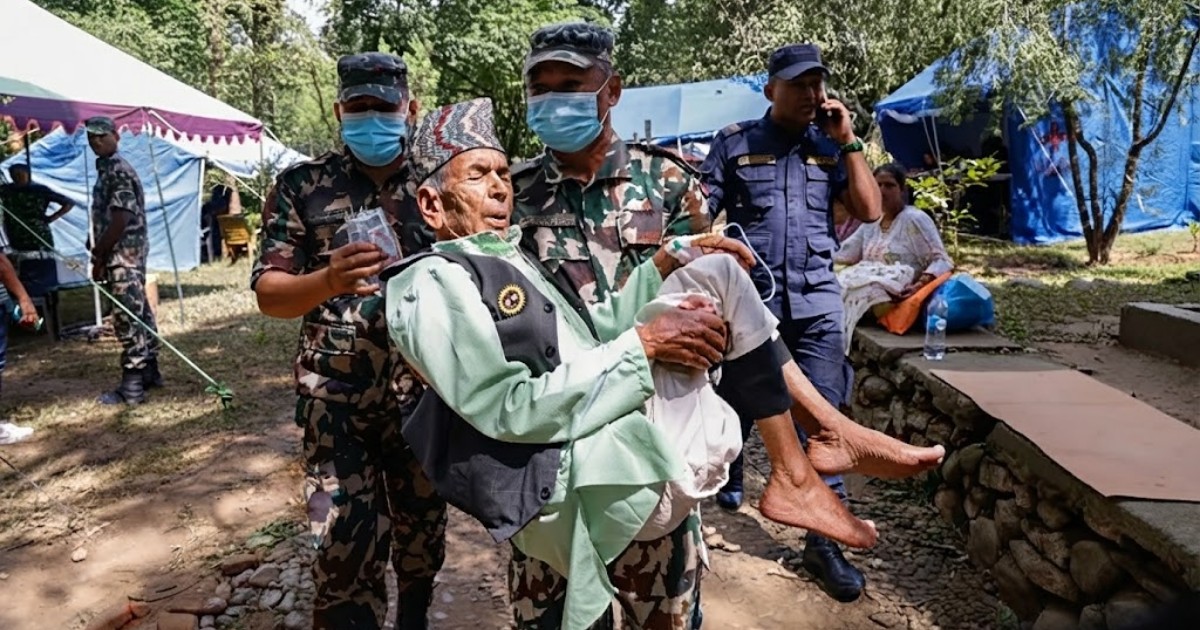
Nepal Police confirmed on Friday that 547 bodies had been recovered, while search teams have managed to rescue more than 3,700 survivors,. Among those brought to safety are over 100 foreign nationals. Despite these efforts, at least 977 individuals remain unaccounted for on the Nepalese side of the border. Rescue operations have been severely hampered by continuous rain and fresh landslides. Despite the harsh weather, the Nepal Army successfully utilized helicopters to extract survivors trapped inside a flooded hydropower tunnel near the Trishuli river. Authorities stated that large clusters of bodies have been recovered across the Rasuwa, Nuwakot, and Chitwan districts.
Helicopters currently serve as the only viable lifeline for isolated communities, as the intense floods completely destroyed nearly 40 kilometers of vital road networks.
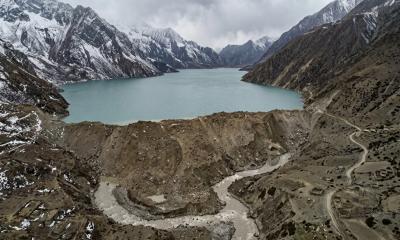
On the Tibetan side of the border, China`s state-run Xinhua news agency confirmed five deaths, with an additional 558 people missing, including 260 foreign nationals. A massive landslide formed a temporary barrier lake that threatened to unleash a secondary wave of floodwaters, forcing Chinese authorities to temporarily pause ground rescue efforts. By Friday, Chinese officials announced that the risk of the lake overflowing was gradually subsiding, allowing search operations to resume in what they described as a critical stage. A specialized rescue team finally reached the Tibetan border trade hub of Gyirong, two full days after it was buried under mud and debris.
Scientific assessments provided by the United States Geological Survey confirmed that the disaster was caused by a massive high-altitude glacier and rock collapse. The sudden detachment of ice sent an enormous mass of debris crashing into the Lhende Khola river, a major tributary of the Bhote Koshi river system. The resulting surge raced downstream, carrying massive boulders and sediment that wiped out entire settlements, concrete bridges, and crucial power infrastructure in its path. The Nepal Army reported that the torrent caused unprecedented destruction in the border towns of Timure and Syafrubesi.
The disaster has deeply affected the international community, as many of the missing individuals were pilgrims traveling to the sacred Mount Kailash. BBC News reported that dozens of British citizens remain unaccounted for, alongside nationals from India, the United States, and Australia,. The Indian government has successfully evacuated several of its citizens and offered specialized tunnel rescue teams, medical staff, and emergency bridges to assist Kathmandu. Simultaneously, the United Kingdom has pledged financial aid and emergency responders to support the ongoing relief efforts. Rescuers on both sides of the mountainous border continue to work tirelessly to locate survivors.