"Pa-pa-pa-pa-pa!" The rhythmic call pierced the heavy silence of the Ukrainian night. Standing in the heart of the world’s most famous radioactive wasteland, Pablo Burraco tracked the sound with his headlamp. What he found was a tiny male tree frog, no more than five centimeters long. To any casual observer, it was just a frog, but to Burraco, an evolutionary biologist from the Doñana Biological Station, it was a revelation. While the species is typically a vibrant green, this particular specimen, found near the ruins of the Chernobyl nuclear power plant, was significantly darker—almost charcoal black.
Today, April 26, 2026, marks exactly forty years since the catastrophic explosion at Chernobyl`s reactor number four. The event remains the most severe nuclear accident in human history, releasing a radioactive cloud that drifted across Europe and left a permanent scar on the landscape of northern Ukraine. While the human population fled the 37-mile-wide exclusion zone decades ago, the wildlife remained. Four decades later, the question of how these creatures have survived—and how they have changed—remains one of the most compelling mysteries in modern biology.
Burraco’s findings, published extensively over the last few years, suggest that nature has undergone a quiet revolution in the absence of man. The darker pigmentation in the tree frogs is hypothesized to be an adaptive response. High levels of melanin, the pigment responsible for dark skin, are known to protect against ionizing radiation by neutralizing free radicals and reducing DNA damage. In the immediate aftermath of the 1986 disaster, the frogs with higher melanin levels likely had a survival advantage, passing their traits to subsequent generations. This is natural selection in its most accelerated and extreme form.
However, the scientific community is far from a consensus on the true state of Chernobyl’s ecosystems. Timothy Mousseau, a biologist at the University of South Carolina who has spent decades studying the zone, remains critical of the "adaptation" narrative. Mousseau’s research has documented a darker side of the disaster: swallows with misshapen beaks, trees growing in twisted, unnatural patterns, and a significant increase in tumors among small mammals. According to Mousseau, the presence of wildlife does not necessarily equate to a healthy ecosystem. He argues that the genetic damage caused by chronic low-dose radiation is a ticking time bomb for the biodiversity of the region.
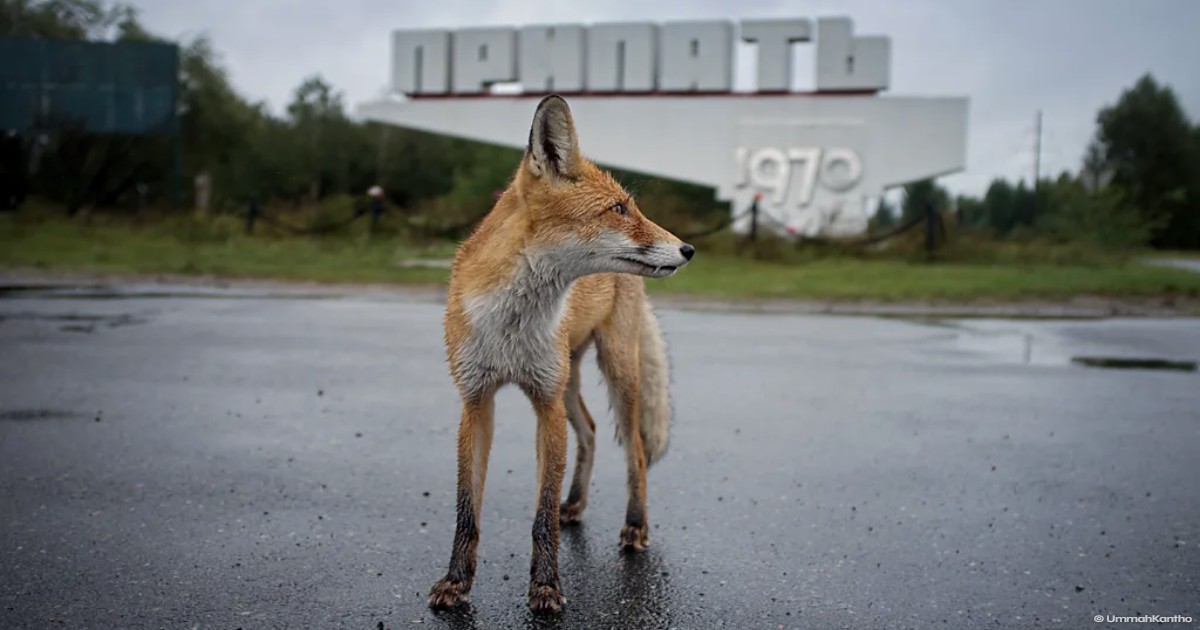
The narrative of Chernobyl as a "post-human paradise" is a complex one. On one hand, the exclusion zone has become an accidental sanctuary for species that were previously pushed to the brink of extinction by human activity. Eurasian lynx, wolves, bears, and the rare Przewalski’s horses now roam the abandoned streets of Pripyat. For these large mammals, the lack of human interference—no hunting, no agriculture, no heavy industry—outweighs the biological risks posed by radiation. The absence of the human footprint has allowed the forest to reclaim the concrete, turning a site of tragedy into a thriving, albeit irradiated, wilderness.
Among the most fascinating subjects of recent study are the feral dogs of Chernobyl. These animals are the descendants of the pets left behind by evacuees in 1986. For forty years, these dogs have lived, bred, and survived in the shadow of the containment shield. Recent DNA analysis shows that these populations are genetically distinct from any other dogs in the world. Whether these genetic signatures are a direct result of radiation-induced mutation or simply the result of long-term isolation remains a subject of intense debate. What is clear, however, is that these dogs have developed a social structure and survival instinct that allows them to navigate a landscape that remains lethal to humans.
Radiobiologist Carmel Mothersill of McMaster University suggests that we must view the resilience of Chernobyl’s wildlife through a lens of biological flexibility. She notes that life has a remarkable ability to find a "workaround" even in the most toxic environments. The "black fungus" found growing inside the ruins of the reactor building itself, which appears to utilize radiation as an energy source, is perhaps the ultimate example of this. However, Mothersill also warns that we are only forty years into a process that will last for millennia. The long-term effects of transgenerational genomic instability are still not fully understood.
As the world observes the 40th anniversary of the disaster, the ongoing conflict in Ukraine has added a new layer of difficulty to this research. Scientific access to the zone has been restricted, and some sensor networks were damaged. Yet, the work continues because Chernobyl remains the world’s most important open-air laboratory for the study of chronic radiation exposure. Researchers like Pablo Burraco believe that the lessons learned here will be vital for our understanding of how life might survive on other planets or in a future where nuclear technology becomes even more prevalent.
Ultimately, the story of Chernobyl’s wildlife is one of survival against the odds. It is a stark reminder that while human mistakes can devastate the planet, nature has a timeline that far exceeds our own. The black frogs of the exclusion zone are not "monsters" in the Hollywood sense; they are a testament to the tenacity of life. They remind us that even in a poisoned land, the pulse of the wild continues to beat, albeit to a different, more mysterious rhythm. As we look toward the next forty years, Chernobyl stands as a monument to human failure and, simultaneously, a beacon of nature’s indomitable spirit. (Quran 30:41) mentions that corruption has appeared on land and sea because of what the hands of people have earned, and Chernobyl is a literal manifestation of this, yet it also shows how the Earth attempts to heal itself once the source of corruption is removed.