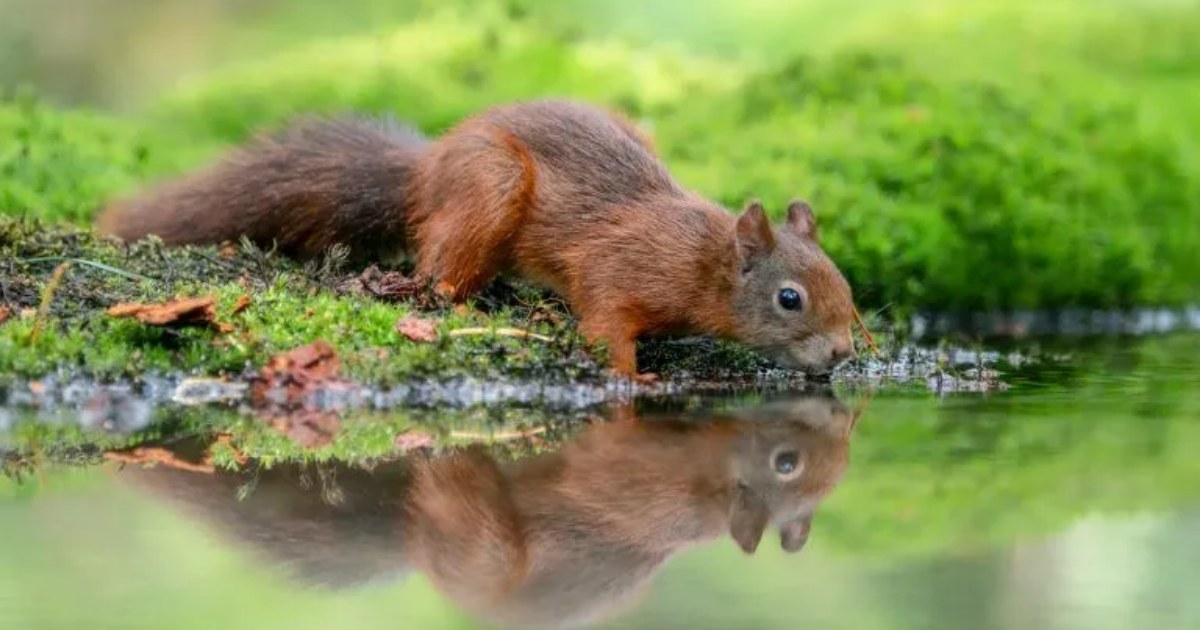
Observing the daily routines of animals like the Eurasian red squirrel, scientifically known as Sciurus vulgaris, reveals remarkable survival strategies developed over millennia. During the warmer spring and summer months, these highly active creatures typically restrict their foraging to the cooler hours of the early morning and late afternoon. According to wildlife biologists and researchers from BBC Earth, squirrels intentionally retreat to their shaded nests during the midday heat. This behavioral shift is not a sign of lethargy, but rather a crucial biological adaptation designed to regulate water loss and avoid heat stress.
At the core of this behavior is the principle of homeostatic control. For any living organism, maintaining a stable internal environment despite fluctuating external conditions is fundamentally essential for survival. When ambient temperatures rise significantly during midday, animals face an increased risk of severe dehydration through panting, sweating, or general respiration. By remaining inactive in cooler, enclosed spaces when the sun is at its peak, squirrels effectively minimize their physical exertion and successfully conserve vital bodily fluids. Scientific observations indicate that this strategic resting period prevents dangerous spikes in body temperature.
These life-saving habits have been permanently hardwired into the animal kingdom through the relentless forces of evolution and natural selection. Over countless generations, species inhabiting environments with extreme temperature variations have had to continuously adapt their behaviors and physiological traits. Those individuals capable of adjusting their daily rhythms to conserve water during harsh conditions were more likely to survive and pass on their resilient genes. Conversely, organisms that failed to maintain proper internal hydration levels under the stress of extreme ecosystems were gradually phased out by nature.
The importance of these adaptive behaviors is drawing renewed attention from the scientific community as global temperatures continue to climb. Recent reports published by National Geographic highlight that behavioral water regulation is becoming increasingly critical for wildlife survival across diverse habitats. As extreme weather events become more frequent, naturalists observing local ecosystems are noticing more pronounced shifts in the activity patterns of native species. In the continuous struggle to endure within an ever-changing natural world, mastering the strict laws of water conservation remains one of the most vital strategies for any species.