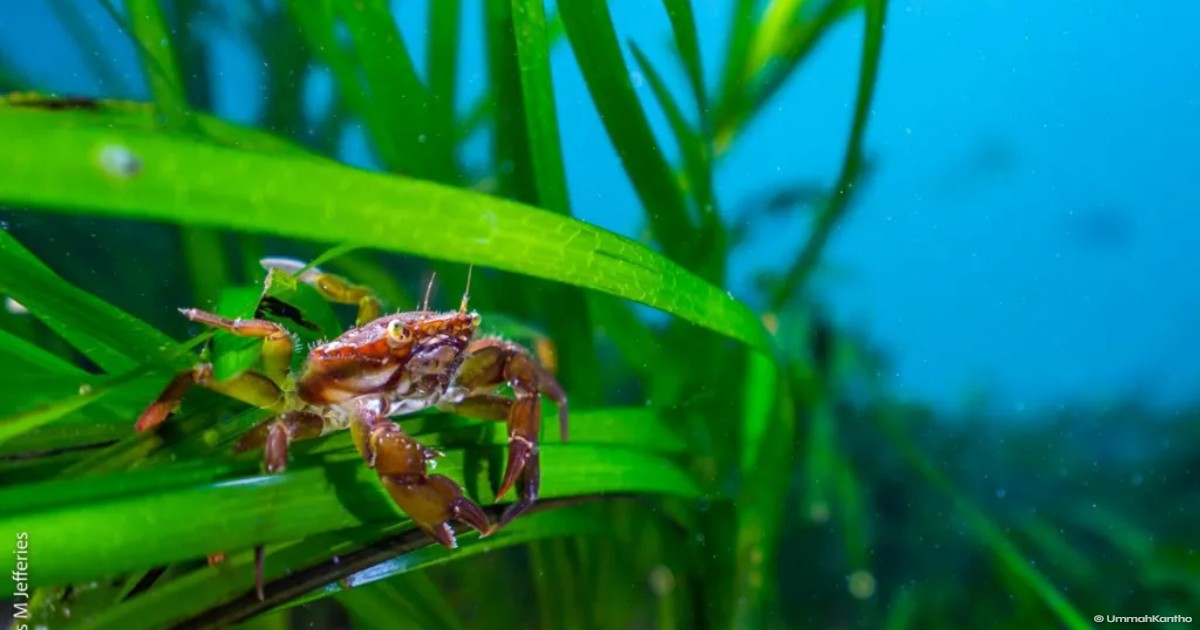
New scientific research has unveiled an "alarming" truth about Britain`s coastal waters, where sewage and agricultural runoff are choking vital underwater forests. These seagrass meadows, often described as the marine equivalent of terrestrial forests, are suffering from a significant loss of biodiversity. Scientists from Swansea University and Project Seagrass conducted a comprehensive study across 16 different marine environments, including estuaries and lagoons. Their findings indicate that areas with high levels of nutrient pollution from sewage, fertilizers, and manure have far fewer small invertebrates, such as crabs, shrimps, and snails, which are essential for a healthy ecosystem.
Dr. Benjamin Jones from Project Seagrass, who spearheaded the research, emphasized that while people naturally avoid swimming in sewage-polluted waters, the impact on marine life is just as severe, if not more so. Seagrasses are flowering plants that grow in shallow, sheltered coastal regions, forming dense meadows that provide a sanctuary for millions of organisms. A single hectare of this underwater habitat can host as many as 100 million invertebrates. These creatures act like insects in a forest, ensuring the environment functions properly by recycling nutrients and providing food for larger species.
The primary driver of this ecological decline is eutrophication—a process where water becomes overly enriched with nutrients like nitrogen and phosphorus. This excess nutrition usually comes from industrial wastewater, farm runoff, and direct sewage discharges. Instead of helping the seagrass grow, these nutrients fuel the rapid expansion of algae. This opportunistic algae smothers the seagrass beds, effectively blocking out sunlight and stripping the water of necessary oxygen. Without light and oxygen, the seagrass beds wither, leading to a collapse of the local food chain.
The implications of this research are stark, according to Dr. Richard Unsworth of Swansea University. Seagrass meadows are not just homes for crabs and snails; they are critical in the global fight against climate change. These underwater plants are incredibly efficient at capturing and storing carbon dioxide. If these meadows are destroyed by pollution, they not only stop absorbing carbon but may also release stored carbon back into the ocean and atmosphere, exacerbating global warming. The researchers noted that the findings provide a clear gradient showing that as nutrient levels rise, the health and variety of animal life plummet.
Public and political pressure regarding the state of the UK`s waterways has been mounting for several years. The situation has already impacted human infrastructure, leading to limits on new housebuilding in certain coastal areas and strict regulations on how farmers store and spread slurry. However, this study is one of the first to provide hard evidence that the damage extends deep beneath the surface. It highlights a silent crisis where the very foundations of marine biodiversity are being eroded by modern industrial and agricultural practices.
As the data becomes clearer, environmental advocates are calling for more than just temporary fixes. The protection of these "underwater forests" requires a fundamental shift in how waste is managed on land. Photographers documenting the study, such as Lewis M. Jefferies, have captured the fragile beauty of species like the marine isopod Idotea balthica, which depends entirely on healthy seagrass to survive. The message from the scientific community is loud and clear: without immediate intervention to reduce the nutrient load flowing into the sea, the UK risks losing one of its most potent natural defenses against both biodiversity loss and the climate crisis. The picture remains incomplete regarding the long-term recovery potential, but what followed the research was a renewed call for urgent legislative action to save these coastal treasures.