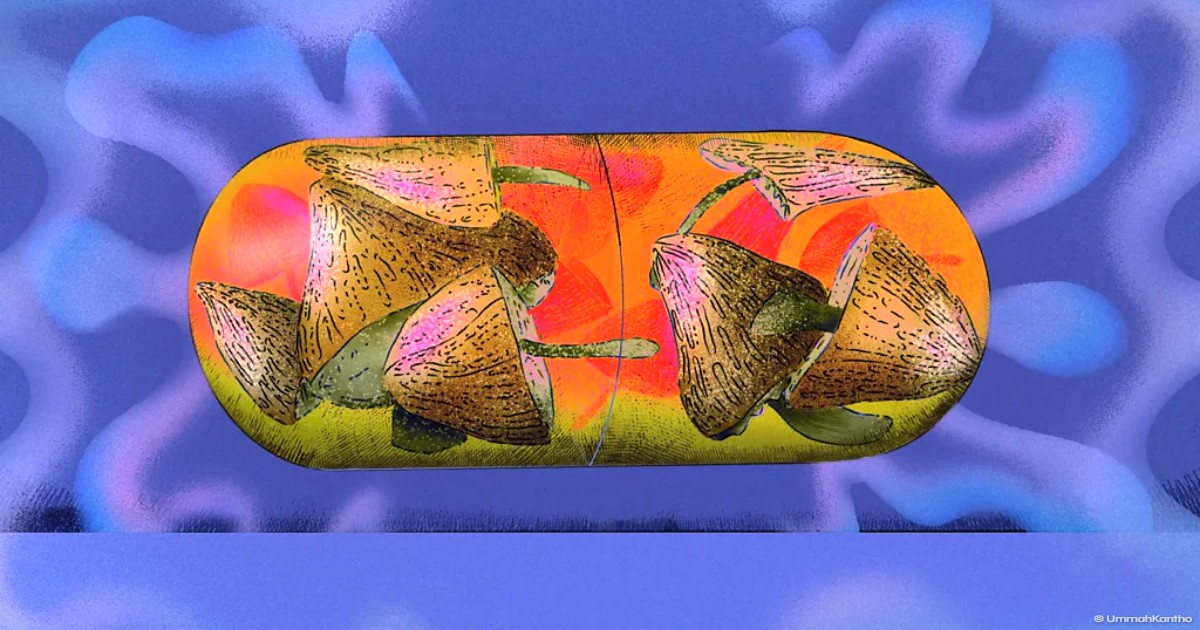
Nicotine is widely regarded as one of the most addictive substances on the planet, often compared to cocaine and heroin in its ability to grip the human brain. While roughly 70 percent of adult smokers express a desire to quit, the reality is stark—fewer than one in ten succeed in any given year. However, a groundbreaking line of research suggests that a controversial alternative might offer a way out. Scientists are discovering that psilocybin, the primary psychoactive compound found in magic mushrooms, could be significantly more effective in helping people give up cigarettes than traditional methods like nicotine patches.
The core of this discovery lies in how psychedelics shift a person’s worldview. According to new data published in March 2026, talk therapy combined with a single dose of psilocybin proved to be a powerful tool for behavioral change. Matthew Johnson, a professor of psychiatry and behavioral science at Johns Hopkins University, has been leading this inquiry. His team found that six months after treatment, participants who received psilocybin had six times higher odds of successfully abstaining from smoking compared to those who used standard nicotine patches. What this really means is that the substance provides more than just a chemical intervention; it offers a psychological "reset."
The findings are not merely based on clinical numbers but on profound personal insights from the participants. Many reported a sudden shift in their life priorities, concluding that smoking no longer served their values or health goals. Johnson noted that the magnitude of the psychedelic experience often overshadowed the previously insurmountable psychological challenge of quitting. One participant described the sensation as being "reprogrammed," to the point where even touching a cigarette felt impossible. This suggests that the drug targets the cognitive loops of addiction rather than just the physical cravings.
This development comes at a critical time for global health. Megan Piper, a professor of clinical psychology at the University of Wisconsin-Madison, pointed out that there has not been a new smoking cessation medication approved in the United States in over 20 years. Given that smoking remains the leading preventable cause of death and disease worldwide, the potential for a new tool is exciting for the medical community. While psychedelics remain illegal in most jurisdictions and are subject to tight clinical controls, the evidence for their use in treating addictions—including alcoholism and opioid dependence—continues to mount.
Despite the promising results, scientists caution that there is still much to learn about the underlying mechanisms. It remains unclear exactly how psilocybin facilitates this change or if the results can be replicated across larger, more diverse populations. Professor Johnson admitted that while researchers don`t fully understand the physiological path, the behavioral changes are undeniable. The study involved a structured 15-week procedure, including cognitive behavioral therapy, ensuring that the drug was administered in a safe, controlled environment.
The picture remains incomplete regarding the long-term accessibility of such treatments, but the early trends are transformative. For millions struggling with the cycle of nicotine addiction, the transition from conventional patches to guided psychedelic therapy could represent a "new dawn" in addiction medicine. As researchers continue to delve into the relationship between mind-altering substances and behavioral health, the focus remains on finding sustainable, life-saving solutions for one of the world`s most stubborn public health crises.
Was there a specific part of the research methodology or the participants` experiences you wanted to explore further in our next report?