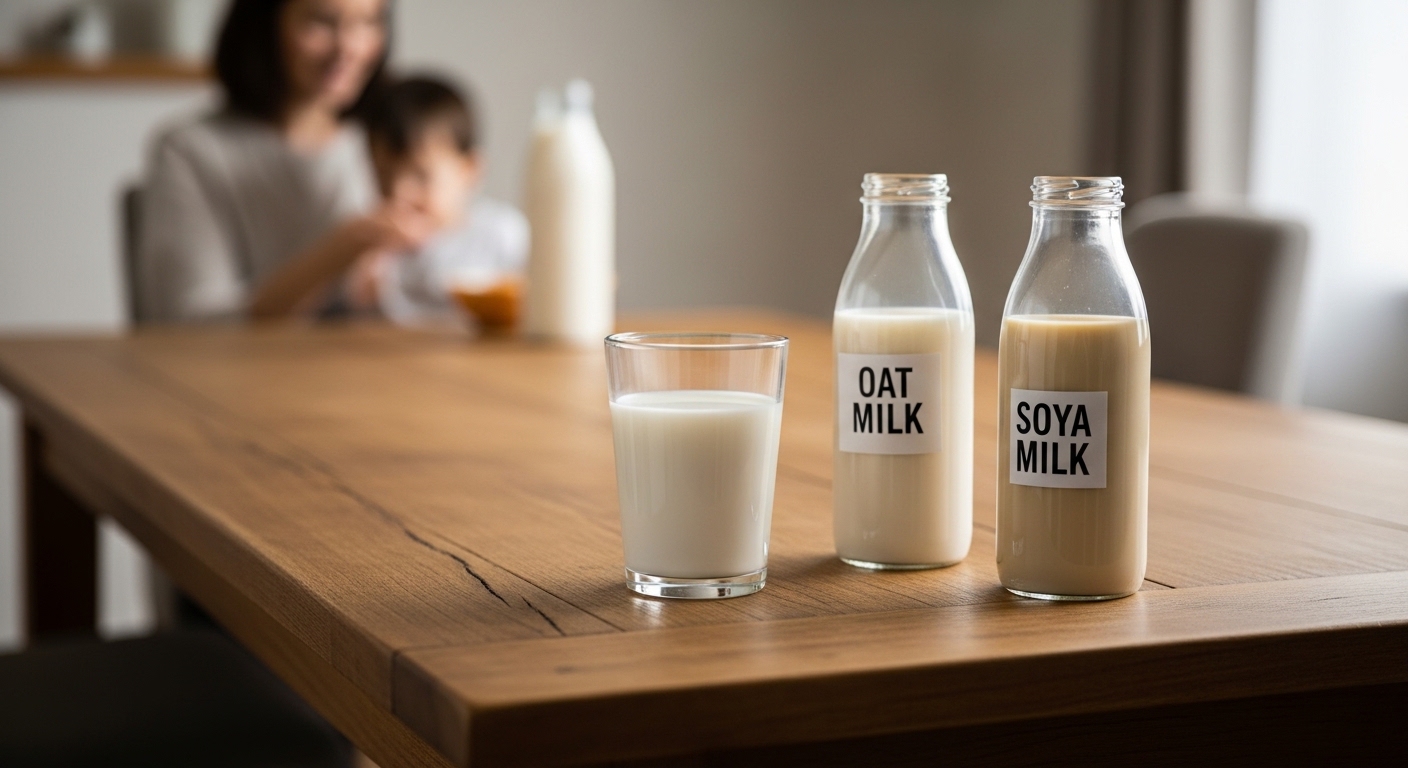
Health experts in the United Kingdom are strongly advising parents not to give vegan milk alternatives, such as oat and soya milk, to children under the age of five. According to new medical guidelines from The British Society for Allergy and Clinical Immunology, these plant-based alternatives carry significant health risks for young children. The society warned that the products often contain high levels of added sugar and lack essential natural nutrients like calcium and vitamin B12. This nutritional deficit can lead to childhood obesity, severe tooth decay, and general malnutrition during critical early developmental stages.
This strong medical advice follows a comprehensive report published by United Kingdom government nutrition advisers last July. The findings clearly indicated that individuals who consume vegan milk alternatives often ingest significantly more added sugar than those who drink traditional cow’s milk. The report stated that these heavily marketed plant-based products are simply not nutritionally equivalent to real dairy milk. In response to these growing public health concerns, Health Secretary Wes Streeting recently announced plans to expand the national sugar tax to include milk substitutes, a major policy change expected to officially take effect by the year 2028.
In recent years, approximately one in three Britons have shifted away from traditional cow’s milk, opting instead for trendy soya, almond, oat, or coconut varieties due to environmental concerns and perceived health benefits. However, growing scrutiny over ultra-processed foods is shifting the global medical community`s focus back to minimally processed dairy. Nutritionist Rob Hobson noted that a standard glass of cow’s milk remains an exceptionally high-quality source of daily protein, containing around seven grams per serving. It also provides roughly one hundred and thirty milligrams of calcium, making it vital for supporting healthy bones, teeth, and overall muscle function in both children and adults. Additionally, traditional dairy provides nearly all the daily required vitamin B12, which the human body needs to maintain a healthy nervous system and safely produce red blood cells.
Recent scientific research also highlights the potential mental health benefits heavily associated with regular dairy consumption. A large-scale study monitoring the mental health of more than three hundred and fifty thousand people in the United Kingdom found extremely positive correlations. The extensive data revealed that individuals who regularly drank semi-skimmed cow’s milk were twelve percent less likely to experience depression and ten percent less likely to suffer from anxiety compared to those consuming plant-based milk. Medical professionals attribute these significant findings to the rich levels of calcium and tryptophan naturally found in dairy, which play a crucial role in mood regulation and protecting long-term brain health.
Furthermore, the regular consumption of cow’s milk may offer robust protection against severe diseases like bowel cancer. Scientists have found that an additional daily intake of three hundred milligrams of calcium, roughly equivalent to a large glass of milk, can reduce the overall risk of developing bowel cancer by up to seventeen percent. The natural calcium actively binds to carcinogenic compounds in the gut, reducing harmful internal inflammation and supporting healthy cellular repair processes. The Food Standards Agency has also issued separate warnings regarding raw, unpasteurized cow`s milk sold directly from rural farms. The agency noted that untreated milk can carry dangerous bacteria that cause food poisoning, especially in vulnerable groups like young children, pregnant women, and the elderly.