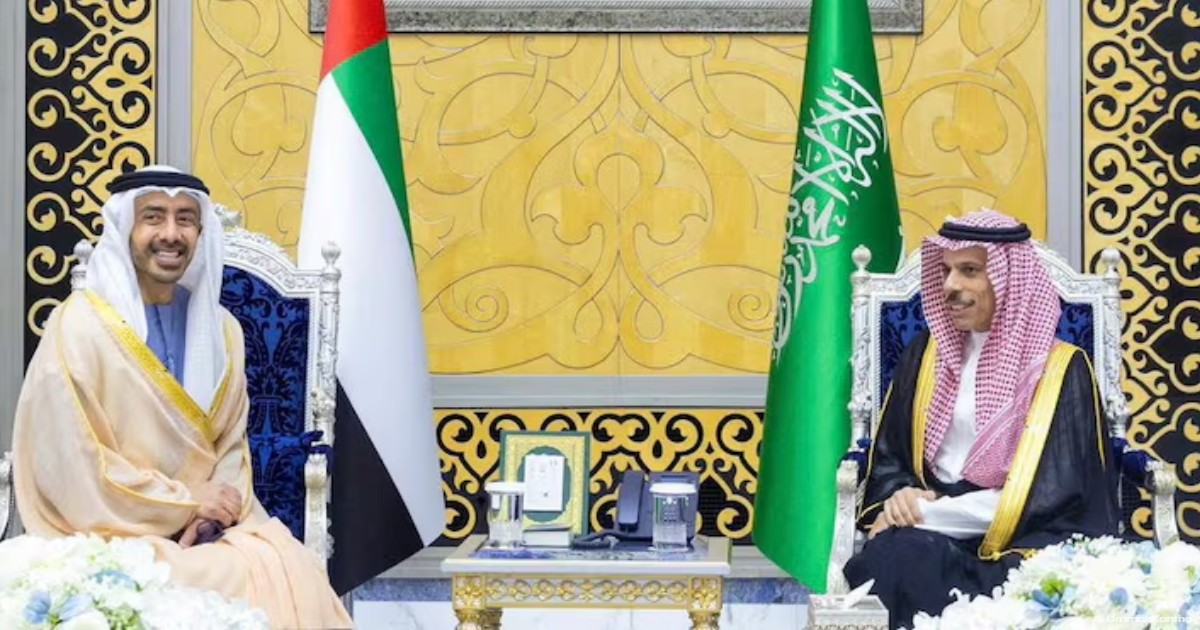
In a move that has dramatically reshaped the global energy landscape, the United Arab Emirates has abruptly announced its departure from the Organization of the Petroleum Exporting Countries (OPEC) after nearly six decades of membership. The revelation came on Tuesday during an emergency Gulf Cooperation Council (GCC) summit in Jeddah, completely blindsiding many attendees. According to a Reuters report, the announcement was dropped just as Saudi Crown Prince Mohammed bin Salman was calling the high-stakes meeting to order.
For years, the Saudi-dominated cartel served as a crucial instrument of Riyadh`s strategic power. However, for the Emirates, the organization had increasingly become an economic constraint. The fundamental reason behind the exit is straightforward: the UAE simply no longer needs OPEC.
While many Gulf nations have spent decades making promises about diversifying their economies away from oil dependency, Abu Dhabi has effectively executed that transition. By the first quarter of 2025, the UAE`s non-oil GDP had reached 77.3 percent of its real output. This single metric highlights why the nation felt confident enough to walk away from the historic energy alliance.
The friction largely centered around production limits. The UAE`s state oil company, ADNOC, has been aggressively pushing to expand its production capacity to 5 million barrels per day by 2027. Abu Dhabi aims to maximize its revenue from current global oil and gas demand to fund its broader economic transition. However, this ambitious target clashed directly with OPEC`s strict quotas, which recently capped the UAE`s output at approximately 3.8 million barrels per day to support the fiscal needs of other member states.
Beyond the raw economic data, a deepening geopolitical rivalry with Saudi Arabia played a major role in the departure. The two Gulf powerhouses have increasingly found themselves at odds, backing opposing factions in Yemen, fiercely competing for foreign investment, and clashing over OPEC allocations. Neil Quilliam, an associate fellow at Chatham House, noted to Reuters that the UAE no longer wants its productive capacity constrained by the cartel, and certainly not by Riyadh.
The economic calculus of the two nations has fundamentally diverged. According to the International Monetary Fund, Saudi Arabia requires an oil price of around $90 a barrel to break even fiscally. In stark contrast, the UAE’s breakeven price sits below $50. With its post-oil identity firmly established as a global hub for trade, finance, tourism, and technology, Abu Dhabi no longer shares Riyadh’s urgent need to artificially prop up global oil markets.
Karen Young, a senior fellow at the Middle East Institute, explained that the departure is part of a broader UAE strategy to gain complete autonomy over its energy exports, preparing the nation for a new era of global energy security.
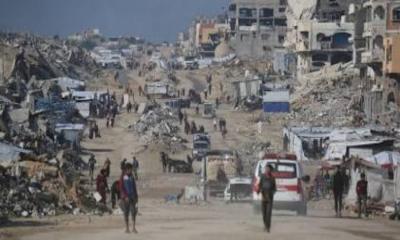
This historic energy realignment is unfolding against a backdrop of severe regional instability. The ongoing U.S.-Israeli war with Iran has led to the closure of the Strait of Hormuz, effectively choking off a fifth of the world`s oil supply. Global benchmark oil prices have recently skyrocketed to $111 a barrel. The blockade has also raised alarms over the vulnerability of vital undersea fiber-optic cables running through the strait, which carry the bulk of internet and telecommunications traffic between Asia, the Gulf, and Europe.
While the UAE is heavily invested in a diversified future, the irony of the current situation is profound. The soaring oil prices driven by the conflict could be immensely profitable for Abu Dhabi`s newly unrestrained production capacity, but the closure of the Strait of Hormuz blocks the very maritime route required to export that oil to the world. Regardless of the immediate logistical hurdles, the UAE has made it clear that its future will no longer be dictated by a cartel built for a bygone era.