In 2009, a court in Trieste, Italy, delivered a ruling that sent ripples through the scientific and legal worlds. Abdelmalek Bayout, who had confessed to stabbing a man to death, saw his nine-year sentence reduced by a year. The justification? His lawyer argued that Bayout possessed a specific genetic mutation—the so-called "warrior gene"—which allegedly made him predisposed to aggressive behavior. This legal precedent raised a haunting question that has puzzled humanity for centuries: how much of our character is hardwired into our DNA from the moment of conception?
For decades, the media and some sections of the scientific community clung to the idea that single genes could dictate complex human behaviors. The MAOA gene, dubbed the warrior gene, became the poster child for this deterministic view. However, modern complex trait genetics has largely debunked this "one gene, one behavior" theory. Experts like Aysu Okbay from Amsterdam UMC emphasize that personality is not the result of a few major genetic switches. Instead, it is shaped by thousands of tiny genetic variations, each contributing a miniscule effect that adds up across our entire genome.
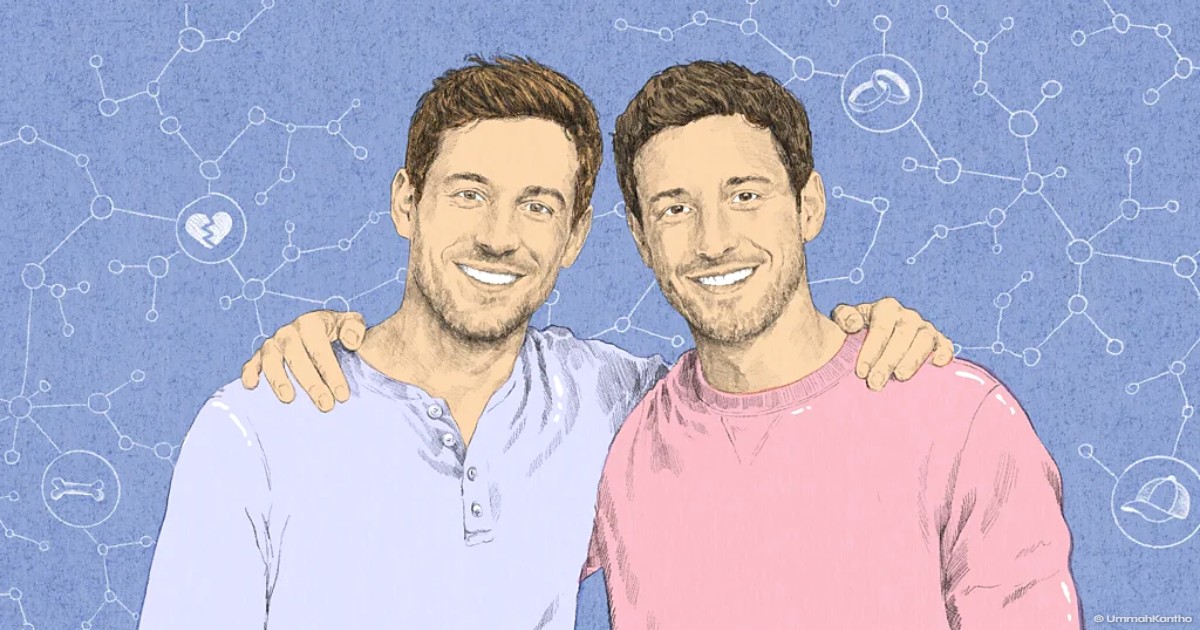
The debate of nature versus nurture was first popularized by the Victorian polymath Francis Galton in 1875. Galton pioneered the study of twins to disentangle the influence of heredity from the environment. Since then, twin studies have become the gold standard for measuring heritability. By comparing identical twins—who share 100% of their DNA—with fraternal twins, scientists have established that personality generally consists of five broad dimensions: openness, conscientiousness, extraversion, agreeableness, and neuroticism. These are often referred to as the Big Five personality traits.
A massive meta-analysis of over 2,500 twin studies conducted between 1958 and 2012 suggests that roughly 47% of the variations in our personality can be attributed to our genes. The remaining 53% is shaped by our environment, experiences, and the unique paths our lives take. One of the most famous anecdotes in this field is the story of the "Jim twins"—identical brothers separated at birth and reunited at age 39. They shared eerily similar lives, from their chainsmoking habits to the names of their ex-wives and even their pet dogs. While such stories are fascinating, skeptics point out that in a world of nearly eight billion people, such coincidences are statistically inevitable.
However, a new mystery has emerged in recent years known as the "missing heritability" problem. While twin studies suggest that nearly half of our personality is inherited, direct analysis of human DNA tells a different story. Genome-wide association studies currently find that DNA variants only account for about 9% to 18% of our personality differences. This massive gap suggests that we still don`t fully understand how genes interact with each other and with the world around us. What this really means is that our genetic code is not a rigid blueprint but a complex, adaptive system.
Here is the thing: personality is far more mutable than we once believed. Research shows that as we age, our conscientiousness and agreeableness tend to increase, while neuroticism often decreases. These shifts prove that we are not prisoners of our biological inheritance. Traumatic events or significant life changes do not necessarily leave a permanent mark on our genetic character. Instead, our personalities remain a work in progress, shaped by a delicate dance between our ancient evolutionary code and the modern world we inhabit. Ultimately, while we are born with certain tendencies, the choices we make and the environments we choose to stay in play a much larger role in defining who we truly are.