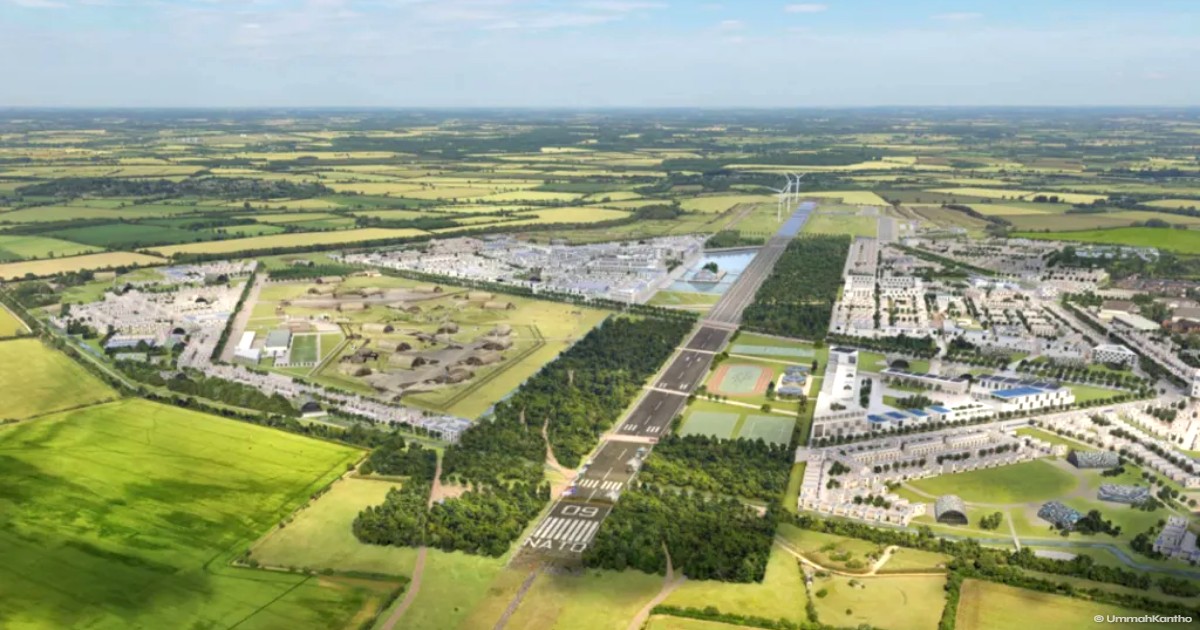
London Oxford Airport has formally raised significant aviation safety concerns regarding a massive proposed housing development at the former RAF Upper Heyford site near Bicester. The project, spearheaded by developer Dorchester Living, envisions the construction of 9,000 new homes alongside various community facilities.
However, the inclusion of three 900kW wind turbines in the master plan has triggered a formal objection from the airport, which is located approximately 10 miles from the site. Airport officials warn that these structures could severely interfere with critical radar systems and established instrument flight procedures.
In a detailed letter of objection, Oxford Aviation Services—the operator of London Oxford Airport—emphasized that the height and movement of the turbines pose a direct threat to safe flight operations. The airport serves as a primary international hub for professional pilot training, attracting students from across the globe.
According to the airport authorities, any degradation of their ability to maintain precise radar monitoring and flight protocols would not only affect local operations but could also harm the United Kingdom`s standing in the global aviation training industry. While the airport maintains that it does not oppose the housing development itself, it remains firm in its stance against the wind turbines.
The Ministry of Defence has also voiced its opposition to the current proposal, citing similar risks to national security and flight safety. The MoD noted that the turbines would create a significant physical obstacle for aircraft operating near RAF Weston-on-the-Green, which sits less than three miles from the proposed site.
Military officials stated that the installation would result in an unacceptable level of risk for air systems, potentially leading to dangerous complications during routine maneuvers. The site at Heyford Park was previously considered for a "New Town" designation by the government, though that specific status was revoked earlier this year.
Responding to these high-level objections, Dorchester Living has confirmed that it is conducting additional technical assessments. The developer stated that it is working closely with aviation experts to address the concerns related to radar interference and instrument flight procedures.
The core mission of the Heyford Park development is to create a net carbon-positive settlement, a goal that relies heavily on the implementation of renewable energy technologies like wind power. The challenge now lies in finding a technological or placement-based solution that satisfies environmental targets without compromising the safety of the skies.
The ongoing dispute highlights a growing tension between the push for sustainable energy infrastructure and the stringent safety requirements of the aviation sector.
As Cherwell District Council reviews the plans, the outcome of this case could set a precedent for how similar conflicts are resolved across the country. For now, the future of the three turbines remains uncertain as technical teams from both the airport and the developer continue to analyze the potential impact on Oxfordshire’s airspace.
Aviation experts suggest that unless a robust mitigation strategy is found for the radar interference, the green energy component of the project may need significant revision to ensure pilot and passenger safety remains the top priority.