In a bold move that further escalates the ongoing economic friction between Washington and Beijing, China has officially moved to block US sanctions against five of its domestic oil refineries. The Chinese Ministry of Commerce announced on Saturday that it had issued a "prohibition order," effectively instructing domestic enterprises to ignore and not comply with the recent restrictions imposed by the United States Treasury Department. This legal intervention is a direct response to Washington`s attempts to penalize Chinese firms for their alleged role in purchasing Iranian crude oil, which the US claims funds Tehran`s military activities.
The Chinese Ministry of Commerce emphasized in its official statement that these unilateral sanctions lack any basis in international law or the authorization of the United Nations. According to Beijing, the US measures improperly restrict the legitimate business activities of Chinese enterprises with third countries, violating the fundamental norms governing international relations. The ministry framed the issuance of the prohibition order as a necessary step to safeguard China’s national sovereignty, security, and developmental interests against extraterritorial jurisdiction.
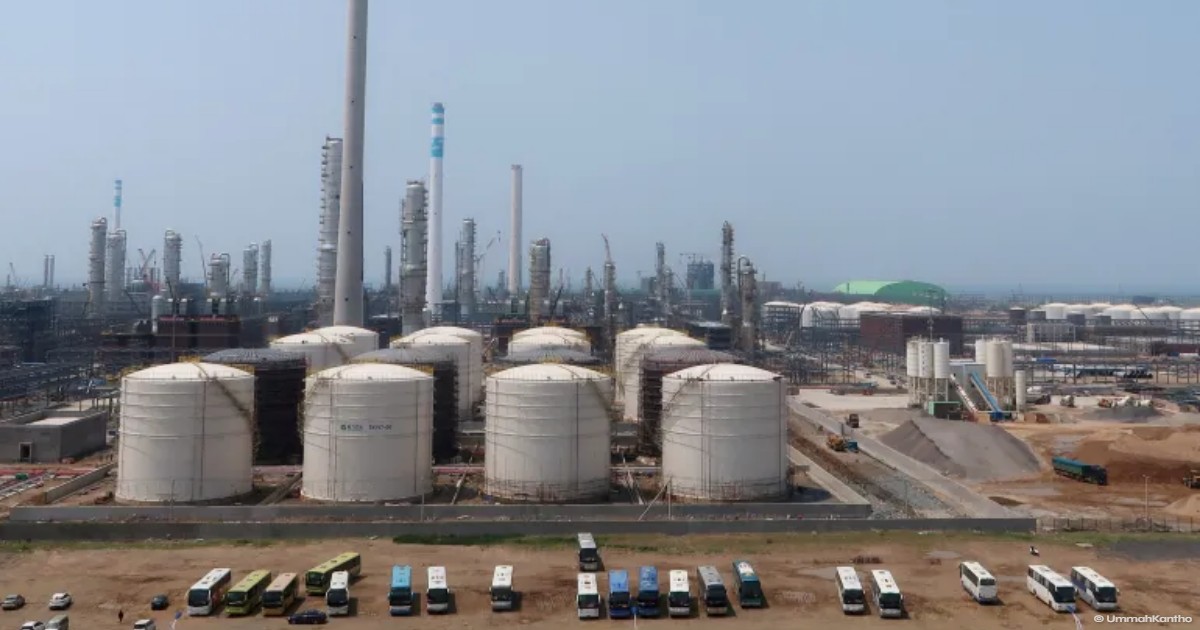
The conflict stems from a US Treasury Department announcement on April 24, which identified Hengli Petrochemical (Dalian) Refinery as one of Tehran`s most significant customers. The US alleged that the refinery’s crude oil purchases generated hundreds of millions of dollars in revenue for the Iranian military. Along with Hengli, the sanctions targeted four other independent, smaller-scale facilities known as "teapot" refineries: Shandong Jincheng Petrochemical Group, Hebei Xinhai Chemical Group, Shouguang Luqing Petrochemical, and Shandong Shengxing Chemical. These facilities are often the backbone of China`s independent refining capacity, operating outside the direct control of state-owned giants like Sinopec.
The economic reality behind this dispute is centered on China`s immense energy needs. China currently sources more than half of its oil from the Middle East, with Iranian crude playing a pivotal role. Data from commodities tracking firms like Kpler indicates that China purchased over 80 percent of Iran’s total oil exports in 2025. The independent "teapot" refineries have been crucial in this supply chain, often capitalizing on heavily discounted crude from nations under Western sanctions, such as Iran, Russia, and Venezuela. These facilities account for roughly a quarter of China’s total refinery capacity, making them vital to the country’s energy security strategy.
This legal confrontation comes at a sensitive time, as regional tensions in the Middle East have already pressured global energy supplies. By invoking its "blocking statute," Beijing is signaling to the international community that it will not allow its domestic energy sector to be dictated by American foreign policy. Experts suggest that this move could create a significant impasse in international trade, as financial institutions may find themselves caught between complying with US sanctions and adhering to China’s new prohibition order. As the war in Iran continues to shape geopolitical alliances, the standoff over these refineries underscores the deepening divide between the world`s two largest economies regarding energy and international law.