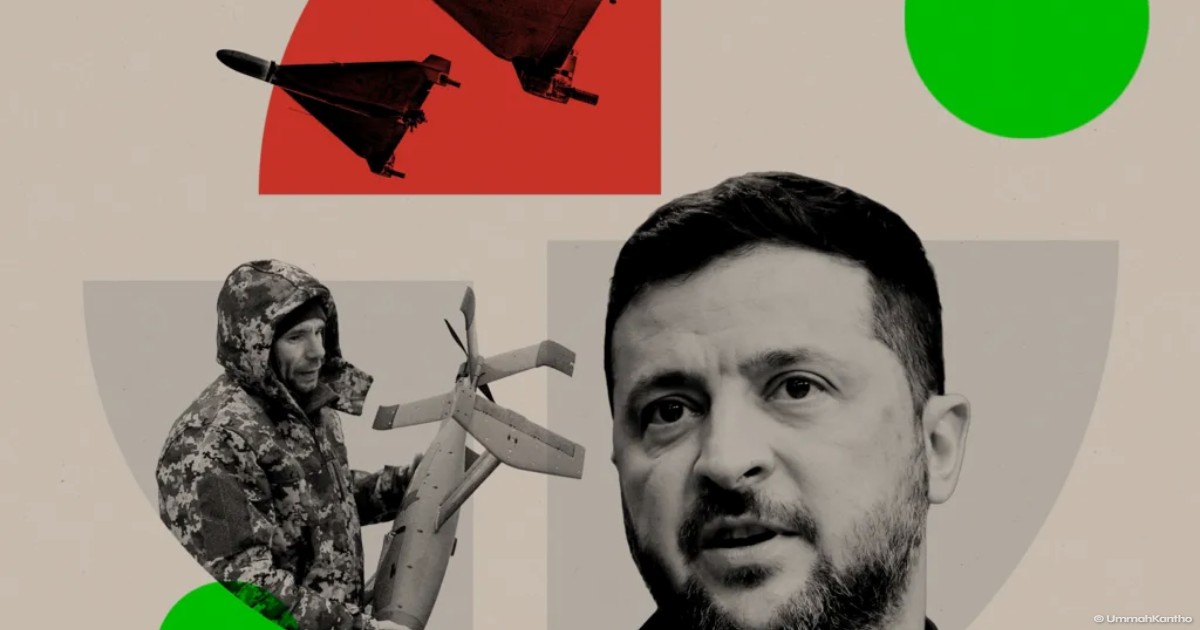
When Ukrainian President Volodymyr Zelensky arrived in Saudi Arabia this March, the global political landscape was already trembling under the weight of the escalating conflict between Iran, Israel, and the United States. At first glance, the eruption of hostilities in the Middle East seemed like a strategic nightmare for Kyiv. With the world`s attention diverted toward Tehran, there were legitimate fears that military and financial aid for Ukraine would dry up. However, what has unfolded since then is a masterclass in geopolitical opportunism, as Ukraine has managed to leverage the Iran crisis to strengthen its own hand in the ongoing war against Russia.
The most significant development has been the emergence of "drone diplomacy." Ukraine has spent the last two years defending its cities against the Iranian-designed Shahed-136 drones used by the Russian military. This battlefield-tested expertise has suddenly become a highly marketable asset. Gulf states like Saudi Arabia, the UAE, and Qatar, which have long faced similar threats from Iranian-backed militias, are now looking to Ukraine for defensive technology and intelligence. By signing defense cooperation agreements with these wealthy US allies, Zelensky has not only secured new financial streams but has also tied Ukraine’s security interests to those of the Middle East’s major powers.
In the midst of this shifting alliance, the prospect of a Ukraine-Russia ceasefire has returned to the forefront of international discourse. Former President Donald Trump has been particularly vocal, following what he described as a "very good" conversation with Vladimir Putin. Trump’s claim that he could reach a "solution" relatively quickly has set off a wave of speculation about a potential diplomatic breakthrough. While the specifics of such a deal remain opaque, the mere fact that the architect of the "America First" policy is talking about a swift resolution suggests that the pressure for a ceasefire is mounting on all sides.
The impact of the Iran war on global energy markets initially seemed to favor Moscow. As tensions in the Strait of Hormuz caused oil prices to spike, the US was forced to issue sanction waivers, allowing more Russian crude to reach the market. This surge in revenue briefly replenished Putin’s war chest. However, Ukraine responded with a new tactical doctrine: targeting Russia’s energy infrastructure with long-range, domestically-produced drones. These strikes have inflicted "critical" damage on Russian refineries, erasing billions of dollars in gains. By turning the energy war back on Moscow, Kyiv is demonstrating that high global oil prices cannot save Russia if its export facilities are in ruins.
Furthermore, Ukraine’s European allies have stepped up their commitments in response to the Middle Eastern instability. Significant defense packages from Norway and Germany, totaling billions of dollars, indicate that Europe is not prepared to let the Iran conflict overshadow the threat on its own doorstep. Perhaps most crucially, the recent leadership change in Hungary has unblocked a €90 billion EU loan that had been stalled for months. This financial lifeline ensures that Ukraine can maintain its defensive operations well into 2027, regardless of the fluctuations in Washington’s political climate.
Despite these strategic gains, the path to a sustainable ceasefire remains fraught with danger. The "quick solution" hinted at by Trump often implies territorial concessions that the Ukrainian public is currently unwilling to accept. Nevertheless, the Iran war has fundamentally altered the bargaining positions. Ukraine is no longer just a recipient of aid; it is a provider of critical military technology and a disruptor of global energy markets. As the geopolitical chess pieces move, the leverage that Zelensky has built through his recent diplomatic and military maneuvers might just be enough to ensure that any future peace deal is negotiated on terms that respect Ukraine’s sovereignty. For now, the world waits to see if the fires in the Middle East will inadvertently help extinguish the flames of war in Eastern Europe.