Six months after the long-awaited birth of her first child, Chrissy Walters received news that would change her life forever. Following a series of medical complications and a major hemorrhage at her home in Toowoomba, a regional city in Queensland, the 39-year-old was diagnosed with advanced cervical cancer. The diagnosis was a shock to the family, especially after their years-long struggle to conceive. Walters recalls telling her husband that there must have been some mistake. However, the reality was much harsher.
Walters has spent the last decade undergoing exhausting and invasive treatments. Despite her resilience, the cancer eventually spread to other parts of her body. Today, her doctors describe her condition as terminal. The emotional toll has been heavy, particularly as she navigates conversations about mortality with her daughter, who is now 12 years old. Yet, in 2026, as her daughter reaches the age for school-based vaccinations, Walters sees a future where her child will not have to face the same ordeal.
Australia is currently leading the world in a race to eliminate cervical cancer, a feat that no other nation has yet achieved. Recent data suggests that the country is on track to eliminate the disease within a decade. This progress is the result of a coordinated national strategy involving groundbreaking scientific research and a robust public health framework. The efforts began decades ago in the laboratories of the University of Queensland and have now transformed into a global exemplar for cancer control.
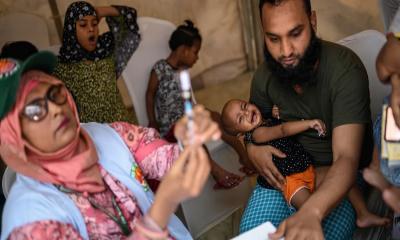
The strategy relies on a two-pronged approach: widespread vaccination and high-grade screening. In Australian high schools, it is a common sight to see students lining up for the Human Papillomavirus (HPV) vaccine as part of the National Immunisation Programme. HPV is a common virus that can lead to cervical cancer, the fourth most prevalent cancer among women globally. Crucially, cervical cancer is one of the few forms of the disease that can be almost entirely prevented through vaccination.
The turning point occurred in 2006 when Professor Ian Frazer and Dr. Jian Zhou developed Gardasil, a pioneering vaccine that prevents the high-risk strains of HPV. Following the vaccine`s approval, Australia became the first nation to implement a national HPV vaccination program in 2007. According to Professor Karen Canfell, an epidemiologist and leader in cervical cancer control, Australia’s proactive stance provided a blueprint for the World Health Organization to follow.
Beyond vaccination, Australia’s screening program underwent a significant overhaul in 2017. The country transitioned from the traditional Pap smear to a more sensitive HPV-based screening. This modern test is only required every five years, providing a more accurate assessment of a woman’s risk. In 2013, the vaccination program was also expanded to include boys, recognizing their role as carriers of the virus and ensuring broader community immunity.
The World Health Organization (WHO) has since adopted many of Australia’s methodologies for its global strategy to eliminate cervical cancer. The WHO’s 90-70-90 targets aim to ensure that by 2030, 90 percent of girls are vaccinated by age 15, 70 percent of women are screened by age 35 and 45, and 90 percent of those with cervical disease receive appropriate treatment. Australia is not only meeting these targets but is exceeding them in several key demographics.
For patients like Chrissy Walters, the scientific advancements bring a sense of bittersweet relief. While the breakthrough came too late to change her own prognosis, it offers a shield for the next generation. Walters emphasizes that she would never wish her experience on anyone else. Seeing her daughter receive the vaccine represents a full-circle moment in a journey that began with her own diagnosis.
However, challenges remain, particularly in ensuring equitable access to these services for indigenous populations and those living in remote areas. Public health officials are continuously working to bridge these gaps through mobile clinics and community outreach programs. The integration of artificial intelligence in analyzing screening results is also being explored to increase efficiency and accuracy in detection.
The narrative of cervical cancer in Australia is shifting from one of tragedy to one of triumph. What was once a leading cause of cancer death for women is now on the verge of being relegated to the history books. As Professor Canfell notes, the success in Australia proves that with the right combination of scientific innovation and political will, eliminating a form of cancer is a realistic goal. The world is watching closely as Australia nears the finish line, providing hope for a future free from the burden of cervical cancer.