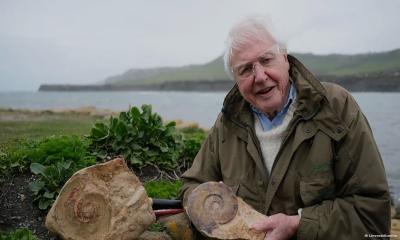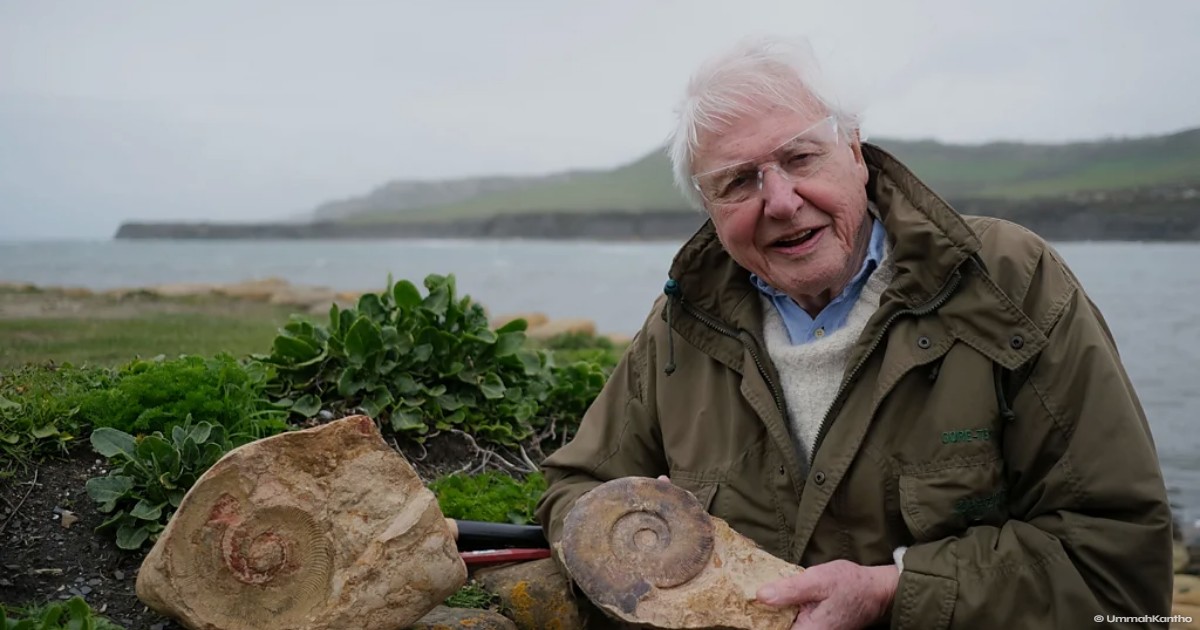
The voice of Sir David Attenborough has become synonymous with the grandeur of the natural world, from the deepest oceans to the highest peaks. Yet, the genesis of this legendary career did not begin in a high-tech studio or on a remote expedition. Instead, it traces back to the late 1930s in the quiet countryside of Leicestershire, England. A young David, equipped with nothing more than a bicycle and a small hammer, spent his afternoons scouring rock faces for remnants of a world long gone. It was during one of these solitary trips that he cracked open a promising stone, revealing a perfectly preserved ammonite—a discovery that would alter the trajectory of his life forever.
Reflecting on that pivotal moment in 2009, Attenborough recalled the sheer beauty of the coiled seashell, glinting as if it had been polished moments before. He realized with a sense of profound awe that his eyes were the first to behold this creature in over 200 million years. These ammonites, once mistaken by locals as "snake stones" due to their unique spiral shape, were actually ancient cephalopods that swam in prehistoric seas. For Attenborough, this was more than just a lucky find; it was a connection to the deep history of our planet. He has often described it as one of the key moments of his life, a thrill that has remained undiminished even as he approaches his 100th year.
The roots of the Attenborough family are deeply embedded in the soil of Leicester. The family home still stands today, nestled within the campus of the University of Leicester, where Sir David’s father, Frederick Attenborough, served as a prominent academic and principal. The campus is a living tribute to the family’s legacy. Just a stone’s throw from their former residence is an arts center named after his brother, Lord Richard Attenborough. In a poetic twist of fate, Richard would go on to play the founder of Jurassic Park in the 1993 cinematic masterpiece, using fossils and DNA to resurrect the very creatures David spent his childhood dreaming about.
Historical records unearthed in 2016 from Frederick Attenborough’s personal correspondence offer a rare glimpse into David’s formative years. The letters reveal a boy deeply fascinated by the Earth sciences, with a clear ambition to pursue geology and natural history as a profession. While the world recognizes him as the ultimate storyteller of nature, his foundations are rooted in the rigorous observation of a scientist. His ability to translate complex biological and geological processes into captivating narratives stems from this early, hands-on engagement with the physical history of the Earth.
Even recently, following his 99th birthday in May 2025, Sir David expressed in a personal letter that fossils still bring him immense pleasure. His lifelong hobby of fossil hunting provided him with a unique perspective on the fragility and resilience of life. He learned early on that the species we see today are but a brief chapter in a much longer, more complex story. This understanding has infused his work with a sense of urgency regarding environmental conservation. He doesn`t just see a forest; he sees an ecosystem with a history spanning millions of years, one that we are currently putting at risk.
For the global audience of Ummah Kantho, Sir David Attenborough’s story is a testament to the power of curiosity and the importance of understanding our origins. His journey reminds us that looking into the past is often the best way to prepare for the future. As he continues to advocate for the protection of our natural world, his message remains as clear as it was that afternoon in the 1930s: the natural world is a breathtakingly beautiful treasure that deserves our utmost respect and guardianship. The legacy of a simple boy with a hammer has become a global call to action, proving that the smallest discoveries can indeed change the world.