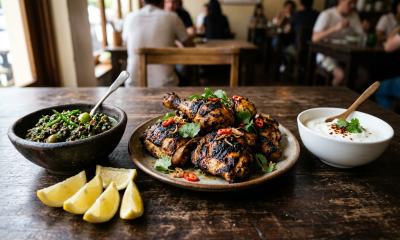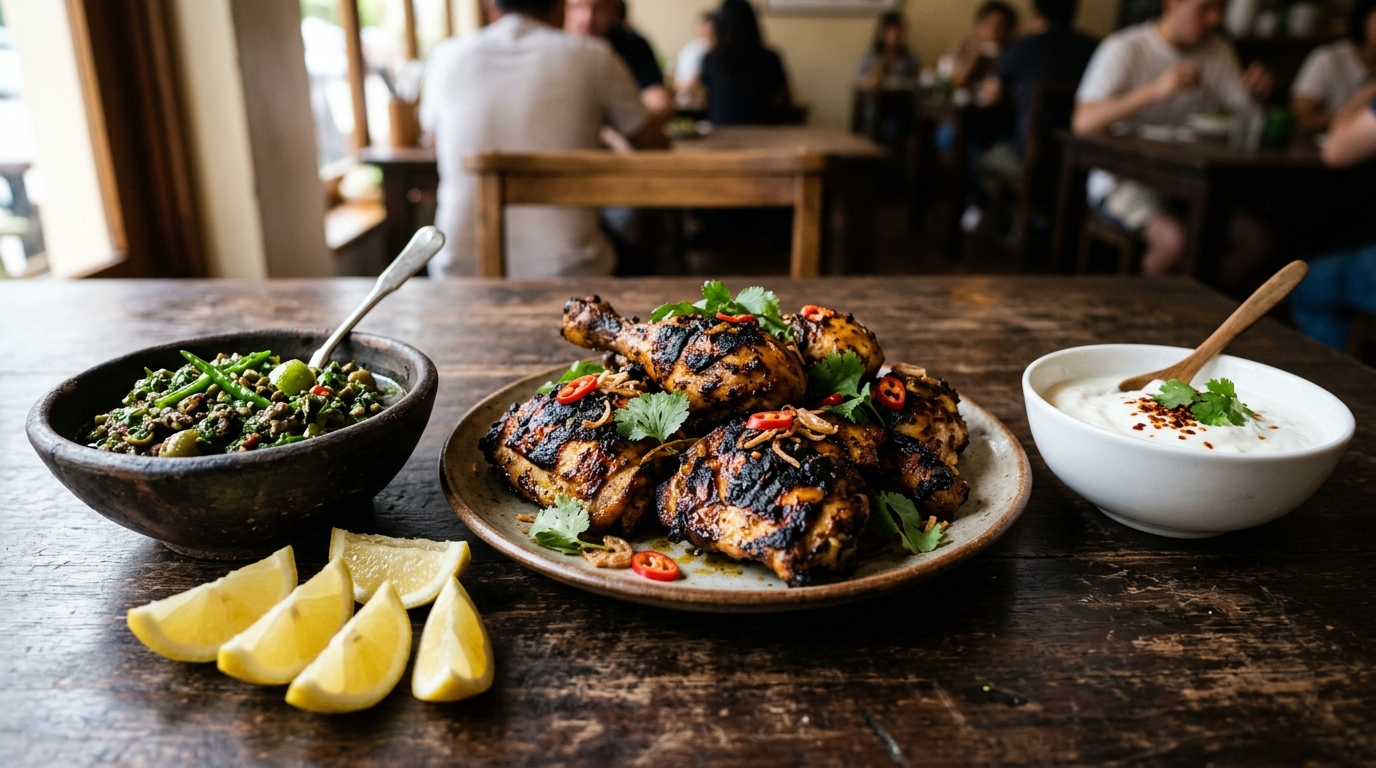
Turkish-Spiced Griddled Chicken With Green Relish: A Halal Recipe Worth Keeping Forever British food writer Diana Henry published a recipe for Turkish-spiced griddled chicken and a vivid green olive relish in The Telegraph on April 30, 2026 — a dish that has gained a devoted following and translates beautifully into a halal kitchen with no modification required.
Henry is no ordinary recipe writer. According to Wikipedia, her 2015 cookbook "A Bird in the Hand" won a James Beard Award in 2016 — one of the highest honors in the food world — and Amazon product listings confirm she has received multiple prizes from the Guild of Food Writers, the Fortnum & Mason Food and Drink Awards, and the André Simon awards. Her recipes are internationally recognized for weaving global flavors into food that real home cooks can actually make on a weeknight. This particular chicken dish is one of her most beloved.
The foundation of the recipe is six skinless, boneless chicken thighs. Before marinating, each thigh is flattened between sheets of parchment paper using a rolling pin — a step that ensures even cooking on the griddle and a better sear. The marinade itself is straightforward: olive oil, ground cinnamon, cayenne pepper, ground cumin, grated garlic, and seasoning. The chicken is coated, covered, and refrigerated for at least two hours, though leaving it overnight draws the spices deeper into the meat.
What makes this recipe worth planning ahead for is the green relish. Made just before cooking, it starts with garlic crushed with sea salt in a mortar and pestle. Roughly chopped green and red chillies go in next, followed by fresh coriander, torn mint leaves, and coarsely chopped pitted green olives. Extra-virgin olive oil and white balsamic vinegar are gradually worked in until the mixture becomes a chunky, textured paste — never a smooth purée. A squeeze of fresh lemon juice finishes it.
According to The Splendid Table, which has published this same recipe, Henry describes the relish as something she returned to again and again, pairing it with lamb and chicken alike. Cooking the chicken is simple but requires attention. The griddle must be properly hot before the chicken goes on. Each thigh cooks at medium heat for about two minutes per side, then the heat drops to low for two more minutes on each side. The result, as The Telegraph describes, is chicken that is cooked through and carries attractive char marks without burning.
Room temperature chicken — not straight from the fridge — is essential for this to work. The Telegraph`s reporting on this recipe notes that Henry views the relish as deeply versatile. It pairs just as well with fish, lamb, roasted vegetables, sweet potatoes, feta, and labneh as it does with chicken. Some people, she has written, keep it in the fridge and eat it straight from the bowl. That detail says something important about this relish: it is not a condiment designed to disappear into the background.
It is a statement. What remains unclear is the relish`s precise historical roots. Henry herself, according to The Splendid Table, has said she heard about a Turkish crushed olive and chilli relish and was compelled to try creating her own version, without claiming it as an exact reproduction of any specific regional recipe. The spirit is Turkish; the execution is her own. For Muslim households, this recipe holds particular appeal. Every ingredient — chicken, olive oil, green olives, fresh herbs, chillies, cinnamon, cumin, and cayenne — is halal by nature. There are no wine-based marinades, no pork derivatives, no hidden non-halal ingredients to navigate.
The spice profile itself has deep roots in Islamic culinary culture: cumin and cinnamon appear across Turkish, Moroccan, Persian, and South Asian cooking traditions that have defined Muslim tables for centuries. The dish comes together in roughly 40 minutes of active cooking, not counting marination time. It serves four comfortably. Henry suggests plating it with lemon wedges, rice, bulgur wheat, or flatbread, alongside a bowl of Greek yogurt and the relish. A cucumber and green salad on the side would not go amiss.
For families looking for something different after Eid gatherings, or anyone who wants to move past the familiar and into something that feels both rooted and new, this recipe offers a rewarding answer. It does not ask for specialist equipment or hard-to-find ingredients. It asks only for a little time and a willingness to let bold flavors do the work. That, in the end, is what good cooking has always asked of us.