Life for a believer is a continuous journey where every action, no matter how small, can be turned into a means of spiritual elevation. We often spend a significant portion of our day moving from one place to another, whether it is commuting to work, going to the mosque, or simply walking in the neighborhood. While these activities seem mundane, Prophet Muhammad SAW taught us that our paths can be paved with immense rewards if we adopt the right mindset and perform simple acts of worship. These small deeds require no financial expense or extra time, yet they hold the weight of mountains in the scales of the hereafter.
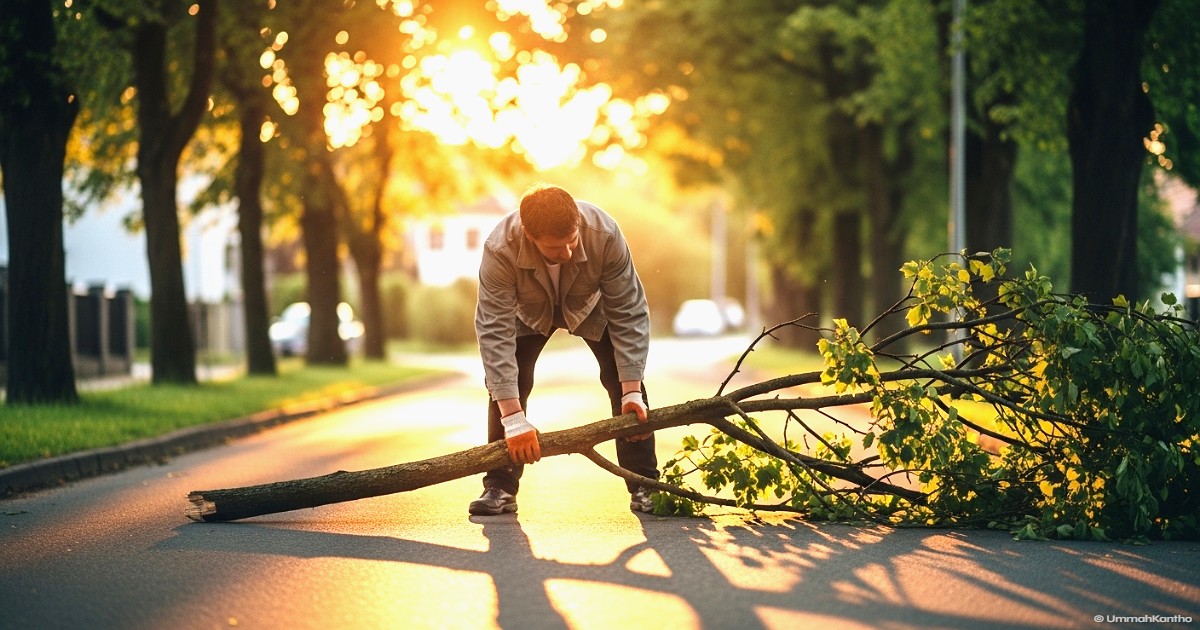
One of the most foundational acts to perform while walking is removing obstacles from the path of others. In Islamic tradition, keeping public spaces safe and clean is considered a branch of faith. The Prophet SAW famously stated that faith has more than seventy branches, and the least of them is removing something harmful from the road (Sahih Muslim, 35). There is a profound narration about a man who saw a thorny branch lying on a path and removed it to protect others. Allah appreciated his gesture and granted him forgiveness (Sahih Al-Bukhari, 2472). This highlights that even a momentary act of civic responsibility is highly valued in the sight of the Creator.
Another simple yet powerful deed is the spreading of Salam. Greeting others with the Islamic greeting of peace is a way to foster love and unity within the community. When asked which Islamic actions were the best, the Prophet SAW replied that one should feed the poor and offer greetings of peace to those they know and those they do not know (Sahih Al-Bukhari, 6236). This practice breaks down social barriers and fills the environment with positive energy. In an age where people often avoid eye contact while walking, reviving the Sunnah of Salam is a beautiful way to maintain a connection with the Ummah.
Smiling is often overlooked as a form of worship, but the Prophet SAW categorized it as an act of charity. He said that smiling in the face of your brother is a sadaqah (Sunan At-Tirmidhi, 1956). Being kind, helpful, and approachable while on the move is a core Islamic value. If you encounter someone who is lost, providing them with directions, or helping an elderly person cross a busy street, are all acts that earn the reward of voluntary charity. These interactions reflect the mercy of Islam and serve as a silent dawah to everyone around us.
Lowering the gaze, or `Ghad-ul-Basar,` is a mandatory etiquette for any Muslim walking in public spaces. Controlling one’s eyes and avoiding looking at forbidden things is not just a moral obligation but a spiritual shield. The Quran instructs believers to lower their gaze and guard their modesty (Quran, 24:30). This discipline protects the heart from distractions and maintains personal integrity. Furthermore, a Muslim is encouraged to walk with humility rather than arrogance. The Quranic advice given by Luqman to his son emphasizes not turning one`s cheek away from people in pride and walking with a balanced, modest pace.
Lastly, the time spent walking or commuting provides an excellent opportunity for Dhikr and Istighfar. Engaging in the remembrance of Allah by reciting `Subhanallah,` `Alhamdulillah,` or `Astaghfirullah` requires no specific posture or location. It turns travel time into productive spiritual exercise. The Prophet SAW was known to remember Allah at all times and in all conditions. By integrating these small, effortless acts into our daily routine, we ensure that our entire journey from home to our destination is recorded as time spent in the worship of Allah. These deeds are easy to perform but their impact on our soul and our record of deeds is eternal.