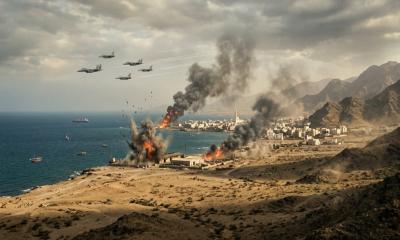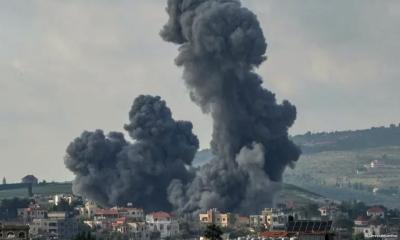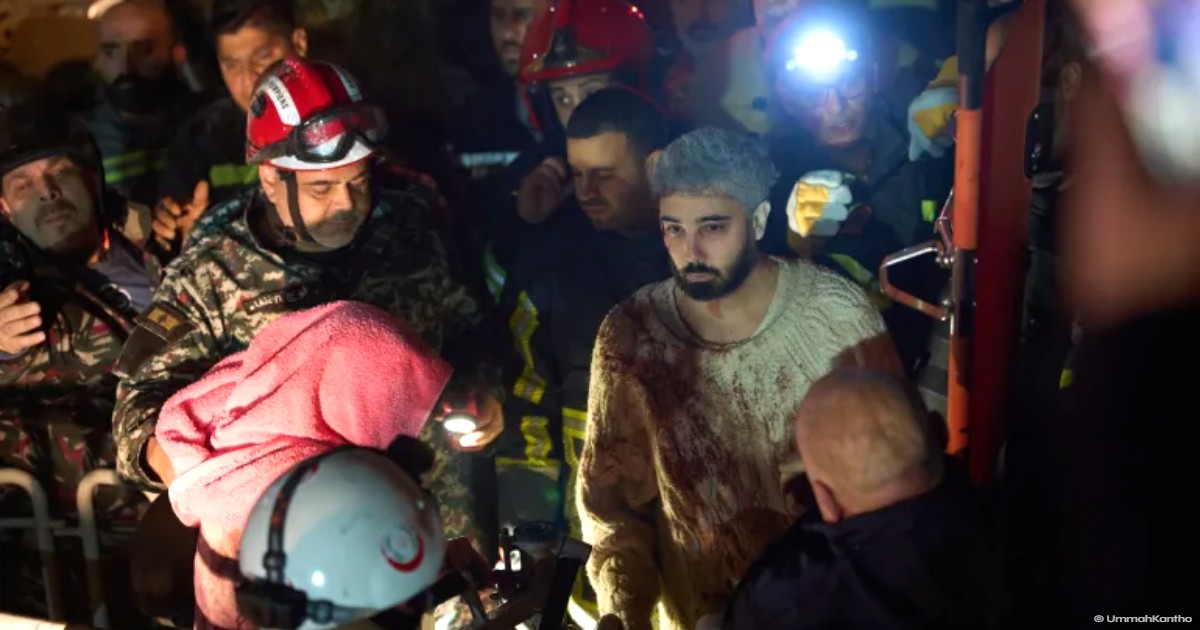
April 8, 2026, has entered the annals of Lebanese history as "Black Wednesday," a day defined by a rapid and devastating aerial campaign that left the nation in mourning. Within a mere ten-minute window, the Israeli military launched more than 100 airstrikes across the country, resulting in the deaths of at least 357 people. While Israel officially claimed to have neutralized 250 Hezbollah operatives during the operation, investigative reports and human rights monitors are presenting a starkly different reality.
Experts from the United Nations and researchers from Human Rights Watch have described the attacks as "indiscriminate," suggesting that civilians were not just collateral damage but were in some instances directly targeted.
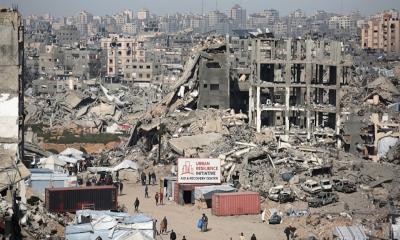
The human cost of the day is perhaps best illustrated by the story of 22-year-old Ahmad Hamdi, a resident of Beirut’s Tallet el Khayat neighborhood. Hamdi was at home when the sounds of incoming rockets shattered the perceived safety of his residential area. Moments after he scrambled from his couch, a direct hit reduced the building across from his apartment to a pile of twisted metal and concrete.
Shrapnel pierced the very spot where he had been sitting only seconds prior. For many residents in Beirut, the events of Black Wednesday shattered the illusion that certain civilian neighborhoods remained off-limits in the escalating conflict between Israel and Hezbollah.
Ramzi Kaiss, a Lebanon researcher at Human Rights Watch, noted that the timing and nature of the strikes suggest a profound recklessness in Israeli military conduct.
He emphasized that launching dozens of simultaneous strikes in the middle of the day without any warning to civilians constitutes a clear violation of international humanitarian standards. According to Kaiss, the method of the attack makes it difficult to justify as a precision operation against military targets. Instead, the high volume of bombs dropped on densely populated areas points toward a strategy of collective impact rather than surgical strikes.
The discrepancy between Israeli claims and the actual casualty list is a central point of contention for legal analysts. Ghida Frangieh, a researcher with the Beirut-based nonprofit Legal Agenda, pointed out that 101 of the victims on April 8 were women and children. She argued that for Israel`s claim of 250 dead combatants to be accurate, nearly every man killed in the strikes would have had to be a Hezbollah fighter.
However, documentation from the ground confirms that many of the men killed were local civilians with no ties to military activities. This suggests that the Israeli narrative may be an attempt to legitimize a campaign that resulted in massive civilian loss of life.
The broader context of these attacks reveals a strategic effort by Israel to create a "buffer zone" along its northern border. Bassel Doueik, a researcher for the Armed Conflict Location & Event Data (ACLED) monitor, explained that the systematic destruction of border towns in southern Lebanon is intended to make the region uninhabitable.
This strategy of creating a "no man’s land" has involved the demolition of thousands of homes and essential infrastructure. Despite a ceasefire agreement reached in November 2024, UN reports indicate that Israel has violated the terms over 10,000 times. Black Wednesday stands as the deadliest manifestation of this ongoing tension, leaving Lebanon to grapple with a deepening humanitarian crisis and the scars of a war that shows no sign of ending.