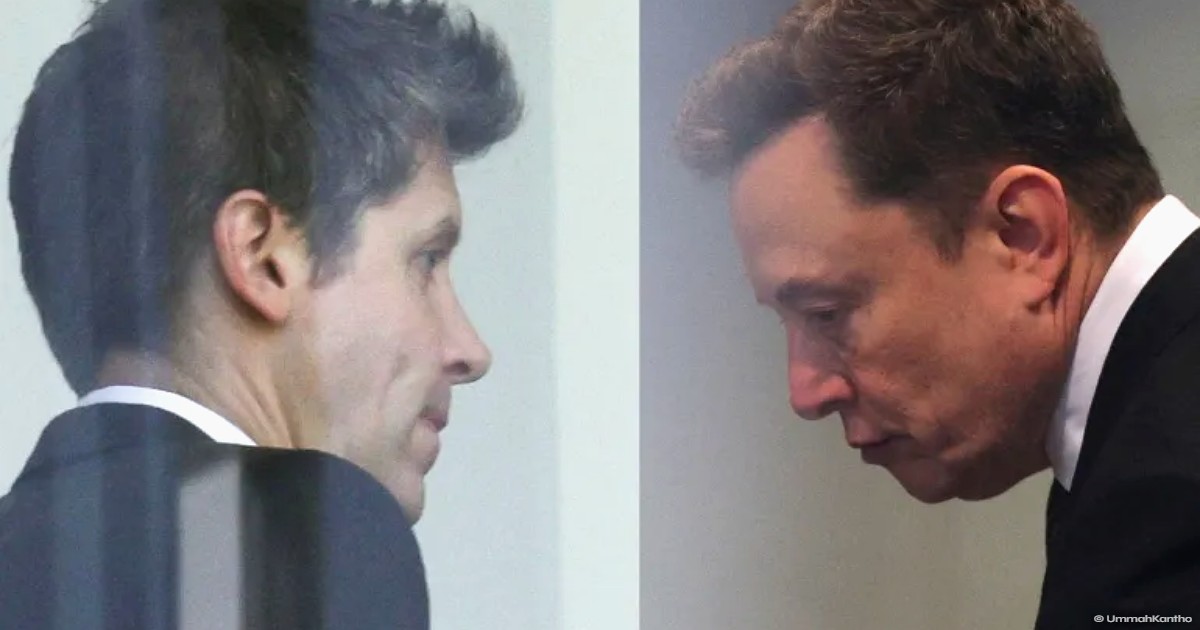
Tech billionaire Elon Musk appeared in a federal courtroom in Oakland, California, for a second consecutive day of testimony against OpenAI and its CEO, Sam Altman. The trial, which has captured the attention of the global technology sector, centers on Musk’s allegations that Altman and co-founder Greg Brockman betrayed the original nonprofit mission of the artificial intelligence company. According to reports from Reuters and the Associated Press, Musk claims that the organization he helped co-found in 2015 as a benevolent laboratory for humanity has been transformed into a commercial engine focused on maximizing profit for private investors.
During his testimony on Wednesday and Thursday, Musk did not hold back his frustration, describing himself as a fool for providing nearly $38 million in funding during OpenAI’s formative years between 2015 and 2017. He told the jury that his confidence in Altman began to erode as the company’s direction shifted toward a for-profit structure. Musk alleged that by late 2022, around the time ChatGPT was released to the public, it became clear that the leadership was attempting to steal the charity. Musk’s legal team argues that this pivot to a commercial model violates a founding agreement that the technology would remain open-source and dedicated to the public good.
OpenAI’s legal representatives have pushed back aggressively against Musk’s narrative. The company’s defense team argued in court that there was never a formal, binding commitment to remain a nonprofit indefinitely. They presented internal emails from 2015 that suggested Musk himself had explored the possibility of a for-profit arm to attract the massive capital required for AI development. Lawyers for OpenAI have characterized Musk’s lawsuit as a strategic attempt to sabotage a competitor, noting that Musk’s own AI venture, xAI, stands to benefit if OpenAI is hindered. This conflict is particularly acute as Reuters reports that OpenAI is currently preparing for an initial public offering (IPO) that could value the firm at $1 trillion.
The cross-examination of the Tesla CEO was marked by tense exchanges and multiple interventions from Judge Yvonne Gonzalez Rogers. When pressed by OpenAI’s lead attorney, William Savitt, about his early intentions for the company, Musk often refused to give simple answers, claiming the questions were designed to trick him. At one point, Musk compared the lawyer’s line of questioning to a misleading trap, prompting laughter in the courtroom but also a stern warning from the judge to stick to yes-or-no responses. Musk maintained that while he once considered a for-profit adjunct to the nonprofit, the complete takeover of the company by commercial interests was a betrayal of trust.
Financially, the stakes of the trial are unprecedented for the tech industry. Musk is seeking the removal of Sam Altman and Greg Brockman from the OpenAI board and is asking the court to order a return to the original nonprofit structure. Furthermore, Musk is pursuing damages of approximately $150 billion from OpenAI and its primary partner, Microsoft. Musk has pledged that any financial award would be redirected back to OpenAI’s charitable foundation rather than his personal accounts. Analysts believe that a victory for Musk could derail OpenAI’s massive IPO plans and reshape how AI research is funded and governed globally.
As the trial is expected to continue for another four weeks, the outcome remains highly uncertain. OpenAI, which recently restructured as a public benefit corporation, maintains that its commercial success is necessary to fund the astronomical costs of building artificial general intelligence (AGI). Altman, who was present in the courtroom but has yet to testify, has previously stated that the company remains committed to its mission despite the shift in its business model. However, Musk’s testimony has highlighted a fundamental power struggle in Silicon Valley over who should control the most powerful technology of the 21st century.