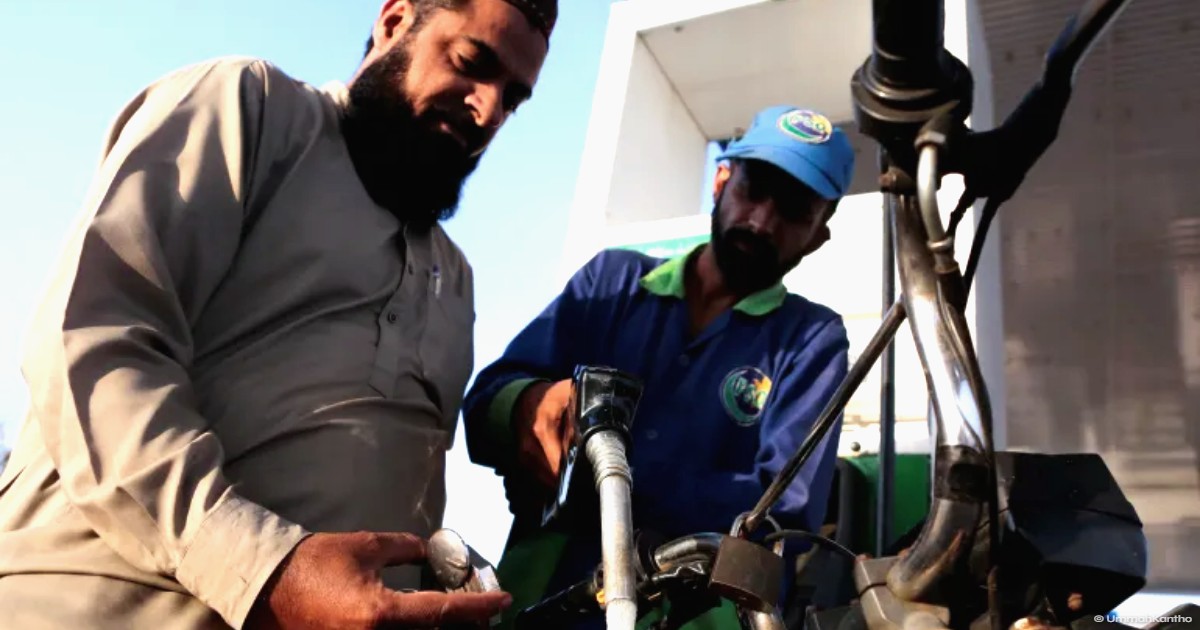
Pakistan is facing its most severe energy-related economic shock in more than fifty years, a crisis that threatens to unravel the nation’s social fabric and destabilize the government of Prime Minister Shehbaz Sharif. Recent data indicates that the country’s monthly oil import bill has ballooned from $300 million to a staggering $800 million.
This sharp increase is largely a fallout of the ongoing conflict in the Middle East, which has disrupted global energy supplies and sent prices soaring. Prime Minister Sharif recently noted that this massive financial burden has effectively erased all economic progress achieved over the last two fiscal years.
The repercussions of this fuel price hike are extending far beyond the gas stations. Economists warn that the impact will be increasingly severe across all sectors, from industrial manufacturing to subsistence farming. Kamran Butt, an economist speaking to the Dawn newspaper, emphasized that oil price hikes trigger a devastating chain reaction.
As transportation costs climb, the prices of daily-use commodities and food items follow suit. This trend reduces the purchasing power of the average citizen, deepens poverty, and inevitably fuels public discontent as the quality of life deteriorates for millions of families already struggling with a cost-of-living crisis.
In a move to contain the fallout and stabilize the currency, the State Bank of Pakistan recently raised its key policy rate by 100 basis points to 11.5 percent. The central bank`s monetary policy committee pointed out that the prolonged conflict in the Middle East has intensified risks to the national macroeconomic outlook.
Global energy prices, freight charges, and insurance premiums remain significantly higher than pre-conflict levels. These disruptions, combined with local supply chain issues, have created an environment of extreme uncertainty for businesses and investors alike.
Pakistan’s vulnerability is heightened by its heavy reliance on imported energy and the potential loss of income from its diaspora. Millions of Pakistani laborers working in Gulf states provide a vital inflow of foreign exchange through remittances. However, the regional conflict threatens to displace these workers or reduce their earning capacity.
A significant drop in remittances, coupled with the rising cost of fuel imports, would leave the country in a precarious balance-of-payments position, further straining an economy already weakened by years of high inflation and heavy debt.
The Sharif administration now finds itself caught between two politically damaging options. On one hand, passing the full weight of global price increases onto the public could trigger widespread civil unrest and protests. On the other hand, providing fuel subsidies would create a massive hole in the national budget, violating the strict terms set by the International Monetary Fund (IMF).
Pakistan is currently under rigorous IMF supervision, and recent requests for subsidy approvals were reportedly rebuffed, leaving the government with little room to maneuver.
The government’s response has faced sharp criticism from experts like Kaiser Bengali, a former adviser on planning and development. Bengali argued that symbolic measures, which he described as "austerity theater"—such as selling off official vehicles or livestock—are woefully inadequate to address the scale of the crisis.
He pointed out that the country is in a state of absolute dependency, where even a single billion-dollar loan tranche from international lenders becomes the difference between national survival and total economic collapse.
Politically, the situation is reaching a boiling point. Opposition parties are seizing on the economic emergency to challenge the government`s legitimacy. Aslam Ghauri of the JUI-F party stated that the administration`s flawed policies have effectively imposed an "economic war" on the Pakistani people.
With protesters already taking to the streets in major hubs like Lahore and Karachi, the escalating fuel costs have transformed from a budgetary issue into a full-blown political crisis that could define the future of the current administration.