Saturday, 25 Apr, 2026
Published: April 24, 2026, 11:43 PM
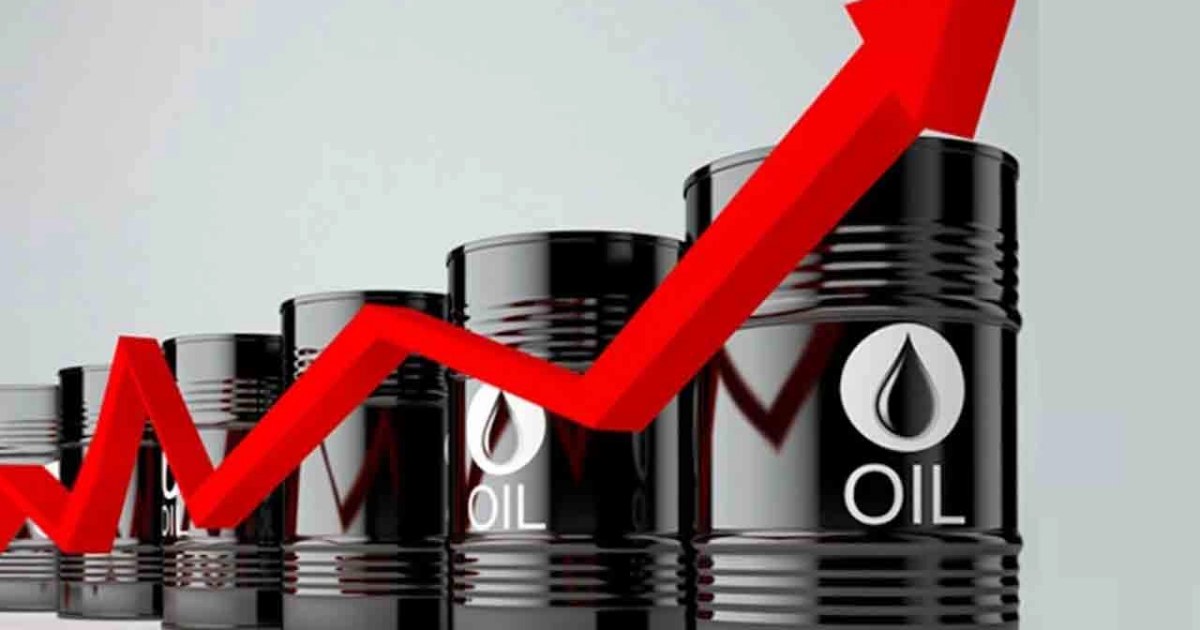
The global energy market is facing its most severe challenge in recent history as escalating military tensions between Iran and the United States, combined with a tightening naval blockade in the Strait of Hormuz, have sent oil prices spiraling. On Thursday, April 23, 2026, crude prices surged by nearly $5 per barrel before settling at $105 for Brent and approximately $96 for West Texas Intermediate (WTI). Analysts warn that the intersection of military action and diplomatic failure has created a "perfect storm" that could push the global economy toward a historic fuel shortage.
The primary driver behind this volatility is the palpable uncertainty surrounding Tehran`s internal politics. Reports confirmed on Friday that Mohammad Bagher Ghalibaf, Iran’s parliamentary speaker and the lead negotiator in peace talks, has resigned from his diplomatic post. Ghalibaf was widely viewed as a pragmatic figure capable of finding a middle ground with the West. His departure is seen as a sign that hardline factions, particularly the Islamic Revolutionary Guard Corps (IRGC), have gained total control over Iran`s strategy. Sources suggest Ghalibaf was pressured out after proposing a Qatari-backed deal to ease the Hormuz blockade—a proposal that was reportedly rejected by Iranian Foreign Minister Abbas Araghchi and other hardliners.
As diplomacy falters, the physical control of the world’s most vital energy artery has become the new frontline. President Donald Trump, in a series of defiant statements, claimed that the United States Navy now maintains "full control" over the Strait of Hormuz. Trump has made it clear that the waterway will remain effectively blocked for Iranian shipments until a new "unified negotiation proposal" is received from Tehran. Furthermore, the President issued a direct order for the US Navy to destroy any Iranian vessels attempting to lay mines in the passage. This stance has turned the Strait, which usually handles 20% of global oil shipments, into a bottleneck that shipping companies are increasingly desperate to avoid.
The U.S. Navy’s Central Command (CENTCOM), under Admiral Brad Cooper, has confirmed that multiple Iranian oil tankers have been intercepted and forced to turn back. While the blockade is officially described as "impartial" against vessels entering or leaving Iranian ports, its impact on the global supply chain is undeniable. The failure of the Islamabad ceasefire talks earlier this month has left little room for optimism. With Tehran activating its air defenses and the U.S. deploying a third aircraft carrier to the region, the market is pricing in the high probability of a direct, sustained conflict that could push oil prices toward the $150 mark.
Market analysts suggest that the current price range is not just a temporary spike but a reflection of a deeper systemic risk. Global inflation is already strained, and a sustained oil price above $100 will inevitably lead to soaring transport and manufacturing costs worldwide. While there is talk of OPEC+ increasing production, the logistical nightmare of navigating the Persian Gulf under the threat of a naval blockade makes such efforts complicated. The world is now watching closely to see if the current ceasefire—extended indefinitely by Trump on paper but contradicted by military actions on the ground—will hold, or if the energy crisis will spiral into a full-scale global economic collapse. For now, the picture remains incomplete, but the trajectory is undeniably upward.


















Design & Developed by