The history of Islam remains incomplete without mentioning the profound contributions of the second Caliph, Umar ibn al-Khattab (RA). Known for his indomitable spirit, justice, and leadership, Umar (RA) was a figure who shaped the destiny of the Islamic empire. However, his journey toward becoming a global leader began in the heart of ancient Mecca, within a lineage that was respected for its intellect and diplomacy. Understanding his birth and early life provides essential context to the formidable personality he later displayed as the leader of the faithful.
Umar ibn al-Khattab (RA) was born in Mecca approximately 13 years after the Year of the Elephant, which corresponds to 583-584 CE. He belonged to the Banu Adi clan of the Quraish tribe, a family line noted for its prestigious role in Meccan society. His father was Khattab ibn Nufayl, and his mother was Hantama bint Hashim. In pre-Islamic Arabia, the Banu Adi clan was traditionally entrusted with the role of arbitration and diplomatic representation. Whenever disputes arose between tribes, the elders of Banu Adi were called upon to negotiate, a heritage that naturally groomed Umar (RA) for public speaking and strategic thinking.
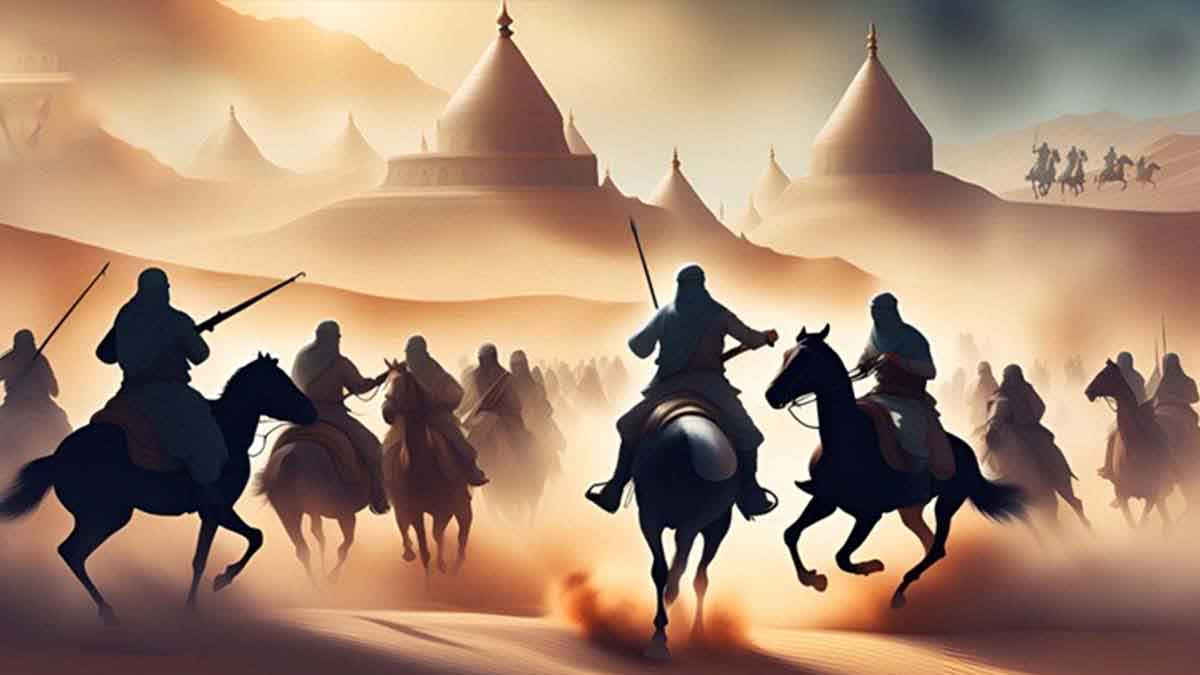
Growing up in the harsh environment of Mecca, Umar (RA) was distinct from his peers due to his rare education. In an era where literacy was a luxury reserved for a few, he learned to read and write at a young age. His father, Khattab, was known to be a strict and demanding man who tasked Umar (RA) with herding camels in the scorching heat of the desert. This disciplined upbringing, though difficult, forged his physical strength and mental resilience. He developed into a formidable athlete, excelling in wrestling, horsemanship, and swordsmanship. His prowess in wrestling was so renowned that people would flock to the Ukaz fair specifically to witness his matches.
By the time he reached young adulthood, Umar (RA) had established himself as a successful businessman and a respected member of the Quraish elite. His intelligence, combined with his family’s diplomatic background, made him the primary choice for the Quraish whenever an ambassador was needed for external affairs. He possessed a commanding presence and an eloquence that commanded respect. This early exposure to tribal politics and international trade broadened his horizons, preparing him for the administrative complexities of the future Islamic State.
The Prophet Muhammad (PBUH), recognizing the inherent strength and character of Umar (RA), made a special supplication: "O Allah, strengthen Islam with either Umar ibn al-Khattab or Abu Jahl, whoever is more beloved to You." Allah accepted this prayer in favor of Umar (RA). His birth and early grooming within the Banu Adi clan were not merely coincidences but were part of a divine plan to provide the Muslim community with a leader who could distinguish between truth and falsehood. This unique heritage eventually earned him the title "Al-Faruq," a testament to his unwavering commitment to justice.