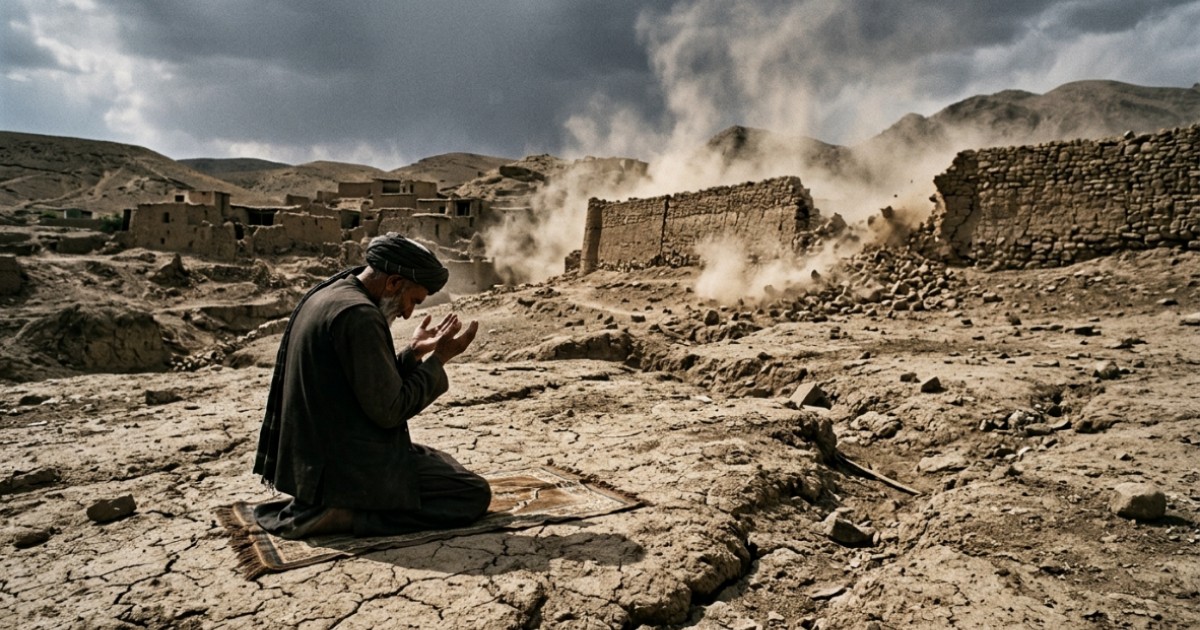
Islamic researchers at the Islamic University of Madinah and Al-Azhar Al-Sharif in Cairo emphasized on Monday the critical importance of observing prophetic supplications and spiritual deeds during natural disasters, especially earthquakes, Al Jazeera reported. Amid growing concerns over global climate anomalies and increasing seismic activities, global Islamic scholars provided comprehensive guidance rooted in the Holy Quran and authentic prophetic traditions. They noted that massive environmental cataclysms serve as profound manifestations of the supreme power of the Almighty. During such stressful events, seeking immediate refuge with God rather than succumbing to sheer panic remains the primary obligation of a true believer.
Prophet Muhammad consistently instructed his followers to seek divine forgiveness and protection whenever faced with sudden cataclysms or severe weather anomalies. An authentic narration recorded in Sunan Abi Dawud confirms that anyone who recites a specific protective supplication three times in the morning and evening will remain completely shielded from unexpected calamities originating from the heavens or the earth (Sunan Abi Dawud, 5088). The profound prayer invokes the blessed name of God, by whose virtue nothing in creation can cause harm, acknowledging Him as the All-Hearing and All-Knowing. Scholars advise Muslims to recite this daily while maintaining constant internal remembrance during an actual crisis.
During the active occurrence of an earthquake, Islamic legal experts recommend looking downward and continuously proclaiming the greatness of God through the recitation of Takbeer, or declaring Allahu Akbar. Believers are also encouraged to proclaim the absolute oneness of God and reflect upon the verses of Surah Ar-Rahman to remember the endless divine blessings bestowed upon humanity. Islamic theologians explain that sudden natural disruptions function primarily as divine warnings, urging mankind to repent from structural sins and return to spiritual righteousness. Seeking collective and individual forgiveness through continuous Istighfar remains essential during these critical moments to avert further widespread devastation.
The Holy Quran provides an exemplary invocation for protection during overwhelming trials in verse 155 of Surah Al-A`raf (Surah Al-A`raf, 7:155). The sacred verse presents a humble plea to the Creator, acknowledging Him as the ultimate protector, begging for absolute forgiveness, and seeking divine mercy since He remains the most forgiving of all. Islamic thinkers explain that implementing this specific Quranic invocation serves as a powerful means to attract divine mercy during intense physical or social upheavals. When a community humbles itself before the divine throne and acknowledges its shortcomings, the Almighty frequently removes impending chastisements and restores absolute security.
What remains less clear is how effectively contemporary Muslim communities are integrating these profound spiritual practices with modern technological and scientific disaster preparedness protocols. Sociologists have observed that modern education systems often prioritize material and structural precautions while completely marginalizing the psychological and spiritual dimensions of cosmic protection. However, Islamic scholars strongly maintain that while adopting physical safety measures is an absolute religious necessity, implementing the divinely taught spiritual safeguards constitutes the ultimate path to true salvation. Therefore, every believer must consciously integrate these authentic supplications into their daily routines to protect themselves and their societies.