In a rare public clarification regarding its internal governance, NATO has stated that there is "no provision" for the suspension or expulsion of member states from the military alliance. The statement comes in response to reports suggesting that the United States might seek to penalize Spain for its refusal to support American military operations against Iran.
The controversy was ignited by a Reuters report citing an internal Pentagon email. The leaked communication suggested that the U.S. government was exploring ways to discipline allies perceived as failing to support Washington’s recent campaign. Most notably, the email hinted at reviewing the longstanding U.S. support for the United Kingdom’s claim to the Falkland Islands—a British territory also claimed by Argentina—as a potential lever of diplomatic pressure.
"The alliance`s founding treaty does not foresee any provision for suspension of NATO membership, or expulsion," a NATO official told the BBC, effectively shutting down the legal possibility of the U.S. unilaterally removing Spain from the 32-member bloc.
Despite the legal hurdles, the rhetoric coming out of Washington remains sharp. Pentagon Press Secretary Kingsley Wilson criticized allies for their lack of cooperation, stating that while the U.S. has consistently defended its partners, "they were not there for us" during the current conflict. Wilson added that the Department of Defense is working to provide President Donald Trump with "credible options" to ensure allies are no longer "paper tigers."
The friction stems from the escalation of hostilities on February 28, when U.S. and Israeli forces launched strikes against Iranian targets. Following the strikes, Iran restricted shipping through the critical Strait of Hormuz.
Spain, which hosts two major U.S. military installations—Naval Station Rota and Morón Air Base—has refused to allow its territory to be used as a launchpad for attacks on Iran.
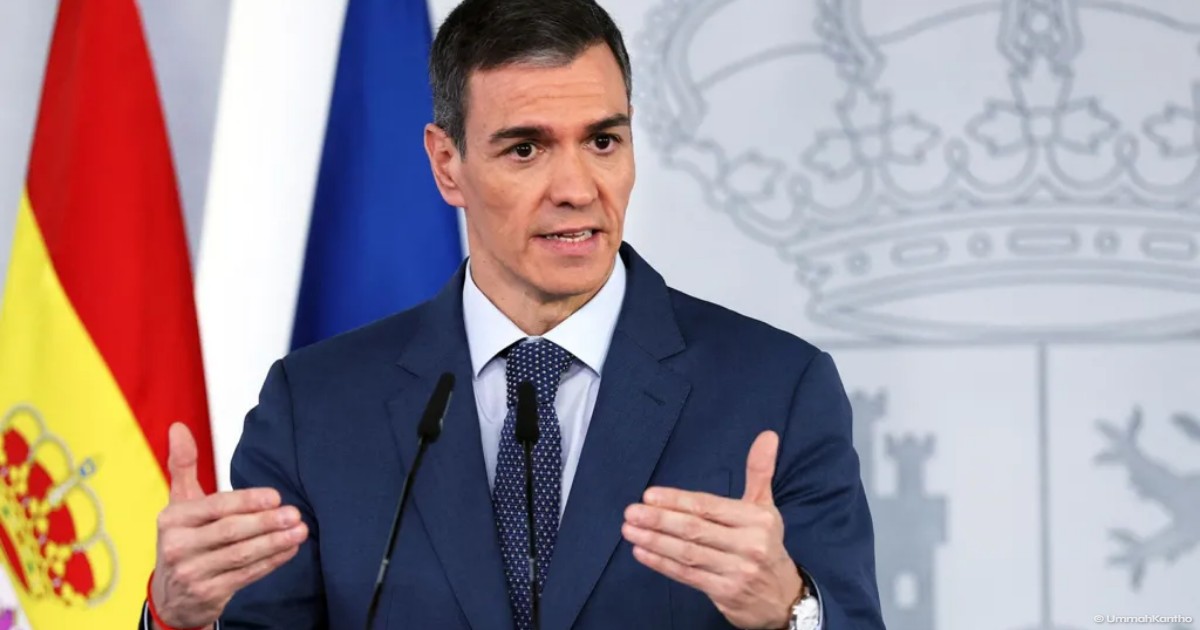
Spanish Prime Minister Pedro Sánchez dismissed the reports of a potential suspension, emphasizing that his government operates based on official documents, not leaked emails. He reiterated Spain`s commitment to international law and ally cooperation but stopped short of changing his stance on the use of airbases.
The sentiment in Washington is one of growing impatience. Defense Secretary Pete Hegseth recently doubled down on criticisms of European "free-riding," noting that Europe depends on the Strait of Hormuz far more than the United States does. "The time for free riding is over," Hegseth remarked during a press conference, urging European nations to provide more naval support rather than just diplomatic rhetoric.
While the U.K. has allowed the use of its bases for strikes and its RAF planes have intercepted Iranian drones, Prime Minister Keir Starmer has maintained that a full-scale blockade of Iran is not in London`s interest.
This cautious approach by key European players has clearly frustrated the Trump administration, which has long viewed NATO as a "one-way street."
For now, other European leaders, including Italian Prime Minister Giorgia Meloni and German officials, have voiced support for Spanish membership and alliance unity. However, the internal memo and the "paper tiger" comments from the Pentagon suggest a deepening rift that could redefine the nature of trans-Atlantic security cooperation in the coming months.