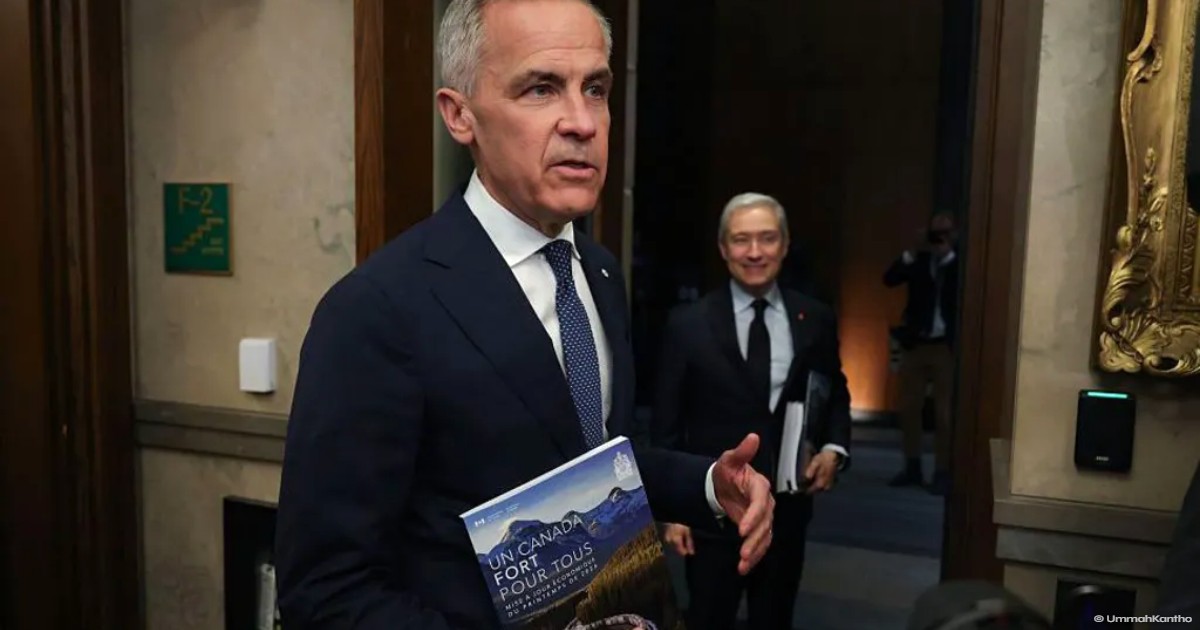
Prime Minister Mark Carney presented a resilient outlook for Canada’s economy on Tuesday, unveiling a spring economic update that shows the federal deficit falling faster than previously projected. Despite the looming threat of U.S.
tariffs and the ongoing geopolitical instability caused by the war between Israel and Iran, Canada’s fiscal position has improved, largely buoyed by surging global oil prices and robust tax revenues. The update positions the Carney government as a disciplined manager of the nation`s finances while embarking on ambitious new nation-building projects according to Bloomberg and CBC News reports.
According to the Department of Finance, the federal deficit for the 2025-26 fiscal year is now projected at C$66.9 billion, a significant drop from the C$78.3 billion forecast in the previous autumn statement. This C$11.4 billion improvement has provided the government with the fiscal room to justify new spending measures aimed at long-term growth.
Prime Minister Carney attributed the savings to several difficult decisions regarding government operations and a strategic focus on revenue-generating sectors. As the possessor of the world’s third-largest oil reserves, Canada has benefited immensely from recent energy price spikes, which have acted as a buffer against global inflation.
A centerpiece of the spring update is the official launch of the Canada Strong Fund, the nation’s first sovereign wealth fund. With an initial federal contribution of C$25 billion, the fund is designed to invest in critical infrastructure, energy corridors, agriculture, and emerging technologies.
In a unique move, the government announced that individual Canadians would soon be able to invest directly in the fund through a retail investment product, allowing citizens to have a personal stake in the country’s long-term prosperity. Carney emphasized that this initiative is aimed at making Canada more independent and resilient in a dangerous and uncertain world.
To address chronic labor shortages, the government is allocating billions to recruit and train up to 100,000 skilled trade workers over the next several years. This initiative includes apprenticeship grants and wage subsidies to modernize Canada’s workforce for major infrastructure projects.
Furthermore, in a bid to provide relief to households, the budget includes funding for previously announced measures such as a one-time grocery rebate for low-income families and a temporary excise tax break on gasoline. These steps are intended to mitigate the affordability crisis that has dominated the national political discourse over the last two years.
However, the fiscal document also carries a somber warning regarding international risks. The heightened global uncertainty cited in the budget refers primarily to the trade tensions with the United States under the current administration and the volatile situation in West Asia.
Although recent reports suggest attempts at mediation in the Israel-Iran conflict, the stability of global energy routes remains a critical concern. The Carney government admitted that while the domestic outlook is positive, Canada remains vulnerable to external shocks that could strain the national economy if global trade barriers continue to rise.
The Official Opposition was quick to dismiss the update as a sign of continued fiscal irresponsibility. Conservative Leader Pierre Poilievre criticized the new spending, arguing that the government’s refusal to present a balanced budget is the root cause of the country`s affordability crisis. Poilievre demanded that Carney slash spending immediately to curb inflation and reduce the national debt.
While the government projects it will eliminate its operating deficit within three years, the overall budgetary outlook suggests that Canada will remain in a deficit through 2031, leaving a significant point of contention for the next election cycle.