Friday, 24 Apr, 2026
Published: April 24, 2026, 12:00 AM

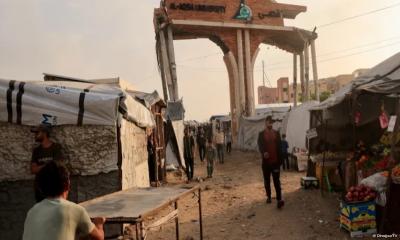
A renewed diplomatic push by Spain, Ireland, and Slovenia to suspend the European Union’s trade and cooperation agreement with Israel has been blocked by Germany and Italy. The debate over the €42.6 billion ($45.3bn) pact highlights deep internal divisions within the bloc, as member states struggle to balance lucrative trade interests against mounting evidence of human rights violations in Gaza and the West Bank.
The EU-Israel Association Agreement, which serves as the legal framework for bilateral relations, contains a strict "human rights clause" in Article 2. Activists and certain member states argue that Israel is in clear breach of this clause due to the death toll in Gaza surpassing 72,000 and the continued expansion of illegal settlements. Spanish Foreign Minister Jose Manuel Albares warned that failing to uphold international law would be a "defeat for the European Union." However, German officials characterized the proposal as "inappropriate," advocating for "constructive dialogue" instead.
The deadlock is rooted in conflicting national histories. While Ireland views the Palestinian struggle through the lens of its own anti-colonial past, Germany’s support for Israel remains deeply embedded in its post-Holocaust cultural and political identity. Furthermore, Prime Minister Benjamin Netanyahu’s government has actively cultivated ties with far-right populist governments in countries like Hungary to ensure protection from EU-wide sanctions.
Analysts suggest that while a unanimous 27-state decision to suspend the agreement is currently impossible, a "bottom-up" approach is emerging. Countries like Italy have unilaterally suspended joint defense pacts, while others are pushing for higher tariffs on products from Israeli settlements. Despite the diplomatic paralysis in Brussels, the shifting public sentiment across European societies is beginning to erode the traditional narratives that have long shielded Israel from economic accountability within the continent.
















Design & Developed by