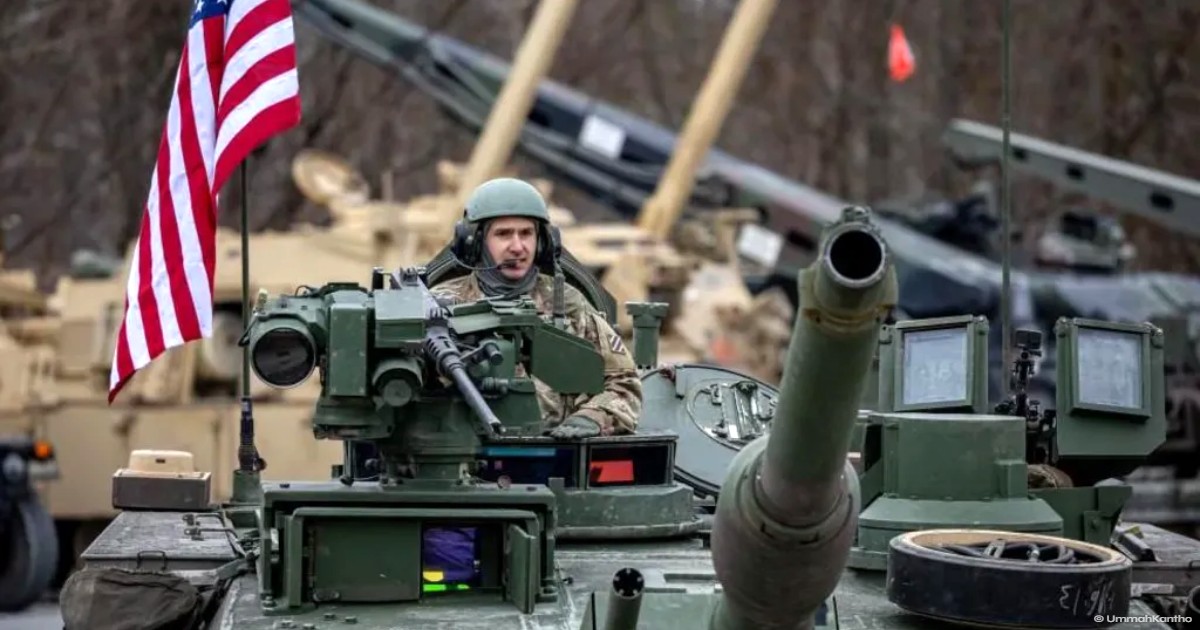
The Pentagon has formally ordered the withdrawal of 5,000 United States troops from Germany, a move that signals a widening fracture in transatlantic relations. This decision, confirmed on Friday, follows a public exchange of barbs between President Donald Trump and German Chancellor Friedrich Merz over the strategic direction of the ongoing war with Iran. Pentagon spokesperson Sean Parnell stated that the process is expected to be completed within the next six to twelve months, though the President has already warned that the cuts could eventually go much deeper than the initial 5,000 personnel.
According to officials, the order came directly from Defense Secretary Pete Hegseth after a review of the US force posture in Europe. Currently, Germany hosts more than 36,000 active-duty American troops, the largest contingent on the continent. The reduction represents about 14 percent of that force. This shift means that critical military assets, including the planned deployment of long-range strike capabilities intended to deter Russian aggression, are now in a state of uncertainty.
The diplomatic fallout began earlier this week when Chancellor Merz told university students that the United States lacked a convincing strategy in the Middle East and was being humiliated by Iranian negotiators. Merz’s critique of the Islamabad talks struck a nerve in Washington. Trump responded on Truth Social, accusing Merz of failing to manage his own country’s energy and immigration crises while ignoring the threat of an Iranian nuclear weapon. The President’s decision to pull troops appears to be a direct reaction to what the White House views as unhelpful rhetoric from its top European ally.
NATO officials are now scrambling to understand the full implications of the withdrawal. NATO spokeswoman Allison Hart noted that the alliance is seeking clarification from Washington, adding that this adjustment highlights the urgent need for Europe to assume a greater share of the responsibility for shared security. While Germany has significantly increased its military spending to 3.1 percent of its GDP, it still falls short of the ambitious 5 percent target established during the 2025 Hague Summit.
German Defense Minister Boris Pistorius attempted to downplay the shock, calling the US move foreseeable. He emphasized that while the American presence remains in the interest of both nations, Berlin must now work more closely with its European partners to fill the resulting security gaps. However, the move has drawn sharp criticism from senior US lawmakers within Trump’s own party. Senator Roger Wicker and Representative Mike Rogers issued a joint statement expressing deep concern, arguing that withdrawing forces from Germany sends the wrong signal to Moscow at a time of heightened regional tension.
The friction is not limited to Germany. Trump has recently hinted at similar troop reductions in Italy and Spain, citing their refusal to participate in operations to secure the Strait of Hormuz. With Tehran effectively limiting traffic through the vital oil shipping route, the President has made it clear that military support is tied to active participation in US-led initiatives. This latest withdrawal from Germany is not just a tactical shift; it is a clear message that the traditional security guarantees of the past are being fundamentally rewritten.