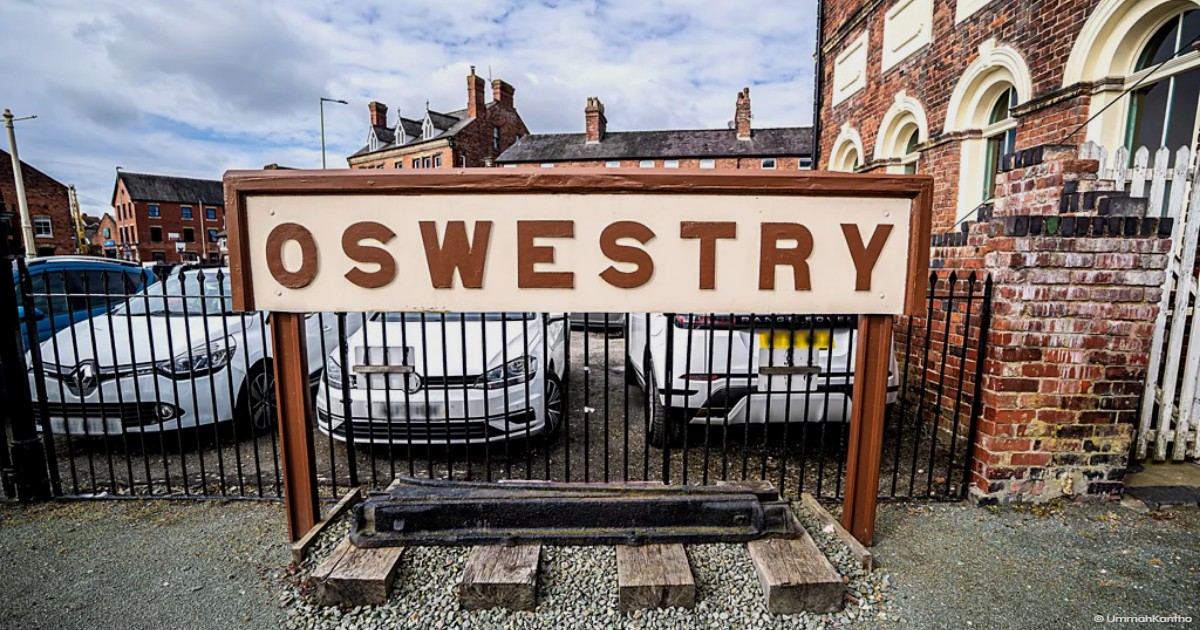
Oswestry, a historic market town in Shropshire, presents a unique geographical and cultural puzzle. On any standard map, it sits firmly within the borders of England. However, walk through its streets or enter its shops, and you will find a town that breathes, speaks, and thinks Welsh. This border town has become a focal point for those interested in the complex identity of the United Kingdom, where lines on a map do not always define the soul of a community. According to a recent BBC News feature, Oswestry is often referred to as a town on the "wrong" side of the border by those who cherish its deep-rooted Celtic heritage.
The immersion begins at places like Siop Cwlwm, a Welsh-themed shop located in the heart of the town. Staff members often find themselves speaking exclusively in Cymraeg—the Welsh language—throughout their shift. Sian Vaughan Jones, a local resident, noted that there are days when she doesn`t speak a single word of English despite being in an English town. This is not a mere coincidence; Oswestry is geographically enclosed by Wales on three sides, sitting in a narrow wedge of English land that protrudes into the neighboring nation. This proximity has allowed the Welsh language and culture to thrive within English territory for centuries.
The historical roots of this ambiguity go back to the Iron Age. The Old Oswestry Hill Fort, built around 800 BCE, still stands as a testament to the Celtic tribes who once dominated this region. As Anglo-Saxon invaders began to push westward following the fall of the Roman Empire, the landscape changed. King Offa of Mercia constructed the famous Offa’s Dyke in the 8th century, a massive earthwork designed to separate the Saxons from the Celts. While the dyke still marks much of the modern border, it placed Oswestry just inside the English line, creating a "lost land" for the Welsh speakers who remained.
During the medieval era, Oswestry was a frequent victim of cross-border violence. In 1216, King John of England burned the town to the ground as punishment for the residents` support of Welsh princes. Nearly two centuries later, in 1400, the Welsh national hero Owain Glyndŵr also burned the town, this time because it was perceived as being too loyal to the English crown. Local curator Mark Hignett explains that the town`s history was defined by a constant cycle of trading with the Welsh or fighting them. This shared history has turned Oswestry into what many call the "unofficial capital of Mid Wales."
In modern times, this dual identity is most visible in the town`s sports and daily governance. The New Saints (TNS), the local football club, plays in the Cymru Premier, the Welsh national league, where it holds the record for the most successful club. The streets of the town bear witness to this history as well, with names like "Welsh Walls" and "English Walls" running parallel to each other. Even the Ordnance Survey marks the town with two names: its English name, Oswestry, and its Welsh counterpart, Croesowallt. While the administrative reality is English, the cultural heartbeat of Oswestry remains undeniably Welsh, making it one of the most intriguing places to visit in the UK.
The picture remains incomplete for those who only see the border as a rigid line. For the people of Oswestry, identity is fluid, shaped by ancient earthworks, medieval rebellions, and a modern commitment to preserving a language that was once thought lost. As visitor signs across the town say "Croeso" (Welcome), it is clear that Oswestry embraces its position as a bridge between two nations, offering a unique perspective on what it means to be a borderland community in the 21st century.
What followed the reopening of the local heritage railway was a renewed interest in the town`s tourism, linking it further back to its Welsh coastal connections. As the town moves forward, it continues to balance its English administrative status with its Welsh soul, proving that culture truly knows no borders.
Would you like to learn more about the specific history of Offa`s Dyke or the Old Oswestry Hill Fort?