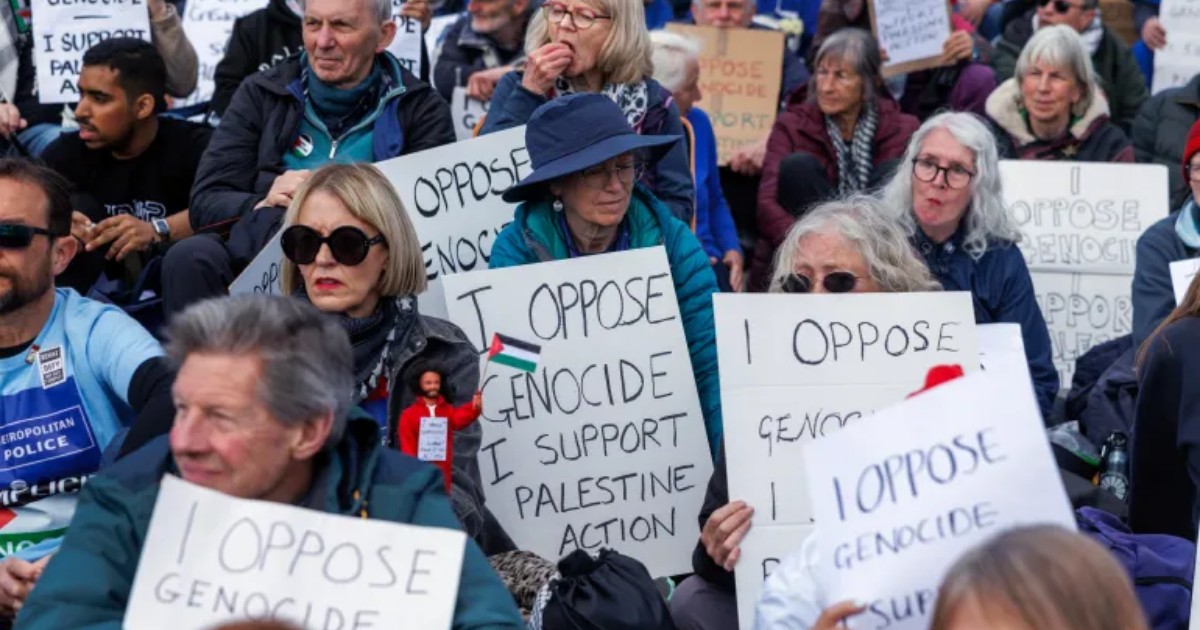
The British legal system is currently embroiled in a deeply polarizing debate as four activists from the protest group Palestine Action face sentencing in the United Kingdom this Friday. Although the activists were convicted by a jury of standard criminal charges, including criminal damage during a 2024 raid on an Elbit Systems factory in Bristol, the presiding judge is weighing whether to rule that these offenses carry a "terrorist connection." If such a determination is made, the defendants could be sentenced under stringent anti-terrorism legislation, an outcome that has sparked widespread public outcry and intense scrutiny regarding the limits of political protest in the UK.
Launched in July 2020, Palestine Action defines itself as a movement committed to ending global complicity in what it characterizes as Israel`s "genocidal and apartheid regime." The group employs "disruptive tactics" to target corporate suppliers of the Israeli military, including major firms such as Elbit Systems, Leonardo, Thales, and Teledyne. In July 2025, the UK Parliament voted to formally proscribe the group as a "terrorist" organization, placing it in the same legal category as groups like al-Qaeda and ISIL (ISIS). This decision was met with immediate criticism from civil liberties advocates, who argue that while the group’s actions often result in property damage, they lack the intent or violent character that typically defines terrorism.
The current case, adjudicated at Woolwich Crown Court, illustrates the evolving tension between state security policies and grassroots political activism. Four of the six defendants were convicted of criminal damage, with one also found guilty of assaulting a police officer with a sledgehammer. The prosecution’s effort to frame these actions within a "terrorist connection" framework is seen by critics as a strategic move to criminalize dissent. By utilizing the Terrorism Act, the state potentially gains access to harsher sentencing guidelines, which activists believe is designed to silence the broader Palestinian solidarity movement.
The legal categorization of Palestine Action has significant implications for the future of civil disobedience in the UK. Many legal experts have voiced concerns that expanding the definition of terrorism to include non-violent or limited-damage political protests sets a dangerous precedent. If the judge agrees with the "terrorist connection" classification, the resulting sentences will undoubtedly be used as a benchmark for future prosecutions against climate activists, anti-war protesters, and other groups challenging the status quo.
What remains unclear is how the court will balance the established criminal damage verdicts with the highly politicized label of terrorism. For the members of Palestine Action, the trial is not merely about the specific events in Filton; it is a battle for the definition of political legitimacy. For the UK government, the proscription and the subsequent sentencing trials are a mechanism to ensure order and prevent the disruption of national security interests.
As the sentencing date arrives, the international human rights community is watching closely. If these activists are sent to prison as terrorists, it may fundamentally shift the landscape of public protest in Britain, signaling a new, more punitive era for those who take to the streets to challenge government policy. The outcome of this trial will serve as a definitive marker of where the British state draws the line between legitimate democratic dissent and criminal activity.