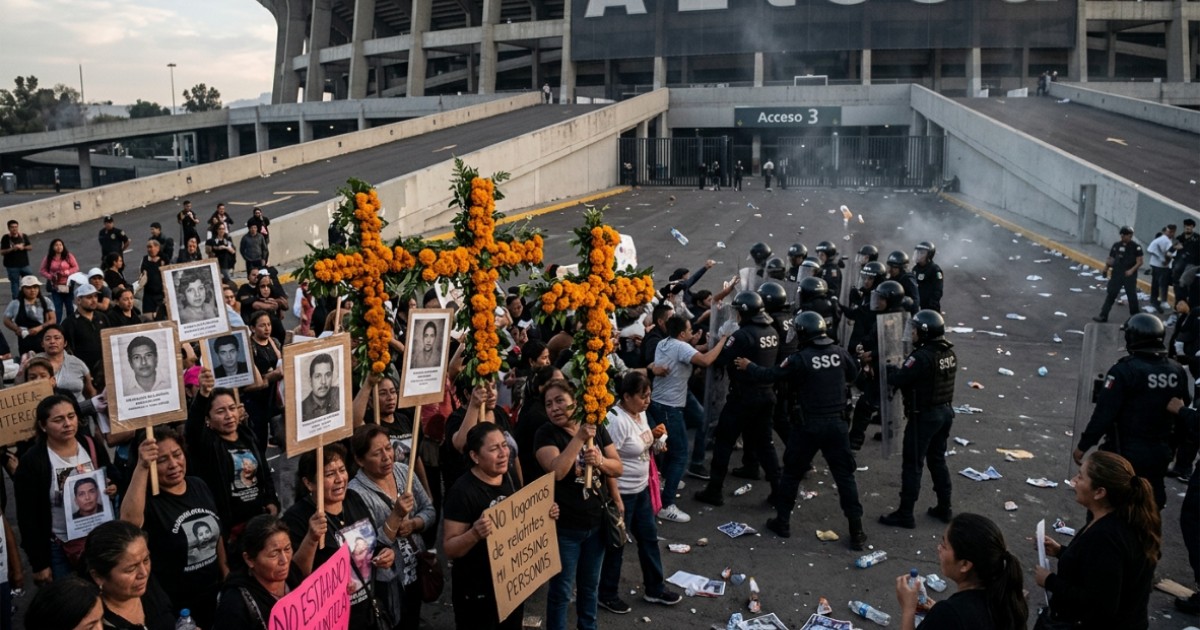
Hours before the official opening ceremony and the kickoff match between Mexico and South Africa at the historic Estadio Azteca, the atmosphere in Mexico City was overshadowed by a poignant display of dissent. Hundreds of demonstrators, primarily family members and relatives of those who have disappeared across Mexico, gathered around the iconic venue on Wednesday night. Their protest served as a stark reminder of the humanitarian crisis occurring just outside the festive perimeter of the global football stage.
The protesters allege that their loved ones were either abducted or murdered by criminal syndicates or government forces, and that the state has failed to provide justice or even adequate investigations into these cases. Maria de Jesus Soria Aguayo, a mother who has been searching for her missing child in the state of Veracruz for over a decade, expressed deep frustration with the current administration. She accused President Claudia Sheinbaum of prioritizing the football tournament over the nation`s internal security crisis, arguing that despite the recurring nature of these disappearances, the government has failed to implement effective measures to stop them.
The demonstration was marked by intense emotion. Protesters laid out "cempasúchil"—marigold flowers traditionally used in Mexican culture to honor the dead—in the shape of a cross on the sidewalk as a tribute to their missing relatives. While they chanted slogans against government negligence, the protest remained peaceful, and there were no reported clashes with law enforcement. To prevent disruptions to the World Cup ceremony, police had established a massive security perimeter extending roughly one mile around the stadium, restricting entry to ticket holders only.
This protest is part of a broader wave of civil unrest that has been building in Mexico for several weeks. In addition to the families of the missing, teachers across the country have been staging strikes demanding improved working conditions and better pay. As the world turns its attention to the football matches, these protests have successfully brought Mexico`s internal human rights and social crises to the forefront of the global conversation, juxtaposing the spectacle of sport with the somber realities of a country seeking accountability.