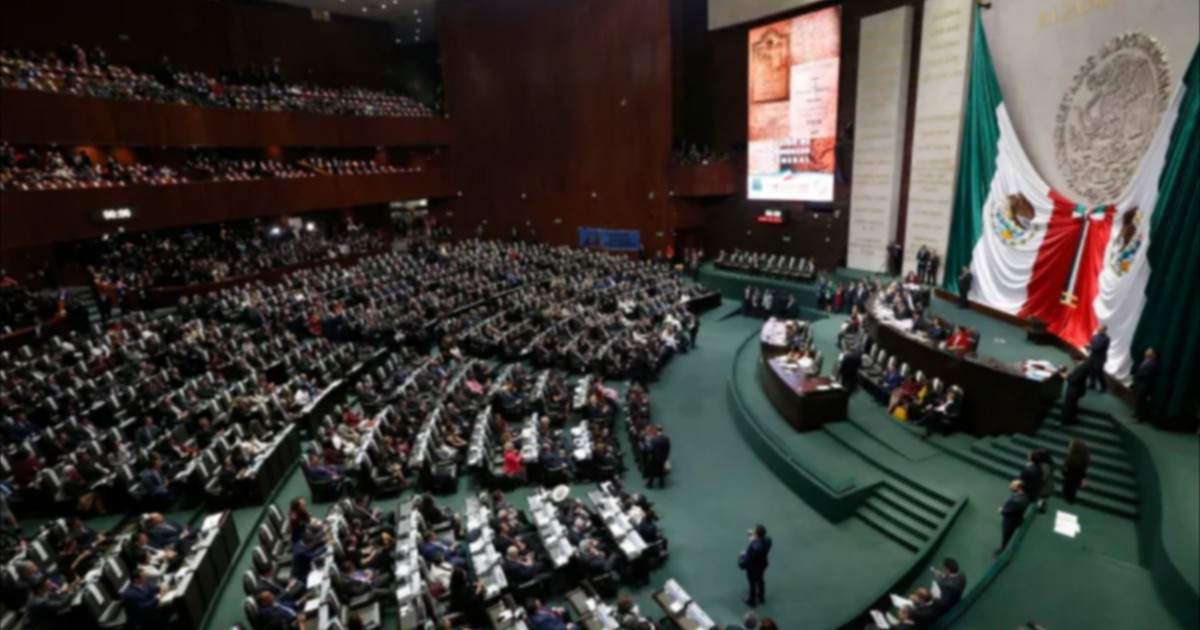
Mexico’s lower house of Congress has approved a sweeping constitutional amendment designed to allow the official nullification of national elections in verified cases of foreign interference. The controversial measure has immediately sparked intense domestic debate regarding democratic transparency and legal sovereignty. Critics warn that the sweeping definitions within the bill could undermine general public confidence in the electoral system. By creating new mechanisms to challenge legitimate political outcomes, the reform could potentially introduce persistent instability into the country`s future democratic processes.The reform passed the Chamber of Deputies with a clear majority.
The proposal comfortably cleared the lower house on Thursday evening, receiving 307 votes in favor, 128 against, and a single abstention. The amendment specifically updates the supreme legal framework to categorize outside meddling as valid grounds for invalidating a democratic contest. While the law marks a significant conceptual shift, it still requires formal approval from the Senate before taking effect. Financial and legal experts note that the adjustments are highly unlikely to affect the upcoming federal election cycle scheduled for June 2027.
Under the newly approved legislative definitions, foreign interference covers a wide array of illicit activities conducted by outside actors. These explicitly include illicit campaign financing, coordinated propaganda, the systematic dissemination of online disinformation, and targeted digital manipulation by foreign governments or external agencies. Furthermore, the constitutional text covers various forms of diplomatic, political, or economic pressure designed to artificially sway local public opinion during a campaign.
Ricardo Monreal, the prominent leader of the ruling Morena party within the lower house, strongly defended the bill as an essential shield for the nation`s independence. He stated that robust legal safeguards are required to stop wealthy foreign entities from engineering specific political outcomes within borders. However, Monreal also requested the withdrawal of secondary legislation that would have established the precise operational mechanics for identifying such interference. The ruling party admitted there was insufficient time to execute those complex procedural guidelines ahead of statutory deadlines.
Opposition lawmakers aggressively pushed back against the narrative, accusing the ruling administration of exaggerating outside threats for partisan gain. Jose Elias Lixa, a coordinator for the conservative National Action Party, flatly rejected accusations that opposing the bill equated to tolerating foreign subversion. Leaders from the Institutional Revolutionary Party also raised red flags over the ambiguous language utilized in the text. They warned that vague phrasing could inadvertently penalize international news coverage or restrict legitimate public discourse.
President Claudia Sheinbaum addressed the growing legislative controversy during her regular morning press conference following the historic vote. Sheinbaum maintained that the danger of external manipulation remains a pressing concern for contemporary Mexican institutions. She pointed to documented historical instances where foreign capital flowed into local political organizations and opposition campaigns. The administration`s concerns have been exacerbated by recent critical rhetoric emanating from various international politicians and US political figures.