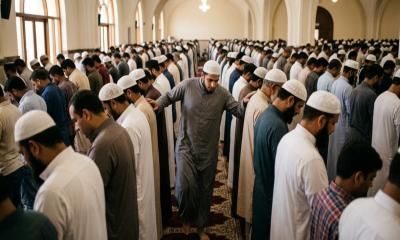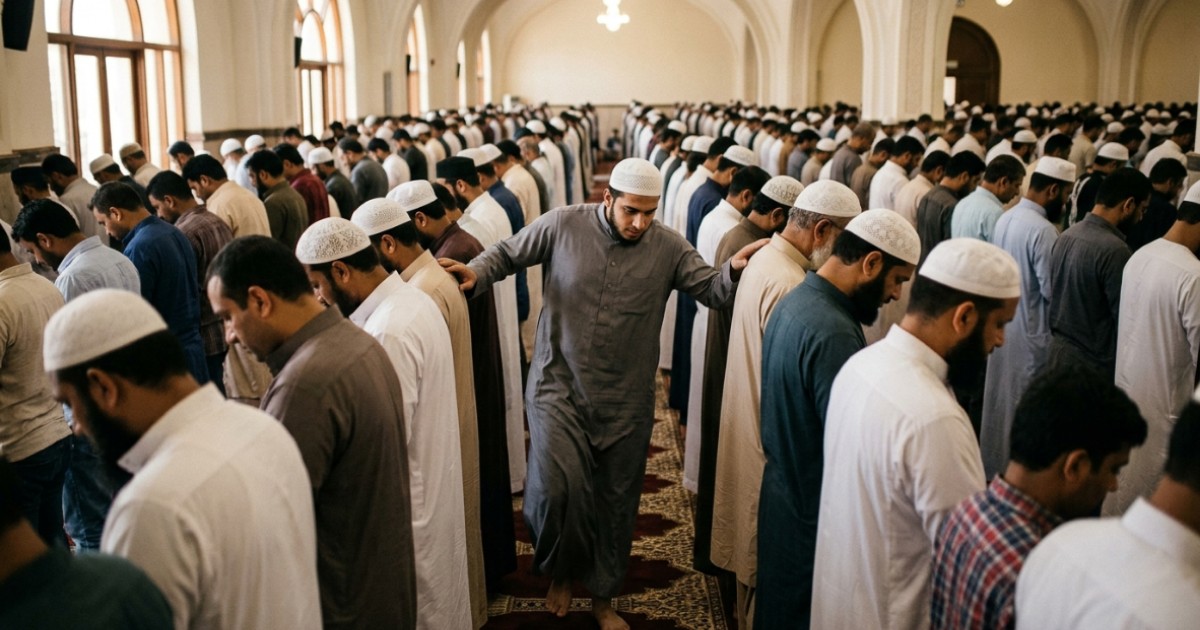
The mosque is a sanctuary of worship, serving as a school of discipline, decorum, and social harmony. When a believer enters the House of Allah, every step taken should reflect humility, modesty, and respect for others. It is common, particularly during Friday prayers or large congregations, to witness latecomers attempting to force their way to the front rows by stepping over or pushing past seated worshippers. Islam provides clear guidance regarding this behavior, emphasizing that disrupting the peace of others in the holy space is contrary to the spirit of worship.
A clear precedent is found in Sunan Abu Dawood, where it is narrated that the Prophet Muhammad (PBUH) saw a man stepping over the shoulders of people while the Friday Khutbah was being delivered. The Prophet (PBUH) corrected him immediately, saying, "Sit down, you have caused harm to people" (Sunan Abu Dawood, 1118). This incident serves as a definitive ruling that attempting to reach the front by causing inconvenience to others is contrary to Islamic etiquette. The Prophet’s intervention underscores that achieving a merit-based reward—like standing in the front row—does not justify causing distress or disturbance to fellow worshippers.
The fundamental Islamic principle of "La Darar wa La Dirar" (there should be neither harming nor reciprocating harm) applies directly to mosque etiquette. Scholars of Fiqh, such as Imam Nawawi (RA) in his work Al-Majmu, have explained that stepping over the necks or shoulders of others to reach the front is contrary to the manners of the mosque and should be strictly avoided. The disturbance caused to worshippers, breaking their concentration and violating their personal space, falls under the general prohibition against causing harm to others.
For those who arrive late to the mosque, the correct approach is to sit wherever a space is available without causing distraction or confusion. The primary goal in a mosque is to maintain order and tranquility. While the reward for the first row is indeed immense, the legitimate way to attain that merit is by arriving early, not by disrupting the established rows. The desire for a front-row position, while natural, must not supersede the ethical requirement to respect those already present.
There is, however, an important nuance: if there is an actual gap in the front rows that can be reached without stepping over anyone or causing disturbance, it is permissible and even encouraged to move forward to fill that void. Completing the rows is a Sunnah that preserves the structure of the congregation. The restriction applies specifically to actions that inconvenience or offend others. Ultimately, maintaining the sanctity and decorum of the mosque is a noble deed. A true believer prioritizes the comfort of fellow worshippers and the overall order of the prayer hall, recognizing that respect for others is as much a part of worship as the prayer itself.